Key Facts
—Warning. GEB president Juan Ricardo Ortega says two lines must be finished within 12 to 15 months.
—Lines. Sogamoso-Norte (500 kV, about 247 km) and Norte-Nueva Esperanza (500 kV, about 136 km).
—Risk. Without them, Bogotá could lose 30% to 40% of its power supply from 2028.
—Cause. Community conflicts and environmental-licensing delays have stalled construction.
—Progress. Substations are about 71% complete and the lines about 64% complete.
—Investment. The project was awarded to GEB with an estimated cost of about US$171 million.
—Dependence. The capital leans on four sources: Guavio, Chivor, Termozipa and the Bogotá river system.
Two delayed Bogotá transmission lines have become the thin margin between reliable power and rolling shortages, with Grupo Energía Bogotá warning that the capital has little more than a year to finish them before demand outstrips what the grid can deliver.
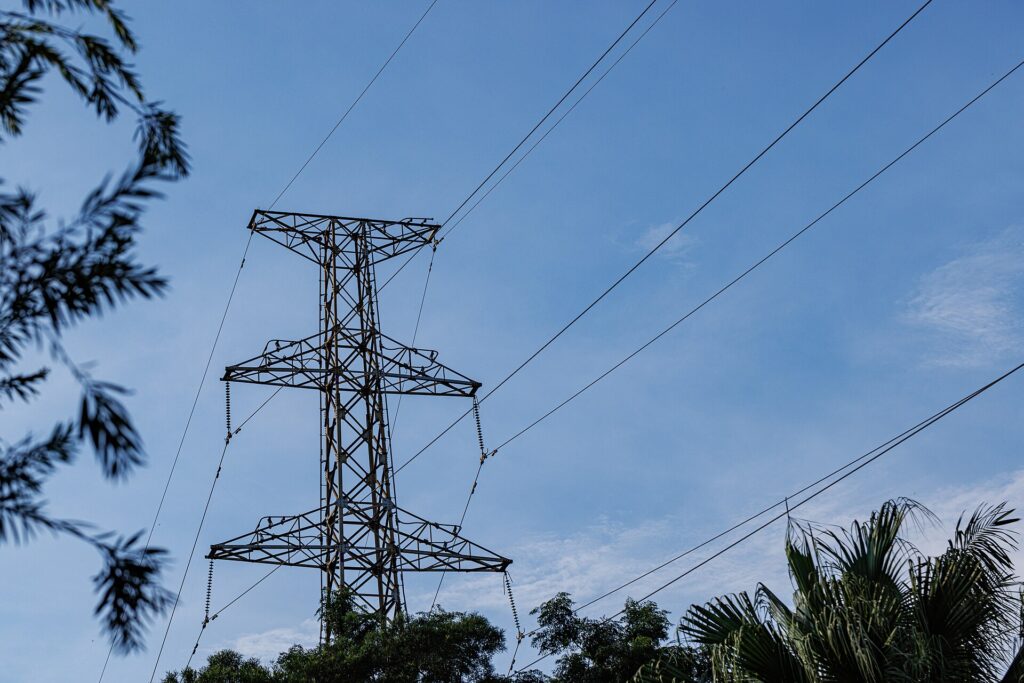
A 15-month clock on the capital’s power
Juan Ricardo Ortega, president of Grupo Energía Bogotá (GEB), has warned that two long-delayed transmission lines must be completed within roughly 12 to 15 months to guarantee electricity supply to Bogotá from 2028. The margin, he says, leaves little room for further slippage.
The warning reframes a slow infrastructure story as a countdown. Bogotá’s electricity demand keeps rising, but the high-voltage links meant to carry additional power into the city have been stuck for years, and the buffer is now measured in months rather than years.
Ortega’s message is aimed as much at communities and regulators as at investors: without the permits and social agreements needed to build, the schedule cannot be met, and the consequences would land squarely on the capital’s grid.
Bogotá is not a marginal load on Colombia’s system; it is the country’s largest concentration of demand, home to millions of people and a growing base of commercial and digital infrastructure. A shortfall in the capital would ripple across the national grid, not stay neatly contained within the city limits.
Ortega has been unusually blunt for a utility chief, turning what is normally a technical planning matter into a public warning. The bluntness is deliberate: with the schedule this tight, GEB wants residents, mayors and national regulators to grasp that the choice is being made now, whether or not anyone is watching.
Which lines, and why they matter
The two links are the Sogamoso-Norte and Norte-Nueva Esperanza lines, both rated at 500 kilovolts and forming part of the UPME 01-2013 project planned by Colombia’s mining and energy planning unit. The Sogamoso-Norte stretch runs roughly 247 kilometres; Norte-Nueva Esperanza about 136 kilometres.
Together they are designed to feed additional power into the Bogotá region and strengthen the eastern grid. The associated substations are reported to be around 71% complete, while the transmission lines themselves are roughly 64% built, leaving the final and most contested stretches outstanding.
The project was awarded to GEB with an estimated investment of about US$171 million. On paper it is well advanced; in practice, the unfinished segments are precisely the ones tangled in permitting and community disputes that no amount of engineering alone can resolve.
At 500 kilovolts, these are backbone lines, the highest-voltage tier of Colombia’s transmission network, built to move bulk power over long distances with low losses. Lower-voltage circuits cannot simply be substituted; the capacity and reach that Bogotá needs depend on completing this specific corridor.
The corridor also matters for the wider east of the country, not just the capital, because it knits Santander and Boyacá into the high-voltage network that balances supply across regions. That is part of why the planning unit prioritised it, and part of why the delay carries national, not merely local, consequences.
What is holding them up
The delays stem largely from conflicts with communities along the route and obstacles in environmental licensing. Ortega has said the project already holds most of its environmental permits, with some procedures still pending before regional authorities in Santander.
He has also accused some landowners of spreading false information about alleged health risks from transmission lines, which he says has fuelled opposition. Rerouting to accommodate objections has lengthened and complicated the path, adding both time and cost to a project already behind schedule.
The result is a familiar Colombian bottleneck: a nationally important line that is technically feasible but socially and administratively stalled, with each delay compounding the risk that lands downstream on consumers.
Prior consultation with communities and environmental licensing are legal requirements in Colombia, designed to protect residents and ecosystems. The tension is that the same safeguards, when contested or slow, can stall infrastructure that the wider public also depends on, leaving operators and regulators to argue over where the balance should lie.
How exposed Bogotá really is
Ortega’s core warning is stark. Without the new lines, he estimates Bogotá could lose 30% to 40% of its electricity supply from 2028, because the capital leans on a narrow set of sources that cannot be fully backstopped when any one of them is constrained.
The city depends heavily on four sources: the Guavio and Chivor hydroelectric complexes, the Termozipa thermal plant and the Bogotá river system. When reservoirs must be managed for sedimentation, typically between January and April, available capacity tightens sharply, as prior energy reporting has documented.
GEB has framed the shortfall in the order of 2,250 megawatts that could not be replaced without the missing transmission capacity. That is the difference between a manageable squeeze and the kind of deficit that forces rationing during the driest months.
Demand is not standing still either. Electrification, population growth and new digital infrastructure all push consumption higher, which means the margin the existing sources provide shrinks each year even before any drought or maintenance outage is factored in.
The January-to-April window is the pinch point. That is when reservoir management and the dry season coincide, reducing hydroelectric output just as the system has the least slack. It is precisely the period in which the missing lines would have provided the alternative route for power that the capital lacks.
The stopgaps, and their limits
GEB is not relying on the lines alone. The group has pointed to a planned solar park in the Bogotá area and other measures as partial alternatives, but these cannot substitute for high-voltage transmission at the scale the capital needs.
Distributed generation and efficiency help at the margin, yet the physics are unforgiving: moving large blocks of power into a growing city requires the backbone lines. Solar output, in particular, does not cover the evening peaks when household demand is highest.
That is why the operator keeps returning to the same point. The stopgaps buy a little time and resilience, but the structural fix is finishing Sogamoso-Norte and Norte-Nueva Esperanza on a schedule that leaves no slack.
There is also a cost dimension. Emergency measures, from running expensive thermal plants harder to importing power, are far pricier than building transmission on schedule, and those costs ultimately flow through to tariffs. Finishing the lines on time is as much a consumer-price story as a reliability one.
Batteries and interconnection with neighbouring systems are sometimes floated as answers, but both are years and heavy investment away at the scale required. Storage can smooth short peaks; it cannot move the bulk power that Bogotá’s growth demands into the city day after day.
A national backlog behind one city’s risk
Bogotá’s problem is the sharp end of a wider issue. Colombia has a long queue of delayed transmission projects, reported at well over a hundred, held up by licensing, prior consultation and land conflicts, and the capital simply has the least room to absorb further slippage.
The situation has also opened a gap between government and companies over who bears responsibility for the delays and how to unblock them. Utilities want faster permitting and firmer state backing for construction; officials weigh environmental and community obligations against the clock.
For residents, the debate is abstract until the lights flicker. Ortega’s 15-month framing is an attempt to make the timeline concrete: build now, or plan for shortages from 2028.
The episode is becoming a test case for how Colombia balances energy security with social and environmental due process. How Bogotá’s lines are resolved, through negotiation, incentives or firmer state action, will shape investor confidence in the country’s next generation of transmission projects.
Key Facts
—Operator. Grupo Energía Bogotá (GEB)
—Planner. UPME, Colombia’s mining and energy planning unit
—Lines. Sogamoso-Norte and Norte-Nueva Esperanza, both 500 kV
—Deadline. About 12 to 15 months, for service from 2028
—Risk. 30% to 40% of Bogotá’s electricity supply
—Cost. An estimated US$171 million
— Figures reflect GEB and UPME statements as reported; confirm current project status with the operator and regulator.
This is reporting, not investment advice. Confirm current figures with official sources before acting.
Frequently Asked Questions
What is Bogotá’s blackout risk?
GEB estimates the capital could lose 30% to 40% of its electricity supply from 2028 if two key transmission lines are not finished in time.
Which lines are involved?
The Sogamoso-Norte and Norte-Nueva Esperanza 500 kV lines, part of the UPME 01-2013 transmission project.
Who is responsible for building them?
Grupo Energía Bogotá, with planning set by the national unit UPME; the project has an estimated cost of about US$171 million.
Why are they delayed?
Community conflicts and environmental-licensing hurdles have stalled the final stretches, despite most permits being in hand.
How much time is left?
GEB’s Juan Ricardo Ortega says the lines must be completed within roughly 12 to 15 months to secure supply from 2028.
Related reading
- Colombia’s stalled transmission projects, mapped
- How El Niño strains the Andean power grid
- Grupo Energía Bogotá expands across the region
- Why permitting delays threaten Colombia’s energy plans
This article was produced by The Rio Times’ automated newsroom system. How we use AI · Report an error
Read More from The Rio Times