Venezuela’s New Oil Rulebook Runs 29 Pages and Never Says PDVSA

Energy
Key Facts
—The document. Venezuela published a 29-page regulation in its official gazette on Thursday, implementing the oil-law reform passed in January.
—The omission. It does not mention Petróleos de Venezuela, the state company that has controlled the industry for decades, at any point.
—The reach. Private firms may now operate from the wellhead to the petrol pump, including refining, marketing and fuel distribution.
—The precedent. It is the country’s first comprehensive oil regulation since 1943, and it replaces a framework built by Hugo Chávez.
—The prize. Venezuela holds roughly 303 billion barrels of proven reserves, among the largest in the world, on United States government estimates.
—The caveat. The opening depends on American sanctions relief granted through licences that can be withdrawn.
The most revealing thing about the new Venezuela oil regulation is not what its twenty-nine pages contain, but the five letters they never print.
Petróleos de Venezuela, universally known as PDVSA, has run the country’s oil industry for half a century. The regulation published in the official gazette on Thursday does not mention it once.
The document sets out how private companies may operate across the whole chain, from pulling crude out of the ground to selling petrol at a filling station. It also fixes the tax treatment, scaled to how risky a project is, from tired old fields to offshore wells.
What the Venezuela oil regulation actually changes
This is not the law. The law was rewritten in January, and Venezuela has been living with the announcement of an opening ever since without knowing its terms.
What appeared this week is the rulebook that makes the law operable. As Bloomberg reported through the Mexican daily El Financiero, it is the first comprehensive oil regulation the country has produced since 1943.
The scope is what startles. Foreign operators had already taken practical charge of production, with Chevron and others running fields since 2022.
The regulation extends that opening to refining, to commercialisation and to the distribution of fuel. Those were the parts of the business the state had kept for itself even as it surrendered the drilling.
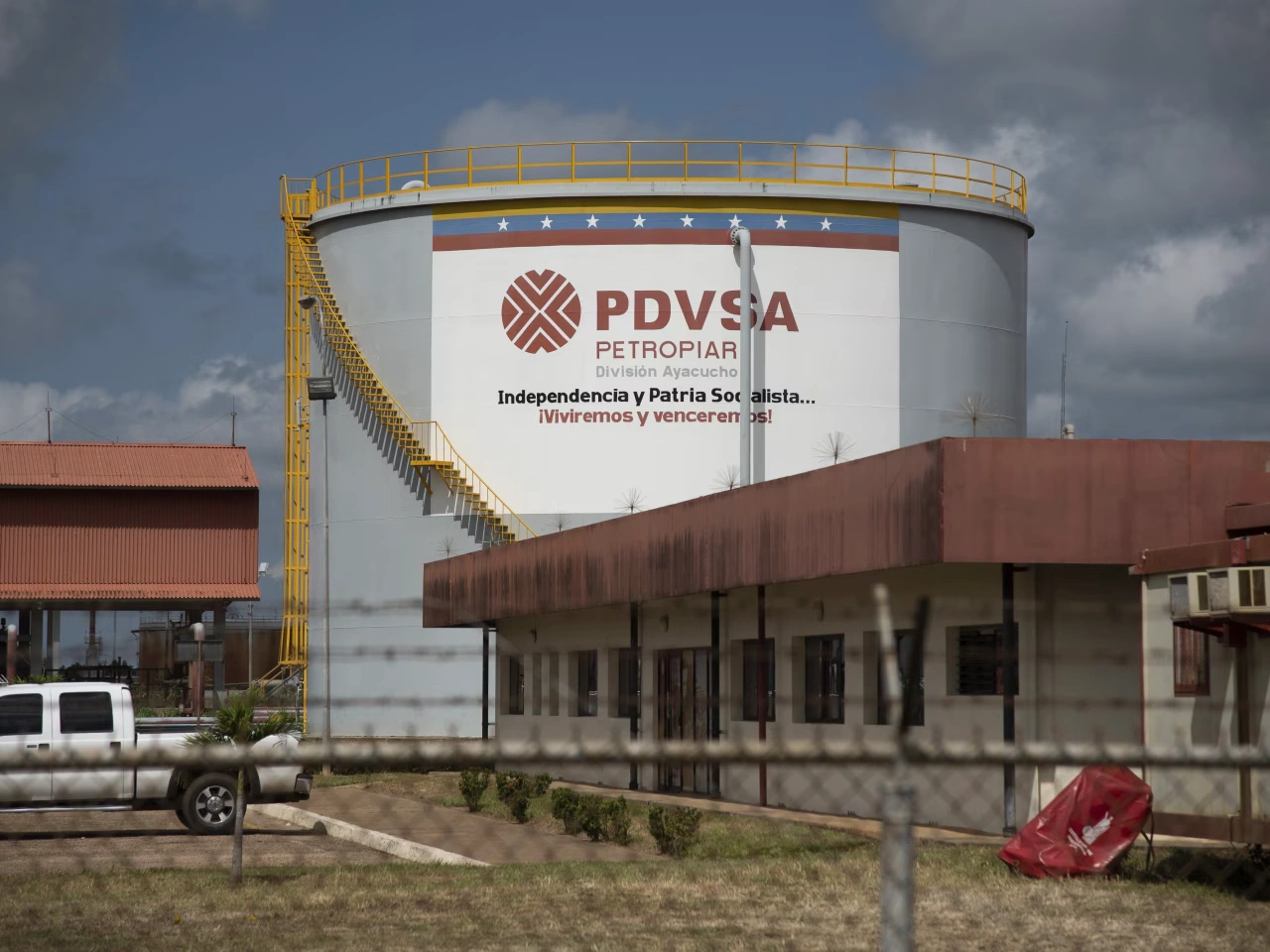
Fifty years, undone on paper
Venezuela nationalised its oil industry in 1976. A cautious reopening in the 1990s let foreign firms in through operating agreements, and Hugo Chávez shut it again in 2006.
Under that settlement any private operator had to fold itself into a joint venture in which PDVSA held the majority. The state was the dominant operator and the sole seller of Venezuelan crude abroad.
The January reform broke that structure, allowing contracts that give companies direct access to acreage without any joint venture at all. Minority partners may now market the oil themselves and bank the proceeds wherever they choose.
Something delicate sits underneath. Venezuela’s 1999 constitution reserves oil activity to the state, and jurists have asked how a contracting regime of this kind fits inside that reservation.
Who is signing these documents
The regulation was signed by Delcy Rodríguez, who governs as interim president. She was Nicolás Maduro’s vice-president and oil minister.
Maduro was captured by United States forces on the third of January and taken to New York to face narco-terrorism charges. No free elections have been announced since.
At a televised signing on Wednesday, Rodríguez called the rules a historic step towards using the country’s reserves for its development. She has framed the reform as respectful of sovereignty, stressing that the fields themselves remain state property.
Her government describes the rules as clear, legally secure and adapted to international practice. It is an argument for foreign capital delivered in the vocabulary of sovereignty.
Why the timing is not accidental
Washington has been dismantling its sanctions in stages since Maduro’s capture. American licences now name BP, Chevron, Eni, Maurel and Prom, Repsol and Shell as permitted to invest, refine and market Venezuelan oil.
Read the two documents side by side and the choreography is plain. Caracas has just legalised precisely the activities that Washington has just permitted.
Foreign lawyers advising on these deals sound a colder note. The relief runs through general licences rather than repealed executive orders, and a licence can be amended or withdrawn far faster than a law can be passed.
Venezuela sits on about 303 billion barrels of proven reserves, by American government reckoning. The country also has a history of expropriating foreign assets, which is the fear the new rules are written to answer.
Production has already begun to answer for itself. Output reached roughly one point one million barrels a day in February, up about a tenth on the year, and Chevron has been expanding its stake in a heavy-crude venture.
The deals have run ahead of the paperwork. Memoranda worth two billion dollars were signed in April, alongside separate terms with Italy’s Eni and Britain’s BP, and the state company circulated a model contract to executives in May.
That sequence is the point. Companies were negotiating against a law whose implementing rules had not been written, and those rules have now arrived.
Does the Venezuela oil regulation abolish PDVSA?
No, and it does not say anything about the company either way. It regulates an industry in which PDVSA is simply no longer named as the necessary partner, which is a different thing from abolition.
Can foreign companies invest now?
Several already are, under American licences that name them individually. Those licences authorise investment, refining and marketing, and lawyers advising clients stress that they can be rescinded.
What should an investor watch next?
The first contract signed under the published fiscal terms, because it will reveal what the tiered tax regime actually costs. After that, whether the licences hold.
Connected Coverage
Venezuela Pitches a Drilling Contract to Restart Its Oil Sector
Venezuela’s Delcy Rodríguez Rewrites the Economy in 100 Days
Venezuela in 2026: Crisis, Economy and the Post-Maduro Transition
More: Venezuela news in English, every day from The Rio Times.
Frequently Asked Questions
What does the new Venezuelan oil regulation actually allow private companies to do?
Private companies can now handle the entire oil business on their own — from drilling to refining to selling fuel at petrol stations — without having to partner with the state company PDVSA. Before this, the state had kept refining and fuel distribution for itself even when it allowed foreign firms to drill.
Why is PDVSA never mentioned in the 29-page document?
The regulation does not abolish PDVSA, it simply sets up a system where PDVSA is no longer required to be a partner in oil contracts, so the company just goes unmentioned. Foreign firms can now access oil fields directly and sell Venezuelan crude themselves without PDVSA being involved.
How safe is it for foreign companies to invest under these new rules?
Several foreign companies — including Chevron, BP, Eni, Repsol and Shell — are already investing under US government licences, but lawyers warn those licences can be changed or cancelled much faster than a law can be rewritten. Venezuela also has a history of seizing foreign assets, which is one of the main risks the new rules are trying to address.
This article was produced by The Rio Times’ automated newsroom system. How we use AI · Report an error · Editorial responsibility: Matthias Camenzind, Editor-in-Chief