Venezuela’s Delcy Rodríguez Rewrites the Economy in 100 Days
Key Facts
— — In 100 days as Venezuela’s acting president since the US military capture of Nicolás Maduro on January 3, Delcy Rodríguez has rewritten the Hydrocarbons Law (January 29) and the Mining Law (April 9) to open both sectors to foreign investment, hosted US Energy Secretary Chris Wright and Interior Secretary Doug Burgum in Caracas, and secured the lifting of OFAC sanctions on the Central Bank, three state-owned banks, and herself personally.
— — Chevron expanded its stake in the Petroindependencia joint venture from 35.8% to 49% on April 13 and is targeting 300,000 barrels per day, up from 260,000 currently. Venezuela’s oil chamber says the national target of 1.3 million bpd is achievable by late 2026 or early 2027. The IMF projects 4% GDP growth in 2026 and 6% in 2027—the fastest in Latin America.
— — The minimum wage remains frozen at 130 bolívares—roughly US$0.27 at the official rate—since March 2022. Rodríguez promised a May 1 salary increase without specifying the amount, raised the monthly public-sector bonification from US$160 to US$190, and installed a “labor dialogue” commission after street protests. The paradox of the pivot: the laws have been rewritten, the oil is flowing, and the workers who extract it are among the poorest in the hemisphere.
Rodríguez demands Maduro’s release in every speech and cooperates with Washington in every meeting. That contradiction is not a bug; it is the operating system of post-Maduro Venezuela, and it is producing the fastest economic reform sequence in Latin American memory.
The Venezuela Delcy Rodríguez reform agenda that crossed its 100-day mark on April 15 has produced two landmark legislative overhauls, at least twelve OFAC license expansions, three high-level US government visits, and a Chevron stake expansion—all while the acting president publicly demands the return of the man the United States removed from power. The Rio Times, the Latin American financial news outlet, reports that the transactional logic driving Caracas-Washington relations under Rodríguez has no precedent in the hemisphere: each Venezuelan reform has been followed by a corresponding US sanctions relief, creating a step-by-step normalization that neither side calls normalization.
The Legislative Overhaul: Oil and Mining
The Hydrocarbons Law reform, passed by the PSUV-majority Asamblea Nacional on January 29, dismantled the Chavista framework that had required majority state ownership of all oil ventures and restricted foreign operatorship. The new regime allows foreign companies to hold up to 49% of joint ventures (up from minority positions), access independent dispute-resolution mechanisms, and invest directly in exploration and production. Chevron moved first: on April 13 it raised its stake in Petroindependencia from 35.8% to 49% and received authorization to operate the new Ayacucho 8 block in the Orinoco Heavy Oil Belt.
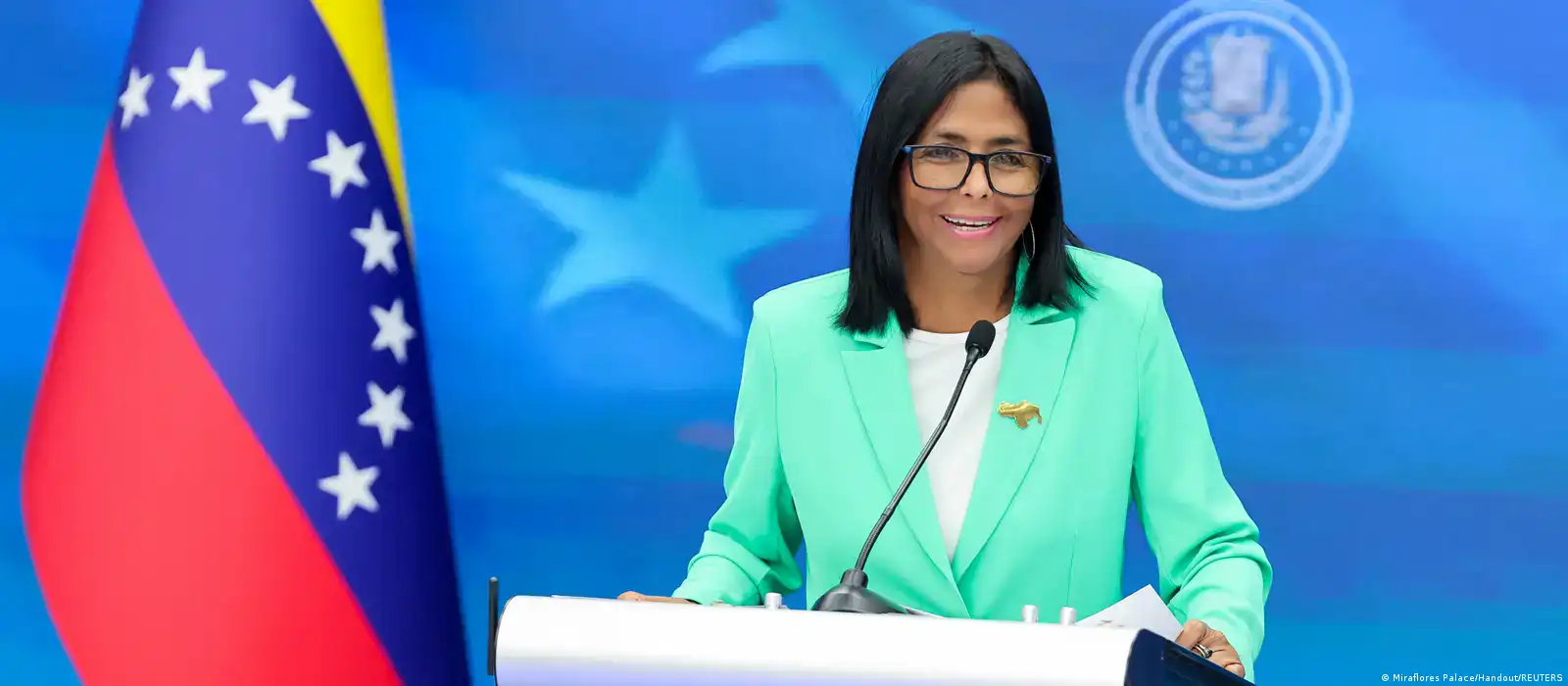
The Mining Law, approved unanimously on April 9, follows the same template: state ownership of mineral deposits is maintained, but private and foreign capital can now enter extraction under long-term concession contracts with access to international arbitration. Penalties of 10 to 15 years of prison were introduced for mining in environmentally protected areas. Rodríguez framed the law as “a vehicle for building the prosperity of the future”; Bloomberg described it as designed to attract US backing and foreign investment.
The US Connection: Wright, Burgum, and Sanctions Relief
Chris Wright, the US Energy Secretary, visited Caracas in February and toured the Orinoco Faja with Rodríguez and Chevron executives, confirming that Chevron’s target of 300,000 barrels per day was achievable and that Venezuelan oil sales already exceeded US$1 billion with the potential to “quintuple.” Interior Secretary Doug Burgum visited the same month. On April 15—the 100-day mark—Rodríguez hosted a third delegation, led by Subsecretario Kyle Haustveit, alongside ConocoPhillips and ExxonMobil representatives, at Miraflores.
The sanctions relief followed a transactional cadence: OFAC issued at least 12 licenses between January and March, each one tied to a corresponding reform. General License 57 authorized transactions with the Central Bank of Venezuela and three state banks, unlocking approximately US$1 billion in frozen assets. On April 1, OFAC lifted personal sanctions on Rodríguez herself—a symbolic capstone that Trump endorsed by saying she was doing “a great job.”
The Numbers That Haven’t Changed
The minimum wage of 130 bolívares—roughly US$0.27 per month at the BCV official rate—has not moved since March 2022. The public-sector bonification that most workers actually receive was raised from US$160 to US$190 in March 2026, paid in bolívares at the official rate and without impact on labor benefits like severance, vacation, or pension calculations. On April 8, Rodríguez promised a “responsible increase” effective May 1, without specifying amount or whether it would apply to the base wage or only the bonification.
The human rights organization Provea warned that the announced recovery “through foreign investment and new energy agreements cannot ignore the necessary reconstruction of income” and called for tripartite social dialogue, noting that Venezuela’s pension system now has more pensioners than contributors. Inflation in Q1 2026 ran at 71.8% cumulatively, the highest in the region by a wide margin. The IMF projects 4% GDP growth in 2026 and 6% in 2027—but growth measured in dollars reaching workers has been functionally zero.
What Investors and the Region Are Watching
The Cámara Petrolera de Venezuela says the national production target of 1.3 million barrels per day is achievable by late 2026 or early 2027 if the reform pace holds, power infrastructure stabilizes, and Chevron’s expansion to 300,000 bpd proceeds on schedule. Venezuela sits on the world’s largest proven oil reserves—the Orinoco Faja alone holds 87% of national reserves across 55,314 square kilometers—and the Rodríguez government is now offering foreign capital terms that would have been unthinkable under Maduro or Chávez. The outstanding question is whether transactional cooperation with Washington, built on the premise that each reform buys corresponding sanctions relief, can survive the US political cycle, a Venezuelan economy with US$164 billion in external debt, and a labor force that is watching Chevron’s share price rise while earning twenty-seven cents a month.
Related Coverage: OFAC Lifts Venezuela BCV Sanctions • IMF WEO: Venezuela 4% Growth 2026 • Brazil Oil to China Doubles
Deep Dive
US Lifts Venezuela Central Bank Sanctions
How Washington ended seven years of financial isolation and what it means for Venezuela’s oil revenue and banking system.
Deep Dive
Venezuela Eyes 12% GDP Growth in 2026
How the Iran war oil windfall is fueling Venezuela’s fastest economic expansion in decades.
Deep Dive
Venezuela Admits to Causing Hyperinflation
Delcy Rodríguez’s historic admission that the regime caused hyperinflation — and what comes next for wages and prices.
More: Latin America news in English, every day from The Rio Times.
This article was produced by The Rio Times’ automated newsroom system. How we use AI · Report an error · Editorial responsibility: Matthias Camenzind, Editor-in-Chief