Venezuela Pitches Drilling Contract to Restart Oil Sector
Key Facts
—The move. Petróleos de Venezuela (PDVSA) began circulating a model contract late last week to oil executives, advisers, and industry players, according to a Bloomberg report on May 15. The document lays out conditions for restarting existing wells, drilling new ones, and marketing the resulting production.
—The legal frame. Venezuela’s National Assembly approved a deep oil-sector reform in late January 2026 that allows foreign companies to operate with greater independence, including directly exporting and collecting revenues from sales even when holding minority stakes in joint ventures with PDVSA.
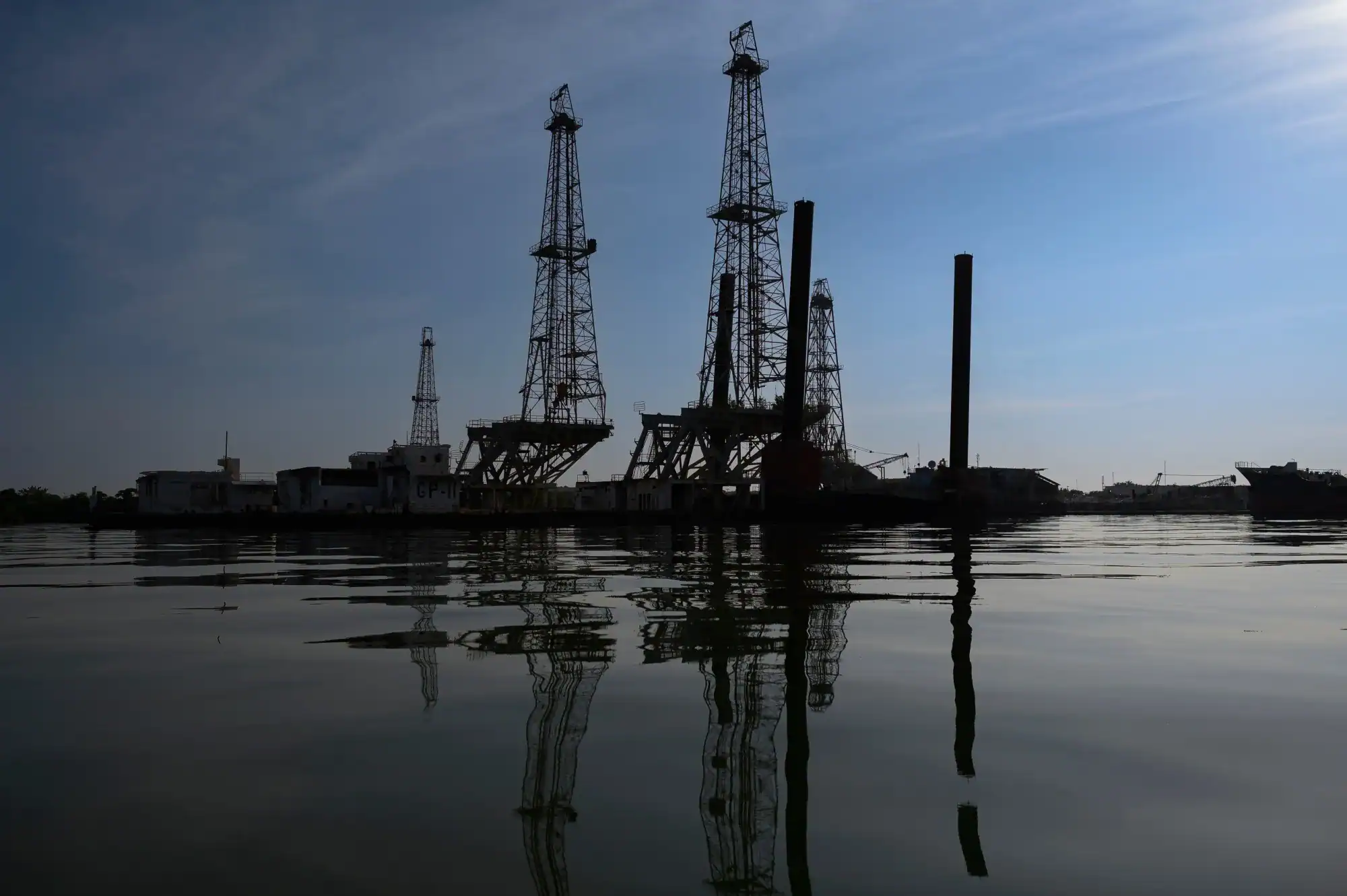
—The drillers in scope. Schlumberger (SLB), Halliburton, Baker Hughes, and Weatherford International, plus their joint-venture partners Chevron, Repsol, Shell, and France’s Maurel & Prom. Dozens of stored rigs in eastern Venezuela and Lake Maracaibo are being transported to shipyards in Trinidad and Guyana for inspection.
—The production gap. Venezuelan output fell from 2 million barrels per day in 2016 to 800,000 in 2023. It closed 2025 at 1.2 million and aims to exceed that figure in 2026. The country holds the world’s largest proven reserves at 303 billion barrels.
—The political context. The contract model arrives one day after Erebor Bank pitched Venezuelan authorities on US correspondent banking, signalling a coordinated push to operationalise the April OFAC General License 57 framework.
Venezuela is finally pushing the document that drillers and oil-services majors have been waiting for since January. The model contract turns the country’s reformed oil law into something operators can price. For Chevron, SLB, Halliburton, and the partners holding mothballed rigs in storage, this is the moment when commercial discussions actually begin.
What did PDVSA share with industry players?
According to Bloomberg, PDVSA late last week began circulating a model contract to oil executives, advisers, and industry counterparts. The document covers conditions under which companies would restart existing wells, drill new ones, and market the production. The model fills the gap between the January 2026 oil-law reform and operational deal-making, which had been blocked by the absence of concrete contractual templates. The Rio Times, the Latin American financial news outlet, reports that the document is the most concrete step PDVSA has taken since the legal framework changed.
The model emerges from a longer process. The Anti-Blockade Law of 2020 created the Productive Participation Contracts (CPP) framework as a workaround to US sanctions. In January 2026, the National Assembly approved a deeper reform that gave PDVSA partners autonomy to operate, export, and collect revenues directly, even from minority positions. The Oil Ministry had said it would issue new models for production-sharing contracts and joint ventures, with separate legislation regulating taxes. Both phases of contract revision were originally targeted for completion by the end of April, but progress slipped. The May 15 model circulation breaks the impasse.
Who is positioned to bid for drilling work?
The four global oil-services majors barred from Venezuelan work since 2019 sanctions are the most direct beneficiaries: Schlumberger (SLB), Halliburton, Baker Hughes, and Weatherford International. SLB has around 15 stored rigs in Venezuela, the largest inventory of mothballed equipment among US companies. Halliburton confirmed on a recent earnings call that it has been discussing commercial terms with customers after touring facilities. SLB has described Venezuela as an “exciting growth opportunity.”
The producers driving rig demand include Chevron, Repsol, Shell, and France’s Maurel & Prom. PDVSA has been in parallel conversations with all three on expanding existing joint-venture areas. ExxonMobil, expropriated twice and forced out in 2007, sent a technical team to Venezuela earlier this year to assess investment opportunities and has signalled willingness under appropriate legal guarantees. Repsol is among five firms already permitted by OFAC to export Venezuelan crude under strict reporting rules.
How is the equipment situation evolving?
Dozens of rigs stored in eastern Venezuelan fields and Lake Maracaibo are being transported to shipyards in Trinidad and Guyana for inspection. Repair costs above $1 million per rig would require medium-term contracts of approximately 12 months to justify the expense, according to sources cited by Reuters. Companies with equipment already inside Venezuela carry a paperwork advantage over those needing to import; the contracts, licences, and Treasury clearance burden is materially smaller.
Venezuelan oil minister Paula Henao has flagged the need for additional equipment beyond drilling rigs: pumps, valves, pipelines, and other infrastructure needed to scale crude and gas production. Logistics constraints at the port of Jose, which handles roughly 70% of national shipments, remain a structural bottleneck. The port faces challenges in reducing loading times and expanding throughput.
Venezuelan oil sector at a glance
| Indicator | Reading |
|---|---|
| Proven reserves | 303 billion barrels (world’s largest) |
| Production 2016 | 2 million barrels/day |
| Production 2023 (trough) | 800,000 barrels/day |
| Production end 2025 | 1.2 million barrels/day |
| Stored rigs (SLB) | ~15 |
| Direct US crude sales (February) | ~375,000 barrels/day (+32% MoM) |
| Petropiar planned production doubling | 12 to 18 months (Chevron investment >$100M) |
| US Energy Secretary projection 2026 | 30% to 40% of global supply growth |
Chevron CEO Mike Wirth cautioned that “production cannot be ramped up overnight” without engineering, supply chains, and the return of skilled workers who emigrated during the sanctions years. Wirth said Venezuela “still has work to do” to attract major investments. Wright, the US Energy Secretary, has been more bullish, framing Venezuelan production growth as central to the 2026 global oil-supply picture.
What does this signal about the wider reopening?
The drilling-contract model arrives one day after Bloomberg reported that Peter Thiel-backed Erebor Bank pitched senior Venezuelan officials on correspondent banking and US sub-accounts. Both moves operationalise the April 14 OFAC General License 57, which authorised financial-service transactions with the BCV and three other Venezuelan state banks. The combination of banking access and an executable oil-contract framework gives international energy operators the two structural pieces needed to commit capital: working financial rails and tradeable commercial terms.
The political backdrop continues to be defined by the January 3 capture of Nicolás Maduro and the transition government led by Delcy Rodríguez. The IMF and World Bank have resumed engagement. Trump has projected that Venezuela will deliver between 30 and 50 million barrels of oil to the US in coming years, with revenue controlled by Washington for the benefit of both populations. The model contract circulating now is the legal mechanism that makes those numbers operationally plausible.
What should investors and analysts watch next?
- First contract signing. The first publicly disclosed Productive Participation Contract or joint-venture amendment under the new framework will set the template for valuation, taxation, and operational autonomy.
- OFAC licence expansion. Any widening of General Licenses 57, 41, or analogous frameworks beyond named state banks and current producers would multiply the addressable market.
- Rig redeployment data. The pace at which rigs move from storage to active drilling will be the most direct leading indicator of production growth.
- ExxonMobil decision. A formal Exxon re-entry would be the most politically loaded signal of US-Venezuelan commercial normalisation.
- Chevron Petropiar ramp. The 12 to 18-month production-doubling timeline is the tightest near-term execution test for the new framework.
Frequently Asked Questions
Are sanctions fully lifted?
No. The April 14 OFAC General License 57 authorised specific banking activities with four named state banks. Other Venezuelan entities, including some military and Maduro-era officials, remain sanctioned. The US Treasury describes the framework as “a structured, carefully managed re-entry into the Venezuelan economy,” not a blanket lift.
Can foreign operators take majority stakes?
Not in classical joint ventures. PDVSA retains majority interest in joint-venture vehicles by law. The January 2026 reform allowed foreign minority partners to operate, export, and collect revenues directly. The Productive Participation Contract framework, separately, allows different economic structures with greater operator autonomy.
How quickly can production scale?
Chevron’s Mike Wirth has cautioned against expectations of rapid ramp-up. Restoring engineering capacity, supply chains, and skilled workers takes years. US Energy Secretary Chris Wright is more optimistic. A realistic medium-term target is gradual recovery toward 1.5 to 1.8 million barrels per day over 18 to 24 months if the contractual and banking frameworks hold.
Connected Coverage
This story extends our Venezuela reopening cluster. The banking-rail parallel sits in our Erebor-Venezuela banking lifeline readout. The OFAC General License 57 framework is detailed in our sanctions-easing analysis. The Chevron-PDVSA renewal context sits in our Chevron renewal note. The wider transition picture is framed in our Maduro capture and transition tracker.
Reported by The Rio Times — Latin American financial news. Filed May 15, 2026.
This article was produced by The Rio Times’ automated newsroom system. How we use AI · Report an error
Read More from The Rio Times