Vale’s Iron Ore Output Grows, But Markets Signal New Challenges
Data from Vale’s official second-quarter 2025 production report shows Brazil’s largest miner increased its iron ore output by 3.7% year on year, reaching 83.6 million metric tons.
Vale’s quarterly report confirms this result stems from the strong performance of its Brucutu plant, which finalized its fourth processing line, and a new record for second-quarter production at the S11D mine in the Amazon region.
These two sites now serve as cornerstones of Vale’s strategy to optimize its output and improve efficiency. Despite improved production, Vale’s iron ore sales fell 3.1% from the same period a year ago, landing at 77.3 million tons, while inventory volumes rose.
The company associates this sales lag with market timing, product mix management, and reduced offtake from key buyers, particularly amid lowered demand from China’s steel sector.
Compared to the first quarter, however, sales increased by 16.9%, with deliveries catching up as logistics stabilized. Vale’s operational plan for 2025 remains on track, aiming for annual output between 325 million and 335 million tons.
This target is supported by upgrades and new technology at its flagship mines. Current pricing, however, tells a different story than volumes alone.
Vale’s average realized price per ton dropped to $85.1, down 13.3% year on year, primarily due to softening Chinese demand and tougher global conditions.
Rather than cut production, Vale has opted to build stockpiles, adjusting supply as market conditions fluctuate. The S11D mine—located in Brazil’s Northern System—continues to attract international attention.
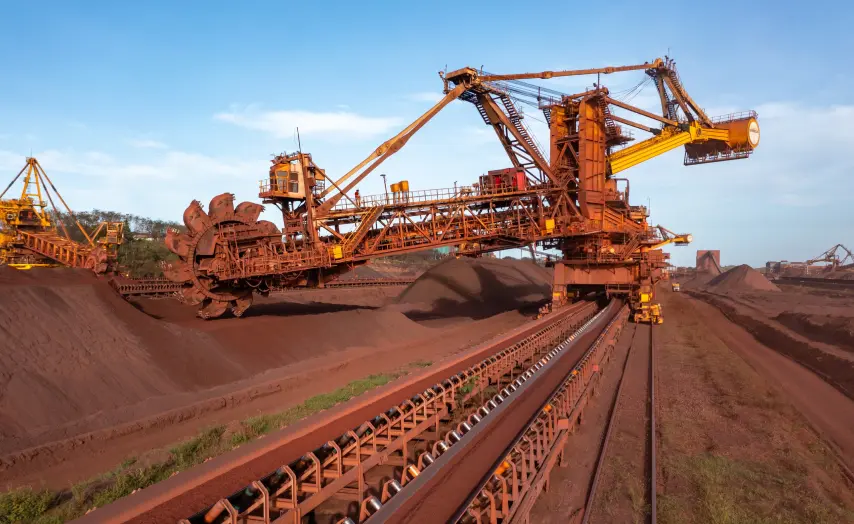
Using a truckless mining system, conveyor belts handle ore, cutting fuel use and reducing emissions. S11D’s ore features iron content above 66%, much higher than the industry standard, which appeals to steelmakers seeking to cut processing costs and comply with tightening emissions rules.
Meanwhile, Brucutu benefits from ongoing improvements after Brazil’s high-profile dam failures. Enhanced monitoring and partially dry ore processing at Brucutu means less environmental risk and more operational uptime, contributing about 30 million tons to Vale’s annual output.
Vale’s increased reliability and operational efficiency at these sites confirm the group’s ability to manage regulatory and technical challenges while keeping costs in check.
Vale’s quarterly numbers echo a wider reality. Brazil stands as the world’s second-largest supplier of iron ore, just behind Australia. Output decisions in Brazil hold major consequences for global construction and manufacturing supply chains.
The difference between production and sales signals a period of market adjustment, where pricing power shifts and logistics capacity tests the entire sector’s resilience.
Market analysts now watch if Vale’s growth in output can weather softer prices in 2025. The company’s heavy bets on operational excellence, inventory flexibility, and premium high-grade ore suggest a focus on long-term market share for business stability.
Industry participants, customers, and investors should take note: Vale’s production moves affect commodity flows, trade balances, and resource strategies across continents.
More: Brazil news in English, every day from The Rio Times.
Live Market IntelligenceBrazil — Live Market Board
Rio Times · Live Market Intelligence
Brazil — Live Market Board
+0.46%
183,827.59
+0.46%
65,071.30
+0.20%
11,055.91
-0.73%
2,782,561
-0.59%
2,558.92
-0.79%
60,220.45
+0.32%
| Instrument | Last | Change | YoY | Prev. | High | Low | Volume |
|---|---|---|---|---|---|---|---|
| IBOV | 183,827.59 | +0.46% | +21.85% | 182,991.13 | 168,310 | 167,142 | — |
| USD/BRL | 5.16 | +0.01% | -5.13% | 5.16 | 5.18 | 5.14 | — |
| SELIC | 14.00% | — | — | — | — | — | |
| PETR4 | 41.64 | -0.05% | +35.19% | 41.66 | 41.97 | 41.15 | 41,499,400 |
| VALE3 | 72.97 | +0.83% | +30.75% | 72.37 | 73.54 | 72.66 | 17,658,000 |
| ITUB4 | 38.60 | -1.03% | +4.57% | 39.00 | 39.34 | 38.39 | 29,487,800 |
| BBDC4 | 16.85 | +0.36% | +3.50% | 16.79 | 16.90 | 16.67 | 19,416,900 |
| BBAS3 | 19.37 | +0.47% | +0.73% | 19.28 | 19.44 | 19.16 | 11,069,200 |
| B3SA3 | 14.26 | -0.21% | +12.73% | 14.29 | 14.47 | 14.11 | 33,037,800 |
| ABEV3 | 14.89 | -0.80% | +21.91% | 15.01 | 15.07 | 14.81 | 16,453,100 |
| WEGE3 | 47.59 | +0.49% | +29.99% | 47.36 | 48.08 | 47.36 | 3,364,600 |
| PRIO3 | 59.14 | -0.19% | +50.67% | 59.25 | 59.81 | 58.74 | 3,325,600 |
| SUZB3 | 41.33 | +2.35% | -23.55% | 40.38 | 41.48 | 40.35 | 3,914,900 |
| RENT3 | 34.68 | -0.09% | +0.84% | 34.71 | 34.96 | 34.35 | 7,979,100 |
| AZZA3 | 15.89 | -2.63% | -53.76% | 16.32 | 16.42 | 15.82 | 1,330,300 |
| CSNA3 | 4.30 | +0.47% | -42.65% | 4.28 | 4.41 | 4.26 | 10,076,100 |
| GGBR4 | 24.69 | +2.19% | +51.38% | 24.16 | 24.85 | 24.18 | 7,047,600 |
| ENEV3 | 24.21 | -1.38% | +70.49% | 24.55 | 24.64 | 23.99 | 9,297,000 |
This article was produced by The Rio Times’ automated newsroom system. How we use AI · Report an error
LatAm Markets: Live Signals → — real-time movers, turnover leaders and FX across Latin America.
Read More from The Rio Times