
SOUTH AFRICA · ANALYSIS
Key Facts
- —What is happening South Africa’s Home Affairs withdrew a directive that had opened asylum applications to people who entered irregularly, after violence in Durban and Soweto.
- —Why it matters The Constitutional Court ruling of 7 July 2026 remains binding, so Home Affairs must still find a way to accept asylum claims without triggering further unrest.
- —The numbers Soweto police are investigating nine cases of malicious damage to property, three of common assault and one of public violence from the 8 October protests.
- —Who is who The Director-General of Home Affairs issued the directive on 28 September 2026 and withdrew it on 9 October, reportedly without the minister’s knowledge; Cyril Ramaphosa is President.
- —What to watch Any new directive will signal how the government balances court compliance with public order.
- —What it means for you US investors and travellers should expect continued localised unrest risk in Durban, Soweto and near refugee reception offices, with possible disruption to logistics and staff movement.
South Africa asylum seekers are caught between a binding Constitutional Court ruling and a withdrawn Home Affairs directive that sparked violence in October 2026. For US readers, the episode shows how quickly migration politics can disrupt operations in a major emerging market.
South Africa is a key destination for foreign investment, but it also carries a long history of anti-migrant tension. This analysis explains what the court actually decided, why the directive failed, and what the unrest means for business and travel. It draws on the Africa Intelligence Brief dated 10 October 2026.
What the Constitutional Court Actually Decided
On 7 July 2026, the Constitutional Court ruled in the Scalabrini Centre of Cape Town matter that parts of South Africa’s refugee framework were unconstitutional. The court found that procedural barriers could prevent a person from accessing the asylum system before the substance of the claim was assessed.
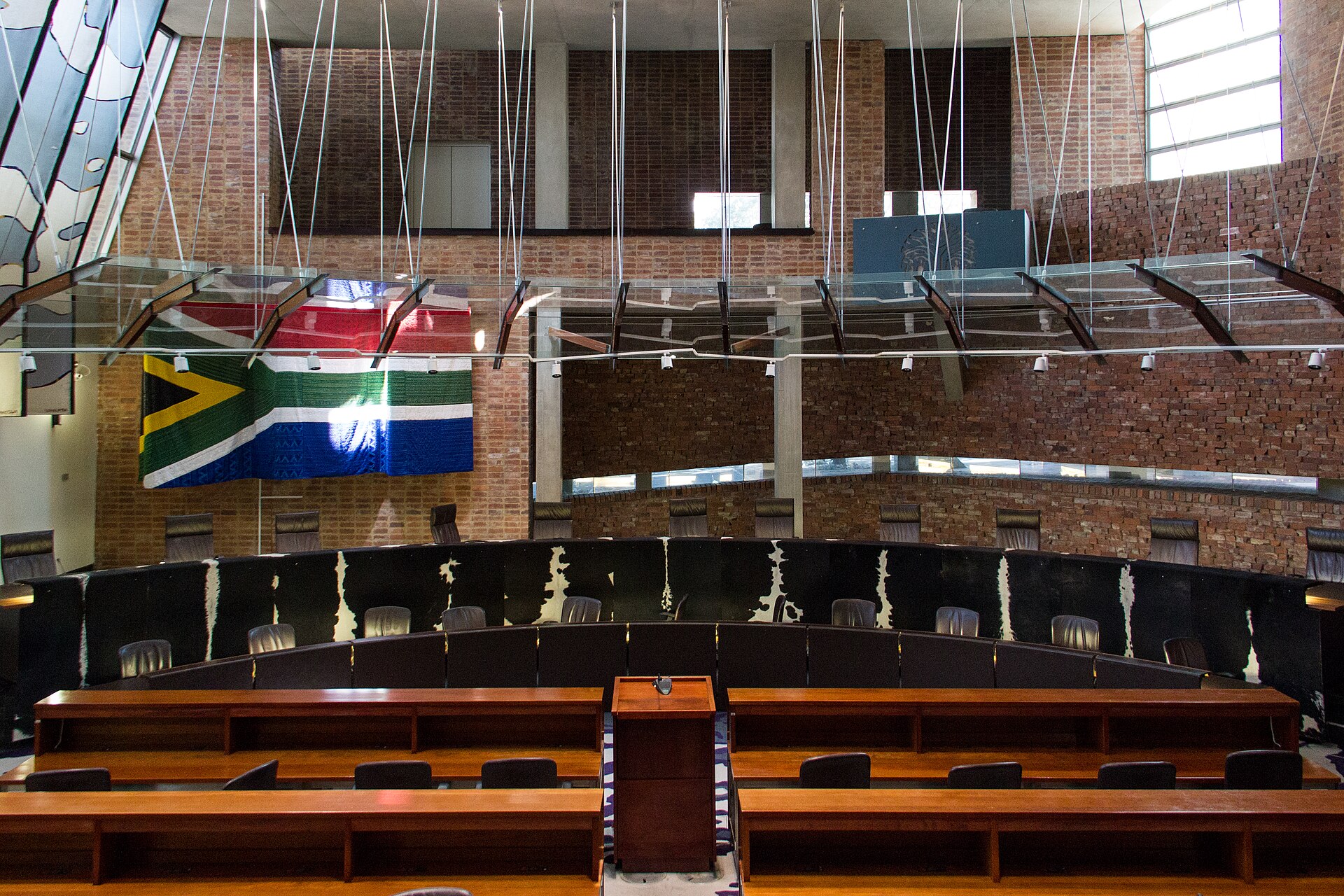
The ruling addressed three specific barriers: entering South Africa irregularly, failing to possess an asylum transit visa, and failing to report to an immigration officer within the prescribed period. The court’s practical legal principle is that these failures cannot, by themselves, prevent an applicant from lodging an asylum claim. The state must provide access to the process and assess the claim on its merits.
Crucially, the judgment does not automatically confer refugee status, permanent residence, citizenship or an unconditional right to remain in South Africa. Each application still requires assessment under the refugee system, and an unsuccessful applicant can remain subject to immigration enforcement. The ruling changed the gateway to the process, not the outcome of every claim.
The Directive That Sparked Violence
On 28 September 2026, the Director-General of Home Affairs issued, as an operational measure, a directive to refugee reception offices to operationalise the Constitutional Court’s judgment. The directive instructed offices to accept asylum applications that previously might have been rejected at the door because the applicant had entered unlawfully, lacked the required transit documentation, or had not reported within the prescribed time.
Home Affairs said the directive was an operational measure designed to implement the court order, not to create a new immigration status. Within days, however, reception offices were overwhelmed. In its statement of 9 October, Home Affairs said its officials had been placed at risk and that “serious threats to public safety and order had emerged.”
The department announced that it would develop a new operational approach. The withdrawal did not suspend or overturn the Constitutional Court’s judgment. Home Affairs remains legally bound to comply with the ruling, meaning it cannot simply reinstate the old procedural exclusions.
Why the Directive Collided With Local Anger
The directive collided with three existing pressures. First, a sharp increase in visible demand at reception offices: once applicants understood that previous procedural obstacles could no longer automatically block them, large numbers went to refugee reception offices. The department said offices were overwhelmed within days.
Second, a longstanding political narrative linking migration to crime, jobs and pressure on public services. The court’s procedural ruling was widely interpreted by opponents as opening the door to “illegal migrants,” even though it did not grant status automatically. Third, existing anti-migrant mobilisation: protesters gathered outside the Durban refugee reception centre, complaining that foreigners were being favoured, and the protests later spread to Soweto in Johannesburg.
On 8 October 2026, violence in Durban and Soweto included burned vehicles, looting and clashes. The political and legal distinction was crucial: the court protected access to an application process, while protesters treated the implementation as evidence that the government was permitting unrestricted settlement.
How the Asylum Process Works in Principle
A person seeking protection must approach a designated Refugee Reception Office and lodge an application. The process is not equivalent to receiving a visa or permanent residence. The key stages are: access to the application system, registration and documentation, substantive assessment, decision and review, and immigration consequences.
After the Constitutional Court ruling, irregular entry, lack of a transit visa or late reporting cannot automatically prevent the application from being received. Home Affairs records the applicant and issues the relevant documentation for the pending claim, subject to the department’s operational procedures. Officials then assess whether the applicant meets the legal definition of a refugee or otherwise qualifies for protection.
A claim may be accepted or rejected, with statutory review or appeal mechanisms available. A rejected claim does not create a right to remain indefinitely; the person may become liable to ordinary immigration enforcement. The Constitutional Court ruling changed the gateway to the process, not the outcome of every claim. That distinction was central to Home Affairs’ public explanation after the unrest.
Business and Investor Risks
For companies operating in South Africa, the episode creates four immediate risk categories. Operational disruption: reception-office closures, road blockades, damaged vehicles and localised unrest can interrupt logistics and staff movement. Security costs: companies may need additional transport controls, site security, employee communication and business-continuity measures.
Reputational exposure: firms employing migrants or serving migrant communities can become politically visible, particularly in retail, logistics, construction, hospitality and informal-market supply chains. Regulatory uncertainty: the government must now design a replacement process that complies with the court ruling while controlling demand at reception offices.
The legal uncertainty is narrower than the political uncertainty. The court ruling remains binding, but Home Affairs had not yet announced the replacement operational arrangements in the material available through 10 October 2026. Companies should therefore distinguish between a person’s right to have an asylum claim received and assessed, a person’s right to work or remain permanently, and the employer’s separate obligations under immigration, labour and compliance law.
For US-listed investors, exposure is most relevant where a company has South African staff, stores, mines, factories, warehouses, banks, telecom infrastructure or consumer operations. A US listing does not insulate an issuer from South African disruptions: the risks would normally appear through operating interruptions, security expenditure, insurance claims, lost trading days, supply-chain delays or changes in local regulation. Any investment analysis should use the company’s latest filing and investor-relations disclosures for South African revenue, assets, employees and country-risk language rather than infer exposure from the listing venue alone.
What It Means for the United States and Latin America
The broad legal principle is comparable to the US distinction between access to an asylum process and ultimate eligibility for protection: allowing a person to present a claim does not mean the claim will succeed. The South African controversy illustrates how quickly that procedural distinction can disappear in public debate.
The systems are not interchangeable. South Africa’s immediate dispute concerns access through Home Affairs refugee reception offices and the consequences of irregular entry or missed reporting requirements. The United States operates a different statutory, border, detention and adjudication framework. Comparisons should therefore focus on process design, not on assuming that a South African court ruling creates a US-style automatic right to remain.
For Latin American readers, the episode offers a cautionary parallel. Several Latin American countries host large Venezuelan and Haitian migrant populations and face similar tensions between legal access to asylum procedures and public pressure for stricter enforcement. South Africa’s experience shows that even a court ruling protecting procedural access can trigger backlash if administrative capacity is weak and migration is politicised.
Scenarios: What Could Stabilise or Tip the Crisis
One stabilising scenario is that Home Affairs develops a phased intake system with clear appointment scheduling, security at reception offices, and public communication that distinguishes access to a process from automatic residence. If the department can show that claims are being assessed individually and rejected claims lead to enforcement, the political temperature could cool.
A tipping scenario is that the replacement approach is perceived as either too permissive or too restrictive. If offices remain overwhelmed, anti-migrant groups could mobilise again. If the department imposes new administrative hurdles that contradict the court ruling, litigation could resume and the government could face contempt proceedings. Either outcome would prolong uncertainty for businesses and travellers.
A third scenario is that the unrest spreads beyond Durban and Soweto to other urban centres with large migrant populations. The October incidents reportedly included attacks on small foreign-run stores and vehicles, not only confrontations at refugee offices. That pattern could recur if economic conditions worsen or if political actors use migration as a campaign issue ahead of future elections.
What It Means for You
If you are a US investor with exposure to South Africa, review your portfolio companies’ latest filings for South African revenue, assets and employees. Pay attention to any mention of operational disruption, security costs or regulatory uncertainty in their risk factors. The unrest is localised but the underlying drivers are national, so do not assume that a company with no presence in Durban or Soweto is insulated.
If you are a traveller, avoid protests, counter-protests and large gatherings, even when they appear peaceful. Monitor local police, municipal and transport notices before travelling. Use secure transport and avoid spontaneous route changes through affected townships. Keep identification and immigration documents available. Do not photograph crowds, police operations or damaged property. Maintain a contingency plan for airport, hotel and business transfers.
The principal travel risk is not that every foreign visitor will be treated as an asylum seeker or migrant. It is that unrest can spread quickly, disrupt roads and public transport, and turn nationality or perceived foreignness into a targeting factor. Ask employers or accommodation providers about localised risks rather than relying only on national travel advisories.
What Is Not Known
As of 10 October 2026, Home Affairs had not announced a replacement operational approach. The department said it would embark on a fresh process to find an operational approach that complies with the court order, but gave no timeline or details.
It is also not known how many asylum applications were lodged during the period the directive was in force, or how many people were turned away after the withdrawal. The available official material does not provide a verified October 2026 national total for asylum applications, asylum-seeker visas, or refugee permits.
Finally, it is not known whether the unrest will lead to legislative changes. Any legislative amendments would require parliamentary consideration.
What to Watch
Watch for any announcement from Home Affairs on a replacement operational approach. The timing and content of that announcement will signal whether the government can balance court compliance with public order. If the announcement is delayed beyond a few weeks, expect continued legal and political pressure.
Watch for further unrest in Durban, Soweto and other urban centres. The October incidents followed a pattern of anti-migrant mobilisation that has recurred in South Africa. Any new protests near refugee reception offices or migrant-owned businesses should be treated as elevated-risk events.
Watch for parliamentary action on migration policy. Any legislative process will be a key indicator of the government’s longer-term direction on migration policy.
Watch for company disclosures from US-listed firms with South African operations. If the unrest continues or spreads, issuers may update their risk factors or provide operational updates. Those disclosures will be the most reliable source of information on business impact.
Frequently Asked Questions
What did South Africa’s Constitutional Court rule on asylum seekers?
On 7 July 2026, the Constitutional Court ruled that irregular entry, lack of an asylum transit visa, or failure to report within five days cannot automatically prevent a person from lodging an asylum claim. The state must provide access to the process and assess each claim on its merits. The ruling does not automatically confer refugee status or permanent residence.
Why did South Africa withdraw its asylum directive in October 2026?
Home Affairs withdrew the directive on 9 October 2026 after refugee reception offices were overwhelmed and anti-migrant protests turned violent in Durban and Soweto. The department said the directive was designed to implement the court order, not to create a new immigration status. The withdrawal did not overturn the Constitutional Court ruling.
Does the withdrawn directive mean asylum seekers can no longer apply in South Africa?
No. The Constitutional Court ruling remains binding, so Home Affairs cannot simply reinstate the old procedural exclusions. The department must develop a new operational approach that complies with the court order while controlling demand at reception offices.
How does South Africa’s asylum process work?
A person must approach a designated Refugee Reception Office and lodge an application. After the court ruling, irregular entry or missed deadlines cannot automatically block the application. Officials then assess whether the applicant meets the legal definition of a refugee. A rejected claim does not create a right to remain indefinitely.
What are the risks for US investors in South Africa after the unrest?
The main risks are operational disruption, security costs, reputational exposure and regulatory uncertainty. Companies with South African staff, stores, mines, factories or logistics operations could face interruptions from road blockades, damaged vehicles or localised unrest. Investors should review company filings for South African exposure and country-risk language.
Is it safe to travel to South Africa after the October 2026 unrest?
The unrest was concentrated in parts of Durban and Soweto, but the underlying drivers are national. Travellers should avoid protests, monitor local notices, use secure transport and keep identification available. The principal risk is that unrest can spread quickly and disrupt roads or public transport.
Who issued and withdrew South Africa’s asylum directive?
The Director-General of Home Affairs issued the directive on 28 September 2026 as an operational measure and withdrew it on 9 October 2026. President Cyril Ramaphosa is the head of state and government. The Constitutional Court ruling binds the department regardless of who holds office.
Sources: riotimesonline.com, gov.za, dw.com, dw.com, iol.co.za, ewn.co.za. Retrieved 10 October 2026.
This article was produced by The Rio Times’ automated newsroom system. How we use AI · Report an error · Editorial responsibility: Matthias Camenzind, Editor-in-Chief