Three Sahel Juntas Open Their Own Parliament as the ECOWAS Split Deepens
Africa · Geopolitics
Key Facts
- —The split Mali, Burkina Faso and Niger, all junta-ruled, left ECOWAS in January 2025 and formed the AES confederation.
- —The institution The AES held its first parliamentary session in Niamey in late August, with deputies appointed, not elected.
- —The patron Russia supplies fighters and, since mid-2026, Shahed-type drones to the juntas’ war on jihadist insurgents.
- —The pragmatists Mali and Ivory Coast agreed on their border route in August, with a treaty expected to follow.
- —The catch The AES zone holds uranium, gold and lithium, plus migration routes, but security remains elusive.
West Africa’s fifty-year-old club lost three members without a war or a vote. The Sahel split is one of the continent’s most consequential regional shifts since the Cold War ended.
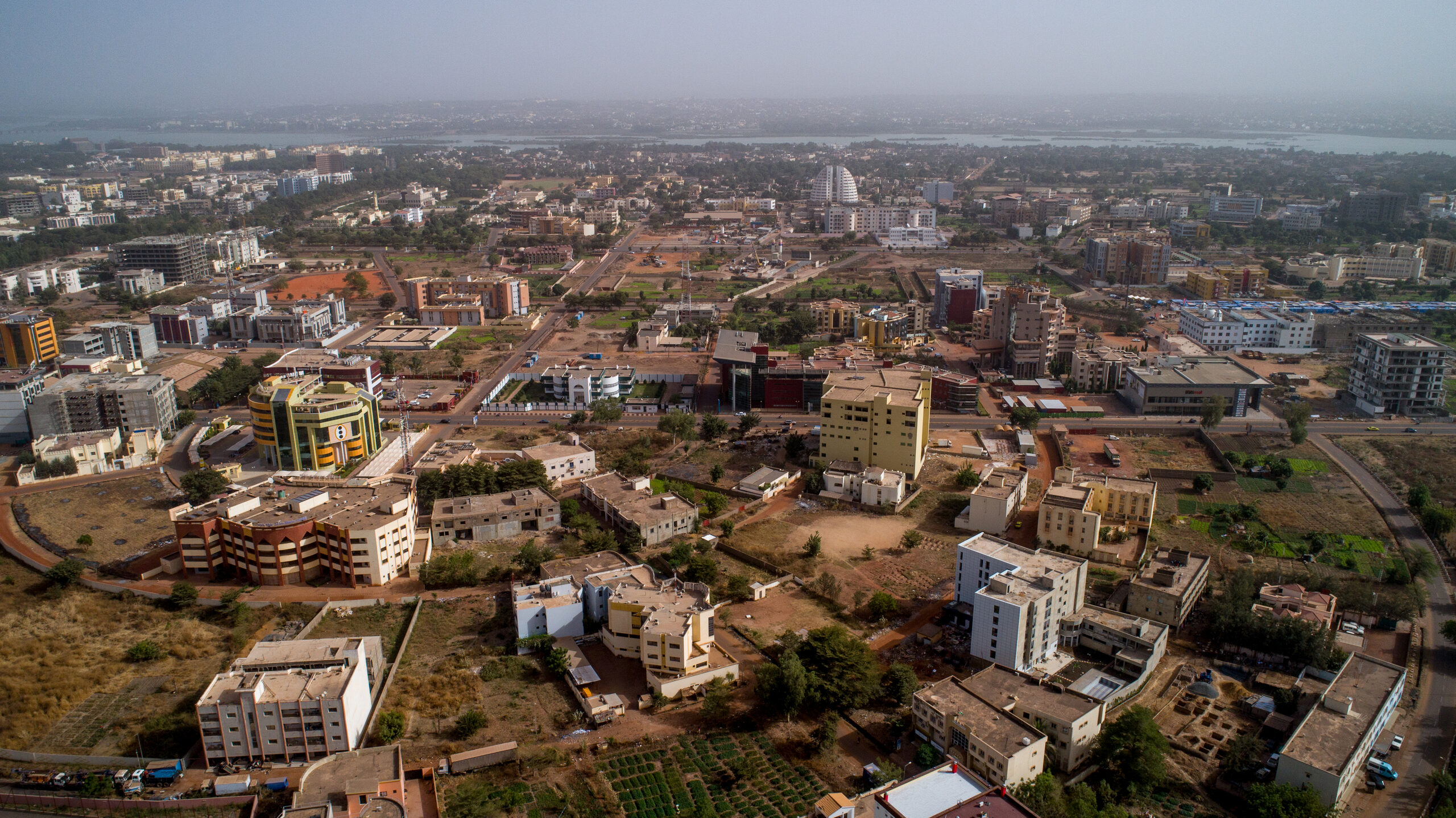
It happened in stages, not overnight.
How three coups became a confederation
From 2020 to 2023, soldiers took power in Mali, Burkina Faso, and Niger. Each time they said elected leaders had failed to stop jihadist attacks.
The regional bloc, ECOWAS (the Economic Community of West African States), threatened intervention in Niger and imposed sanctions. The three juntas announced their exit together on 28 January 2024.
It took legal effect exactly one year later, on 29 January 2025.
The three had already signed a mutual-defence pact, the Liptako-Gourma Charter, in September 2023. In July 2024 they upgraded it into a confederation, the Alliance of Sahel States (AES), with its own treaty.
The Russian factor
Where France and the UN were pushed out, Russia moved in — first with Africa Corps personnel, later with hardware. Shahed-136-type attack drones were confirmed in Mali’s conflict for the first time in mid-2026.
In late August, Russia’s Africa Corps helped Niger’s presidential guard put down a mutiny at a Niamey military base, Russia’s ambassador said. Three guardsmen were killed.
The exchange is straightforward: security assistance for access to gold, uranium and strategic geography. Moscow gains influence without occupation; the juntas gain survival without elections.
ECOWAS after the exit
The bloc, now 12 members instead of 15, chose adaptation over confrontation. It quietly lifted sanctions, and borders stayed mostly open under a transition deal.
ECOWAS said citizens of the three states could keep travelling visa-free for now. Their goods also kept preferential access to ECOWAS markets during the transition.
In August, Mali and Ivory Coast — a junta and a coastal democracy — agreed on their shared border’s final route. Both governments aim to sign a formal delimitation treaty before the end of 2026.
That deal is the region’s future in miniature: political distance, practical cooperation. Trade corridors to the ports of Abidjan, Lomé and Cotonou are too valuable for either side to disrupt.
What the split means for security
The insurgencies have not been defeated, and attacks in the tri-border zone remain frequent. Jihadist groups now face a less coordinated but more heavily armed opponent.
For coastal states, the risk is southward drift: fighters, weapons and displacement moving toward Ghana, Togo, Bénin and Ivory Coast. Morocco’s arrests of ten suspects in an ISIS-Sahel plot this summer showed how far recruitment networks reach.
Life under the juntas
The juntas govern through transition charters with shifting deadlines. Media space has narrowed, and French broadcasters have been forced out.
Mali’s transitional leader, General Assimi Goïta, was given a five-year, renewable mandate by a national forum in July 2025, not an election. Niger’s leader, General Abdourahamane Tiani, had his own transition term extended by a similar national conference in February 2025.
For ordinary Sahelians, the visible changes are more checkpoints, costlier imports, and conscription of young men.
The AES institutions, explained
Beyond the parliament, the AES has built the trappings of statehood. In January 2025 the three countries launched a joint biometric passport.
In April 2025 they imposed a 0.5% import levy on goods entering from outside the bloc, including from ECOWAS states. In December 2025 they inaugurated a roughly 5,000-strong joint military force, with its command post in Niamey.
Burkina Faso’s Ibrahim Traoré took over the AES’s rotating chairmanship that same month, succeeding Mali’s Goïta.
The minerals underneath
Niger’s uranium, Mali’s gold and regional lithium prospects are why capitals far away watch the split closely. The AES states are renegotiating mining codes, with Russian and Chinese firms often first in the new queue.
Gold is the juntas’ cash machine; Mali is among Africa’s largest producers. Artisanal sites across the tri-border zone finance states, insurgents and smugglers alike, researchers say.
Lithium deposits are mostly still unmined, but contracts are signed. Whether mineral revenue builds administrations or mainly funds security forces is a question the next budgets will answer.
The coastal states’ insurance policy
Ghana, Ivory Coast, Togo and Bénin are now the front line, absorbing both fighters’ attention and refugees’ needs. They are building northern defences with Western training and drones.
Their strategy is engagement without endorsement: trade with the juntas, intelligence-sharing with Paris and Washington, and public silence on the confederation’s legitimacy.
What the split means for investors
The AES states left the West African currency union’s fiscal rules along with ECOWAS. The confederation now talks of its own monetary arrangements.
Mining investors price three distinct jurisdictions where one framework once applied.
Analysts describe a two-speed region. Coastal economies attract diversified capital, while the Sahel offers higher returns for investors who accept higher political risk.
Inside Niamey’s new chamber
Niger’s state news agency reported that the AES’s confederal parliament held its inaugural session in Niamey from 24 to 29 August 2026. Independent confirmation of the exact dates was not immediately available.
Deputies are designated by the three countries’ transitional legislatures, not elected by voters. No seat total or budget has been published.
Its supporters call it the embryo of a Sahelian state. Sceptics call a parliament without a budget a stage set, not an institution.
The test cases are already queued: new mining codes, monetary ambitions, and coordinating three armies that still answer to separate commands. Niamey was chosen deliberately, as Niger’s capital and the site of the strongest Russian presence.
What to watch
Analysts will watch whether the AES parliament gains real budget power, and whether drone warfare spreads beyond Mali. They will also watch whether ECOWAS and the AES formalise their current coexistence into a lasting arrangement.
The juntas promised security and sovereignty. Three years on, they have delivered the second more clearly than the first.
Connected Coverage
The Sahel Juntas Open a Parliament in Niamey
A Sahel Junta and a Coastal Democracy Just Agreed Where Their Border Runs
Russian-Made Shahed-136 Drones Hit Africa’s Sahel Conflict
The Big Picture
Africa: The New Scramble — why the world’s powers are competing for the continent
Latest developments
- Suho Plays São Paulo on 20 December 2026 — 13 October 2026
- Mazatlán Marathon on 6 December 2026 — 13 October 2026
- Ghana Cedi Falls 11% Against the US Dollar This Year — 13 October 2026
- French Montana Plays Cape Town on 4 December — 13 October 2026
This article was produced by The Rio Times’ automated newsroom system. How we use AI · Report an error · Editorial responsibility: Matthias Camenzind, Editor-in-Chief