Rejection of Politicians Rises in Chile After Three Months of Social Crisis
RIO DE JANEIRO, BRAZIL – Three months after the October 18th social outburst in Chile, which combined massive peaceful protests with unprecedented levels of violence, the repudiation of the political world set a record and devastated all sectors.
Distrust of institutions has increased dramatically, according to a recent survey by the Center for Public Studies (CEP). Only seven percent of the population trusts businesses, six percent the Prosecutor’s Office, five percent the government, three percent Congress and two percent political parties, both the current majority and the left-wing opposition.
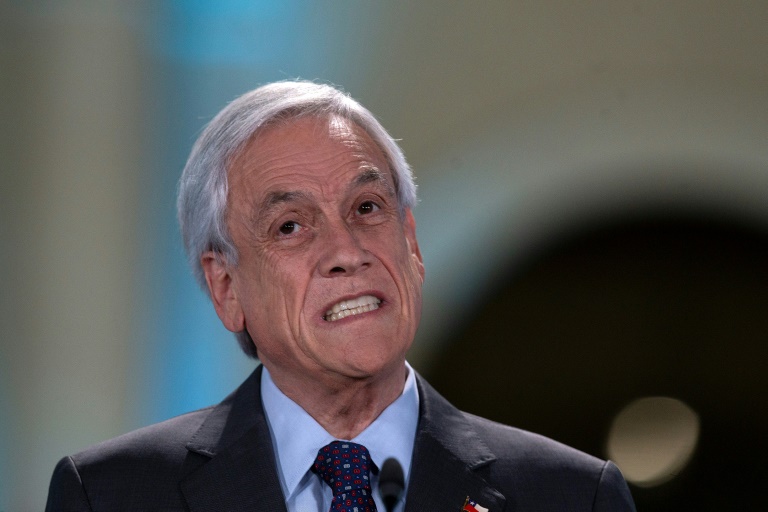
President Sebastián Piñera’s popularity has dropped to its lowest level during the democracy: Only six percent of the people approve of the way he leads the administration.
The X-ray of this changed country represents a major challenge for officials, as it will be the political leaders themselves and the institutions that will be required to lead a complex process to emerge from the crisis, which includes a plebiscite on a new constitution in April.
“The population believes that everything has been conducted very poorly,” says Lucía Dammert, an academic at the University of Santiago.
Regarding President Piñera’s low popularity, she said: “It’s hard to know if people are dissatisfied with him for not having been able to control public order or for trying to control [the protests] through violence. Some say that support for the president has dropped to six percent because of repression, but we still can’t say that,” she said.

For Dammert, however, the opinion polls released in recent weeks (including that of the CEP) lead to the conclusion that “people believe that the Carabineros [militarized police] were not up to the task”.
And she continues: “The feeling after those three months is that the Carabineros, if they don’t have tear gas, water with chemicals or projectiles, don’t have an alternative plan, which confirms the need for a deep reform of the security system”.
The incidents of violence have decreased over the past three months. According to official figures, there has been a considerable drop in events considered serious. After reaching 350 per day at the beginning of the crisis (as occurred on October 20th, 2019), these incidents fell to ten nationwide (on January 10th).
But not a single day goes by without new detainees. Since the demonstrations began, 22,747 people have been arrested, 1,096 of them in 2020. Of the total, 1,615 have been remanded in custody.
On the other hand, the authorities report wounded agents daily: 3,821 throughout the country since October 18th, 326 of them this year. In these three months there have been about 350 attacks on Carabineros barracks, mainly in the capital.
In the municipality of Renca, located in a poor region of Santiago, the same police station was attacked 20 times. Meanwhile, the National Institute of Human Rights (INDH) counted 3,649 civilians injured – 405 in the eyes – and brought 1,080 lawsuits in the courts, five for murder.
The public disorder, however, does not reach the October and November levels. According to Dammert, one of the factors influencing the reduction of protests “is the economic climate, which is affecting people. “You go to a public notary’s office and it’s full of workers signing resignation papers. The increase in mobile trade leaves countries like Peru as legal havens compared to what happens in Chile,” she says.
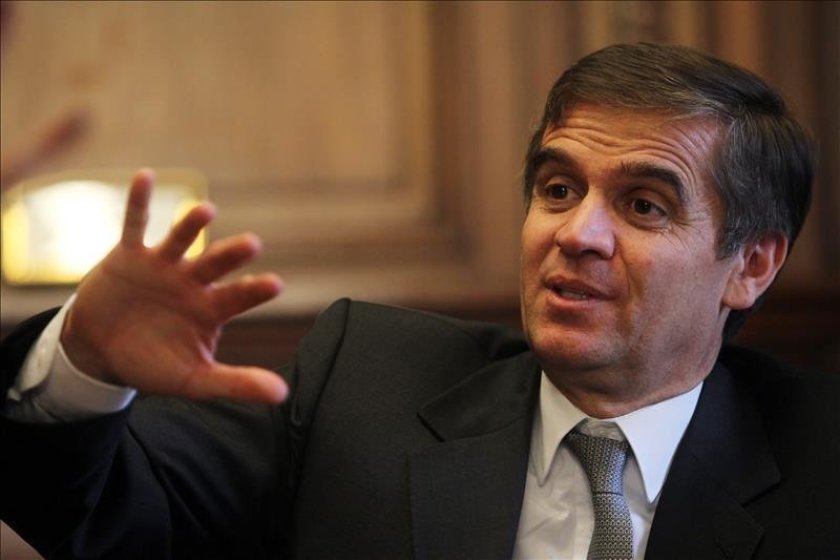
Political and social turbulence has also affected the Chilean economy. Rodrigo Vergara, former president of the Central Bank, explains that the effect of the social explosion “was significant in the real economy”.
And he exemplifies: “Before October 18th, the economy was expected to grow in the fourth quarter by about three percent. But that growth will be between -2 and -2.5 percent, that is, it will see a significant drop”.
The economist says the forecast was that Chile would grow about 2.5 percent in 2019, but after the protests, “the expected growth is around one percent or just over. That is, the last two and a half months of the year showed a drop in total 2019 growth of about one and a half points.
Vergara reports that all components of the economy are dropping, mainly investment. Among the most affected sectors, he mentions trade, tourism, and services.
The former president of the Central Bank also said that with the lower growth and higher social demands – many of which have been met – Chile will have a larger fiscal deficit in 2020.
“A tax reform has already been approved to finance part of this, and new tax efforts will probably be needed to finance the highest permanent expenditures and reduce the biggest fiscal deficit,” he says.
But the economist points to another aspect: The effects of the social explosion on Chile’s financial assets were much more moderate than expected, “It’s true that we had a currency depreciation of about seven percent, but it wasn’t uncontrolled. Interest rates, on the other hand, remained at similar levels to those before the crisis”.
Vergara adds that the country risk has increased relatively little “given the social uprising that has taken place”: it is less than 15 basis points higher than it was before October 18th (it was at 31 and now revolves around 45).
“We remain the Latin American country with the best access to international markets,” says the economist. “The view we have of Chile out there has remained relatively positive, but obviously it will depend on what happens from now on”.
More: Latin America news in English, every day from The Rio Times.
This article was produced by The Rio Times’ automated newsroom system. How we use AI · Report an error · Editorial responsibility: Matthias Camenzind, Editor-in-Chief