Dominican Mining Is Erasing the Caribbean’s Greatest Cave Art
Heritage
Key Facts
—The site. Fifty-seven caves near San Cristóbal, twenty-five with rock art, more than 4,000 images.
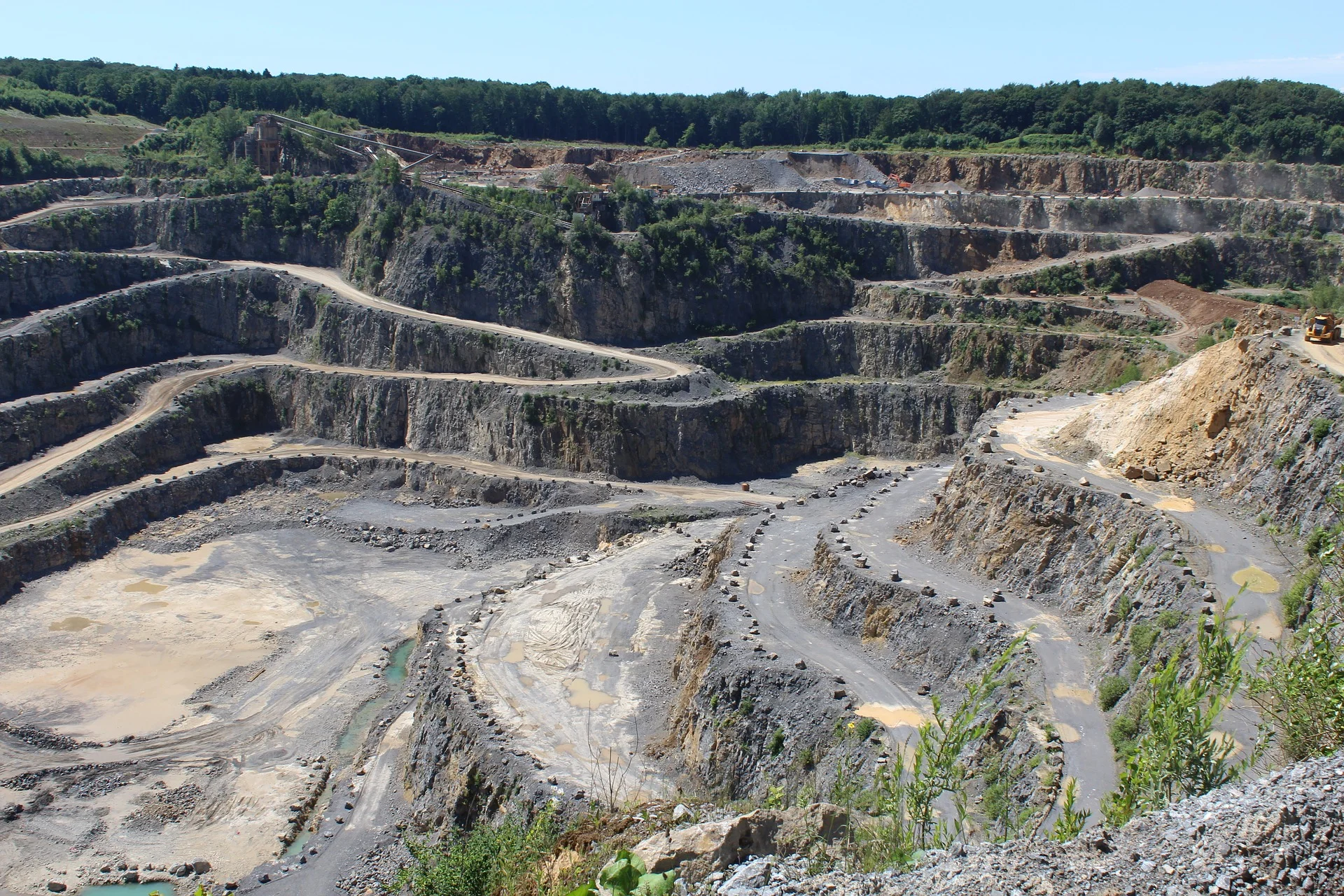
—The damage. Of 24 caves whose entrances were confirmed, 9 were harmed by mining and 7 by quarrying.
—The burial. A commission confirmed on 26 May that a cave catalogued in 1987 had been covered over.
—The alternative. A commissioned expert mapped the same limestone west of the reserve across at least 110 km².
—The water. He warned that roughly 30% of blasting explosive stays in the subsoil and reaches groundwater.
—The paradox. Weeks after the burial, the Senate advanced a bill naming the reserve the rock-art capital.
In May a cave containing indigenous rock art, catalogued by Dominican speleologists in 1987, was buried under quarry spoil. In June the Senate voted to declare the reserve that contains it the country’s rock-art capital, and the president declared land inside the Pomier caves of public utility.
Both things happened. Neither cancels the other.
Thirty kilometres from Santo Domingo, in the province of San Cristóbal, sits the largest concentration of prehistoric rock art in the Caribbean. The state has known this for a very long time.
What is in the Pomier caves
The reserve holds fifty-seven caves, a count revised upward when an expert found some connected and others uncatalogued. Twenty-five of them carry rock art, more than four thousand painted and carved images.
Two peoples made them, the Igneri and the Taíno. Radiocarbon work by Dominican and Spanish specialists, with the University of Oxford, has now dated the paintings.
They were made between the eleventh century and the very end of the fifteenth, running into the years when Taínos first met Europeans. The tourist literature that calls this art two thousand years old is simply out of date.
The corrected version is more arresting, not less. Some of these images were painted by people who would live to see Spanish sails, and Pomier served as a ceremonial centre across four or five centuries.
The British were told about this a very long time ago. A consul praised the caves in 1849, and an account was published in London two years later.
The report the state paid for and did not follow
In 2024 the environment ministry brought in George Veni, an American cave scientist, after one of the mining firms working the site submitted a remediation plan involving fresh blasting. The deputy minister who requested help said plainly that he lacked the competence to judge it.
Veni’s preliminary findings sit on the ministry’s own website. Of the twenty-four caves whose entrances he confirmed, nine had been damaged by mining and seven by quarry operations.
Sixteen of twenty-four is two thirds, and some of the destroyed caves held pictographs and petroglyphs that no longer exist. That figure has been public for two years.
The same report supplied the solution. Hydrogeological maps, Veni noted, show the identical limestone to the west across at least a hundred and ten square kilometres, a far larger area than the one being worked.
The quarry does not have to be here. It could move, subject to impact studies, and the country would keep both its cement and its caves.
The part that is really about drinking water
Here is what almost no coverage mentions. Veni’s sharpest warning was not about archaeology at all, it concerned the water supply of a province of nearly seven hundred thousand people.
The water at La Toma in San Cristóbal has turned white on occasions, he observed, as lime reaches the groundwater and eventually the surface. Blasting throws up dust, and that dust travels down boreholes into the subsoil.
Then the figure that ought to have ended the argument. Around thirty percent of explosive material, he wrote, remains as residue in the environment and the subsoil, where it contaminates groundwater.
Limestone karst is not ordinary rock, it is the plumbing of an aquifer. Quarrying it is not merely quarrying stone.
Veni asked for tracer studies to map exactly what drains toward La Toma and the other capture points. He also asked that slopes be built up rather than cut, that no wall be extended into the reserve, and that visitors pay more so protection could fund itself.
A ministry that must ask permission
Activists say the cave buried in May, known as the Tándem, was covered by operations linked to a lime company. A commission including ministry officials, the presidential commission for the caves and local residents verified the damage on the twenty-sixth of that month, and no finding of illegality has been made against any firm.
The structural problem is visible in the ministry’s own resolution. Its legal directorate must notify the mining authority to formally request that the concessions be reduced.
Read that again. A protected-areas regulator has to ask a mining regulator to shrink permits already granted inside a national monument.
The site has sat on the country’s tentative list at UNESCO since 2018, and officials speak of a future World Heritage bid. Such a bid requires a state to demonstrate that it protects the property, which is an awkward thing to demonstrate while catalogued caves are being filled in.
Can you visit the Pomier caves?
Yes. The reserve lies about thirty kilometres from Santo Domingo and is open to guided visits, with a lookout above San Cristóbal.
How old is the rock art?
Radiocarbon dating places the paintings between the eleventh and late fifteenth centuries, reaching the period of first contact with Europeans.
Is the mining legal?
Concessions exist and the president has acknowledged that both legal and illegal operations affect the reserve. The environment ministry has moved to have the concessions reduced.
More: Latin America news in English, every day from The Rio Times.
Frequently Asked Questions
How many caves and rock art images are found at the Pomier reserve near San Cristóbal?
The reserve holds fifty-seven caves, twenty-five of which contain rock art with more than four thousand painted and carved images. The artwork was created by two peoples, the Igneri and the Taíno.
What damage has quarrying and mining caused to the Pomier caves?
Of twenty-four caves whose entrances were confirmed, nine were harmed by mining and seven by quarrying. In May, a commission confirmed that a cave catalogued in 1987 had been buried under quarry spoil.
What environmental concern was raised about blasting near the caves?
A commissioned expert warned that roughly thirty percent of blasting explosive stays in the subsoil and reaches groundwater. The same expert also mapped equivalent limestone terrain west of the reserve across at least one hundred and ten square kilometres, suggesting an alternative quarrying location exists.
Connected Coverage
Harvard Ranks the Dominican Republic a Top-20 Growth Economy
This article was produced by The Rio Times’ automated newsroom system. How we use AI · Report an error · Editorial responsibility: Matthias Camenzind, Editor-in-Chief