Cuba Removed Otero Alcántara From Prison. He Has Vanished.
Rule of Law
Key Facts
—The removal. State Security took the artist from Guanajay maximum-security prison on Tuesday 7 July, two days before his sentence ran out.
—The silence. He is not at his family home, not with friends, and has contacted nobody. His whereabouts remain unknown.
—The date. His five-year sentence expires today, 9 July 2026, a date the Supreme Court confirmed in April.
—The anniversary. Saturday is five years since the 11 July protests he was arrested trying to join.
—The count. Prisoners Defenders recorded 1,281 political prisoners in June, the highest figure it has logged.
—The pardon. Havana pardoned 2,010 inmates in April by name in the official gazette. He was not among them.
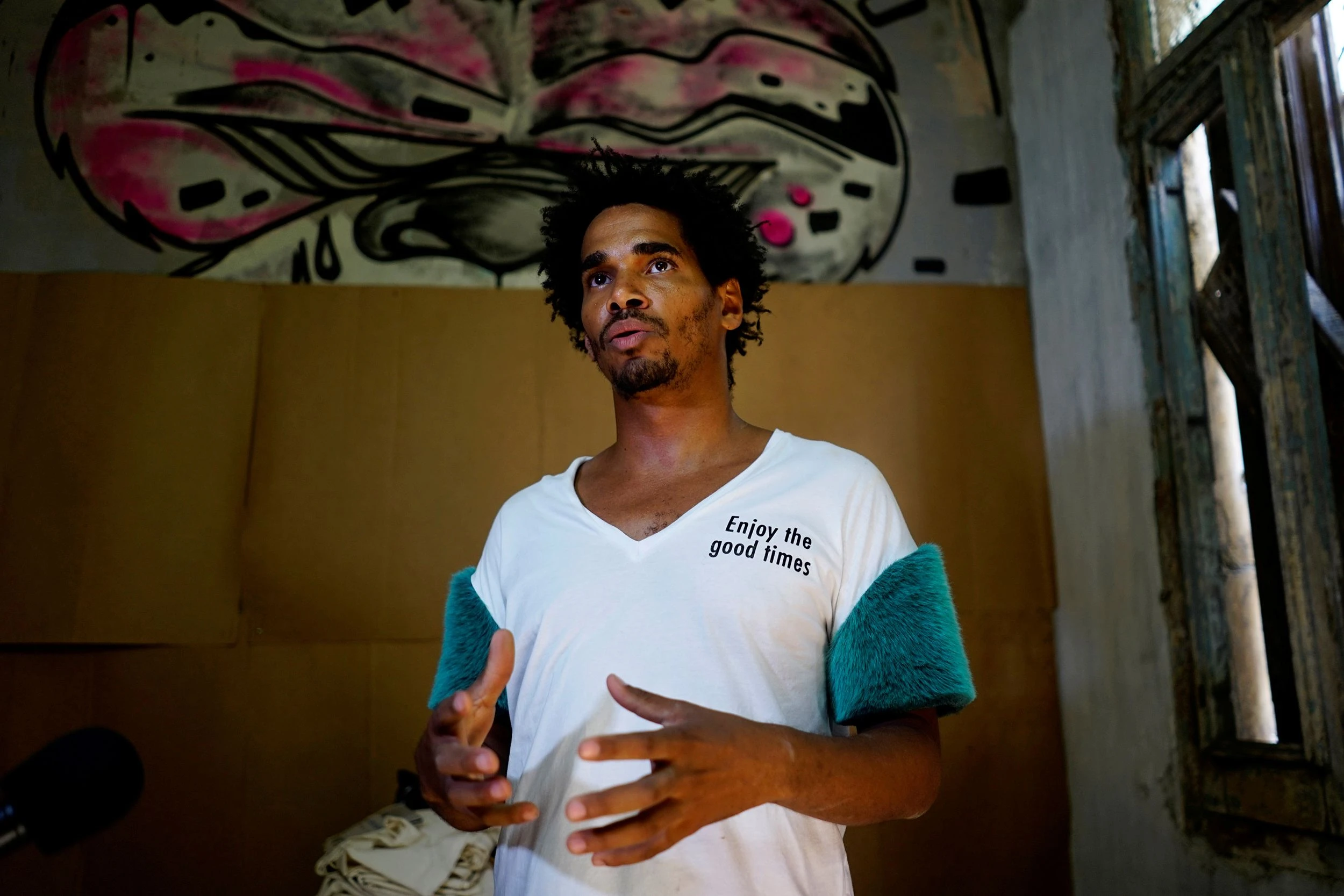
On Tuesday afternoon, Cuban state security agents drove Otero Alcántara out of a maximum-security prison forty kilometres from Havana. He has not been seen since, and today his sentence formally ends.
Do not call this a release. His family have confirmed he is not at the house in El Cerro, and his friends have heard nothing. Human rights lawyers say unofficial accounts place him in state custody at an unnamed address.
The news reached the outside world through other inmates. His international calls had been cut a month earlier, in retaliation for the essays he was smuggling out.
Who Otero Alcántara is, and why the date matters
He is thirty-eight, a visual artist, and co-founder of the San Isidro Movement. That collective of artists and writers formed in 2018 against restrictions on artistic freedom. He also sang on Patria y Vida, the song that became the anthem of Cuba’s largest protests in decades.
He was arrested on the eleventh of July 2021 as he tried to join those protests. A closed-door trial the following June gave him five years for insulting national symbols, contempt and public disorder. The rapper Maykel Osorbo got nine.
Now hold three dates together. He was taken out on the seventh, his sentence expires on the ninth, and Saturday the eleventh marks five years since the demonstrations that put him inside.
A friend of the artist has argued the state simply does not want him at liberty in that window. The calendar makes the argument for her.
Every single day, and not one day less
In April the criminal chamber of Havana’s Supreme Court rejected a habeas corpus petition. It argued the sentence had already been served. The lawyers had counted his pre-trial detention and the good-conduct remission Cuban law normally allows.
That remission runs to roughly two months for each year of a sentence. Across five years it comes to about ten months, and the court granted none of it.
Consider what that insistence implies. A prison system with wide discretion over release chose to hold one artist to the last hour of the last day. Then it removed him from the building before the hour arrived.
There was an escape hatch, and it also closed. In April the government pardoned 2,010 inmates by decree. It published the names in the official gazette and called the measure a humanitarian and sovereign gesture.
The pardon excluded crimes against authority, the charge sheet of dissent. Writing from his cell for an American newspaper, the artist put it in six words: “In other words, it didn’t include me.”
A bargaining chip in a room he is not in
He left Guanajay the same day the American ambassador to the United Nations held up photographs of jailed Cuban artists on the floor of the General Assembly. The session had been convened at Havana’s request, to denounce American sanctions.
This is not the first time his name has crossed a negotiating table. Washington demanded his release during talks in Havana in April. Cuba’s ambassador replied that detainee matters were not on the table at all.
Amnesty International named him a prisoner of conscience in 2021. It said in January that he and six others “must not spend another day in prison”. Two weeks ago it went further, warning that any July release had to be full and unconditional, with no surveillance, no arbitrary restrictions and no threat of return.
That warning now reads as a forecast. Amnesty tracked the two hundred and eleven people freed for political reasons in the last such process. Some were pushed into exile, and others were sent back to jail.
The activist coordinating his case put the present position plainly: “Until we receive firsthand news, we consider him missing.”
An application for American parole, filed on his behalf, has not been granted. He refused exile while imprisoned. A country that has recorded its highest ever number of political prisoners is not obliged to offer him anything better.
Has Otero Alcántara been released?
No, he was removed from prison by state security on 7 July and his whereabouts are unknown. His family and lawyers have had no contact.
What was he convicted of?
Insulting national symbols, contempt and public disorder, after a closed-door trial in June 2022. Amnesty International calls the conviction unjust.
Why does 11 July matter?
It is the fifth anniversary of Cuba’s largest protests in decades, the day he was arrested in 2021. It falls this Saturday.
Connected Coverage
The First US-Cuba Talks in a Decade End in Stalemate Over Prisoners
Cuba: Bankrupt Regime Trades Prisoners for Survival
GAESA, the Secretive Military Empire That Controls Cuba’s Economy
More: Cuba news in English, every day from The Rio Times.
Frequently Asked Questions
Has Otero Alcántara actually been freed now that his sentence is up?
No, he has not been freed. State security agents removed him from Guanajay prison on 7 July, two days before his sentence ended. Nobody — not his family, not his friends, not his lawyers — has heard from him or knows where he is.
What was he sent to prison for, and how long was his sentence?
He was given a five-year sentence after a closed-door trial in June 2022. The charges were insulting national symbols, contempt, and public disorder. They stemmed from his attempt to join the 11 July 2021 protests.
Why did the April 2026 pardon of over 2,000 Cuban inmates not apply to him?
The pardon excluded crimes against authority, the category his charges fall under. So his name did not appear on the official gazette list of 2,010 pardoned inmates. He summed it up himself in six words: 'In other words, it didn't include me.'
This article was produced by The Rio Times’ automated newsroom system. How we use AI · Report an error · Editorial responsibility: Matthias Camenzind, Editor-in-Chief