Petrobras Opens Talks for Four Offshore Blocks in Ghana
Brazil · ENERGY
Key Facts
- —What happened Petrobras cleared to negotiate directly for four offshore blocks in Ghana’s Keta Basin.
- —How big a jump It follows its 14 August oil discovery off Amapá, its first cross-Atlantic move.
- —The catch Nothing is signed; no petroleum agreement, block names, or dollar figure exist yet.
- —Who it touches The move reverses a pattern of African firms entering Brazil, not Latin Americans going to Africa.
- —What comes next Ghana also plans an auction of eight Keta blocks once seismic mapping ends by early 2027.
The geology on Ghana’s side of the Atlantic looks a great deal like the geology Petrobras has just proved on Brazil’s.
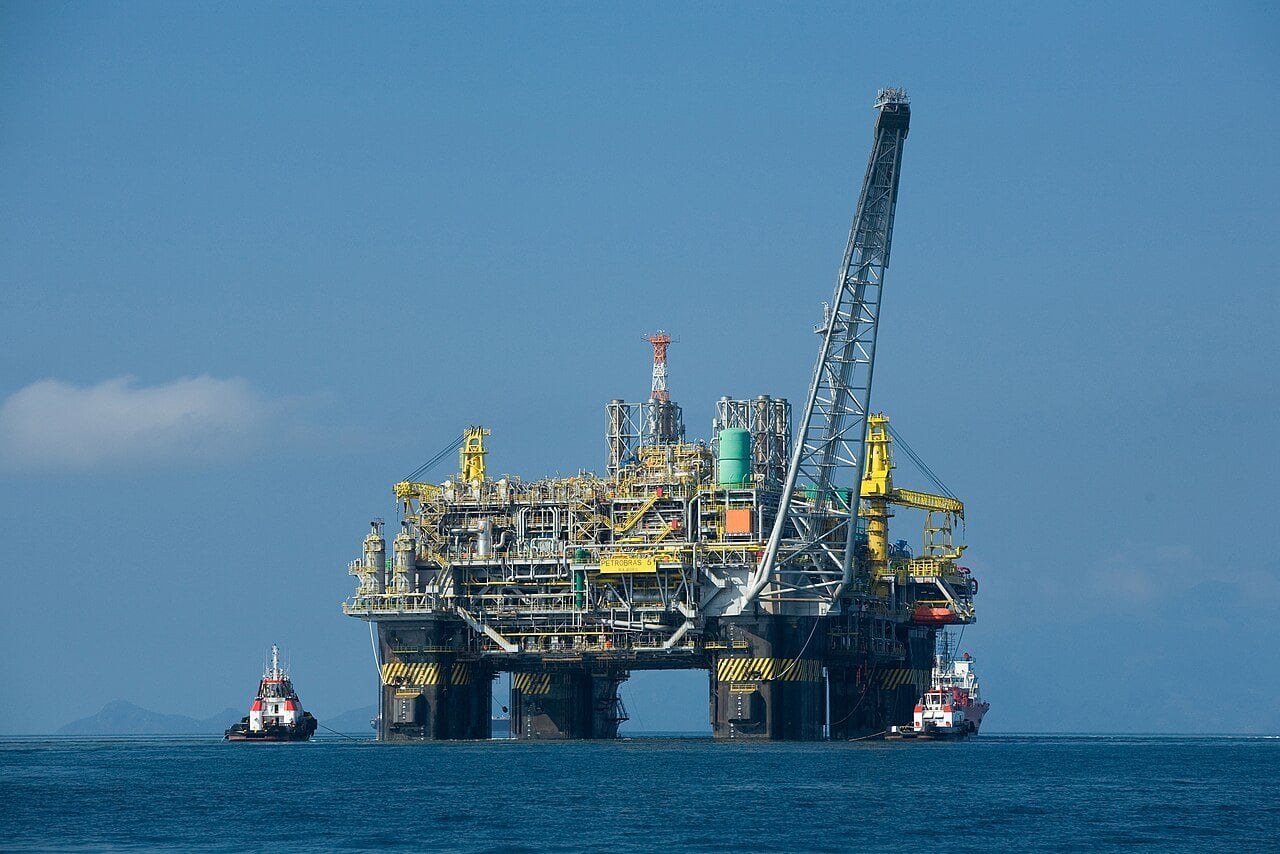
Petrobras Ghana talks are open. The company said on 21 August that Ghana’s energy ministry has approved its expression of interest and cleared it to negotiate directly for four offshore exploration blocks in the Keta Basin. It is the first serious move across the Atlantic since the company proved its thesis on Brazil’s own equatorial coast a week ago, and the two facts are not a coincidence.
What the Petrobras Ghana move actually is
Be precise about the stage, because the coverage will not be. Petrobras submitted an expression of interest. Ghana’s Ministry of Energy and Green Transition approved it. That opens a phase of direct negotiation on exploration contracts for four blocks in the Keta Basin.
Nothing is signed. There is no petroleum agreement, no memorandum, no work programme and no dollar figure. The block names have not been published either, and the count of four comes from a single outlet — Petrobras’s own statement does not give a number.
That matters because direct negotiation is a route with a history in West African licensing, and it is faster than a bid round but not shorter than the argument that usually follows one. Between an approved expression of interest and a rig on location sit ratification, fiscal terms and a parliamentary process.
Why Ghana, and why now
The answer is a coastline that used to be joined to another one.
Before the South Atlantic opened, what is now Brazil’s equatorial margin sat against what is now West Africa, along the Romanche transform. Geologists call these conjugate margins, and the industry has spent forty years reading one side to guess at the other. The analogy is real but loose — the Morpho well sits in the Foz do Amazonas basin, whose closest African counterpart lies west of Keta, and Keta’s nearest Brazilian analogues are Barreirinhas and Pará-Maranhão.
For most of that time the reading ran the other way. Ghana’s Jubilee field, found in 2007, was the proof that the West African transform margin held commercial oil, and it was one of the reasons Brazil kept drilling off Amapá through a decade of environmental litigation.
On 14 August Petrobras announced the Morpho discovery on the Brazilian side, in block FZA-M-59 some 175km off Amapá. Seven days later it is negotiating for acreage on the African side. A company that has just de-risked its own half of an ancient rift is unusually well placed to bid for the other half, and it knows it.
Live Company IntelligencePetroleo Brasileiro Petrobras SA ADR — the full investor dossier
Wall Street view
Valuation & profitability
Price & risk
$10.6552-wk high
$21.99
Revenue trend · 6y
Ownership
Dividend
The Navy protocol is not decoration
A day before the Ghana announcement came a domestic one that got less attention: on 20 August Petrobras and the Brazilian Navy signed a protocol of intentions covering offshore logistics, maritime monitoring, emergency response, search and rescue, research and training on the Equatorial Margin.
The Equatorial Margin is a long way from the Campos and Santos basins where Brazil’s offshore industry grew up. It is remote, the logistics are thin, and it borders waters where search and rescue, oil-spill response and simple presence are not guaranteed by the density of existing infrastructure.
A protocol of intentions is not a contract, but it is how a state-controlled company starts buying that capability without building it. It also signals, to Brasília and to anyone watching from Georgetown or Cayenne, that Brazil regards the equatorial offshore as strategic rather than merely commercial.
What it means if you invest in Brazilian energy
The honest framing is optionality, not revenue. Four exploration blocks under negotiation in a frontier basin will not move Petrobras’s cash flow this decade, and exploration is the part of the business where most money is spent finding nothing.
What it does change is the story. Petrobras has spent years being described as a company with a declining reserve base and a political mandate that stops it looking for a new one. Negotiating for African acreage six days after an equatorial discovery is a different narrative, and narratives are what large state-controlled oil companies trade on.
Some context makes the route matter. Only six wells have been drilled in the Keta Basin since the 1970s, the last deepwater one in 2003, and Ghana is separately preparing to auction eight Keta blocks once a seismic programme finishes mapping the basin by early 2027. Petrobras is negotiating directly rather than waiting for that auction.
For the region more broadly, watch the direction of travel. Latin American national oil companies going into Africa reverses a pattern in which the traffic ran the other way. If Ghana concludes, the ones to watch next are Ivory Coast and Namibia — the same rift, the same logic.
There is a timing question worth holding too. Petrobras is expanding exploration at a moment when most European majors are shrinking theirs, and when the argument about how much oil the world should still be looking for is unresolved. A frontier block acquired in 2026 produces, if it produces at all, some time in the late 2030s. Whoever runs Petrobras then will inherit a bet placed by people who are not accountable for how it turns out — which is the nature of exploration, and the reason it is the hardest part of the business to govern.
Background: Petrobras Confirms New Oil Find Off Rio de Janeiro Coast.
More: Brazil news, every day from The Rio Times.
Background: Petrobras Diesel Subsidy Passes US$900 Million in 2026.
Background: Petrobras P-32 Recycling Yields 44,000 Tonnes of Steel.
Background: Oil Falls Despite Hormuz Shock; Petrobras Drops 3%.
Has Petrobras signed anything in Ghana?
No. Ghana’s Ministry of Energy and Green Transition approved Petrobras’s expression of interest on 21 August 2026, opening direct negotiations on exploration contracts for four offshore blocks in the Keta Basin. No petroleum agreement or memorandum has been signed and the block names have not been published.
Why is Petrobras interested in Ghana?
Ghana’s offshore and Brazil’s Equatorial Margin sit on opposite sides of the same Romanche transform system, torn apart when the South Atlantic opened. Petrobras announced a discovery off Amapá on 14 August 2026. The margins are geological cousins, though not exact mirrors.
What is the Navy protocol about?
Petrobras and the Brazilian Navy signed a protocol of intentions on 20 August 2026 covering offshore logistics, maritime monitoring, emergency response, search and rescue, research and training on the Equatorial Margin — a remote region far from the established infrastructure of the Campos and Santos basins.
Connected Coverage
Sources: Petrobras; Ministério de Energia e Transição Verde de Gana; Reuters; MT Newswires; Marinha do Brasil.
Frequently Asked Questions
This article was produced by The Rio Times’ automated newsroom system. How we use AI · Report an error · Editorial responsibility: Matthias Camenzind, Editor-in-Chief