Pemex Bets on Private Partnerships to Halt Decline and Secure Mexico’s Energy Future
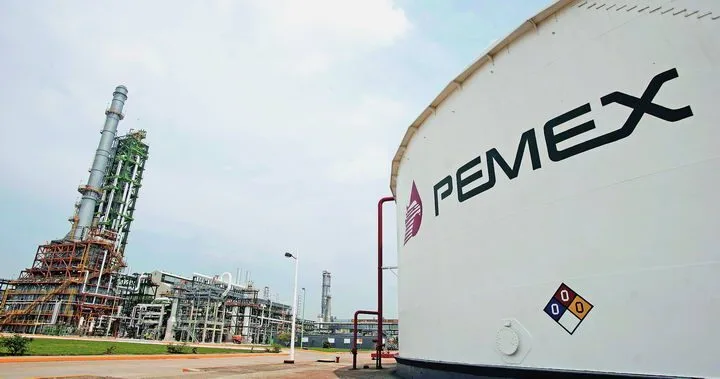
Mexico’s state oil company, Pemex, has launched a new strategy for 2025, aiming to reverse years of falling production and mounting debt by entering mixed development contracts with private partners.
Official company documents and statements from government leaders confirm that Pemex will keep at least a 40% stake in each project while allowing private firms to invest, share risk, and bring technical expertise.
This marks a significant shift for a company that has long operated as a near-monopoly and now faces urgent financial and operational pressures. Pemex’s oil output fell to around 1.6 million barrels per day in early 2025, the lowest in decades.
The company aims to reach 1.8 million barrels per day by the end of the year, but persistent declines in mature fields and delays in new projects have made this goal difficult.
The company’s financial obligations now exceed $101 billion, making it the world’s most indebted energy firm. Revenue dropped by 2.5% in the first quarter of 2025, mainly due to lower crude oil sales, and Pemex posted a net loss of $2.12 billion during this period.
The government has provided significant support, including 80 billion pesos in the first quarter, primarily to service debt. To address these challenges, Pemex’s board approved new guidelines for mixed contracts in April 2025.
These contracts allow Pemex to choose partners through public tenders or, in some cases, direct awards. Each contract must meet strict financial and technical benchmarks. The company expects to sign at least ten contracts this year, covering both oil and gas fields.
Pemex’s New Partnerships to Boost Production
Pemex projects that these partnerships will add 69,400 barrels of oil per day and 609.5 million cubic feet of gas per day, representing about 4.2% and 13.4% of current production, respectively.
The total value of signing bonuses for these deals is estimated at $8.06 billion. One of the most significant projects involves the Ixachi gas field, where Pemex is in talks with Grupo Carso, owned by Carlos Slim, for a major investment.
Ixachi stands as Mexico’s most important natural gas discovery in over 25 years and is critical for reducing the country’s reliance on imported gas. Other fields, such as Bakte and several mature onshore and offshore blocks, are also included in the new contracts.
Most interested companies are Mexican, with some foreign interest from firms like Sinopec and Cheiron. Pemex will not have to provide cash upfront for these projects.
Instead, partners will receive a share of production, and payments will be secured through dedicated trusts for each contract. The government and Pemex leadership argue that this approach will help stabilize output, support public finances, and maintain energy security.
However, analysts caution that the scheme may favor local firms with political ties over international companies with advanced technical capabilities. The new mixed contract model represents a pragmatic response to Pemex’s urgent need for capital and expertise.
The company’s future, and by extension Mexico’s energy security, will depend on whether these partnerships deliver real investment and operational improvements.
The outcome will shape the country’s ability to meet domestic energy needs and manage its public finances in the years ahead.
More: Latin America news in English, every day from The Rio Times.
This article was produced by The Rio Times’ automated newsroom system. How we use AI · Report an error · Editorial responsibility: Matthias Camenzind, Editor-in-Chief