Newmont Plans 19.7M Tonnes at Peru’s Yanacocha Mine

PERU · MINING
Key Facts
- —The country Peru is an Andean nation on South America’s Pacific coast, where gold, copper and silver mining anchor the economy.
- —What happened Newmont’s Peruvian unit filed a short-form environmental report for the Yanacocha mine with regulator Senace on Wednesday 7 October.
- —The plan About 19.7 million tonnes of ore from the Katia and Yanacocha Pinos zones, mined through 2027, Lima daily Gestión reported.
- —Who owns it Newmont of Denver, listed in New York as NEM, has owned 100% of Yanacocha since 2022.
- —The numbers Yanacocha produced 272,000 ounces of gold in the first half of 2026, about 11% of Newmont’s attributable output.
- —Still open Senace lists the file as under evaluation; the law gives it 15 working days, paused while the company answers questions.
Denver-based Newmont, the New York-listed gold producer, has asked Peru’s environmental regulator to let its Yanacocha mine dig two zones through 2027. The request, filed on Wednesday 7 October, covers about 19.7 million tonnes of ore near the Andean city of Cajamarca.
For US investors, the Yanacocha mine posted the lowest all-in cost per ounce in Newmont’s first-half 2026 report. Gestión, the Lima business daily that reported the plan on Friday 9 October, said higher gold prices now make low-grade ore there worth mining.
What Newmont Filed With Peru’s Regulator
The request is formally the eighth technical report under the second modification of the mine’s environmental impact study. Its public record at Senace carries the file number M-ITS-00213-2026.
Senace, Peru’s National Environmental Certification Service for Sustainable Investments, is a technical agency attached to the Environment Ministry. Its portal shows the report as received on 7 October and under evaluation.
The applicant is Minera Yanacocha S.R.L., the Peruvian company through which Newmont runs the Yanacocha mine. A report of this kind, known in Peru as an ITS, is a fast-track procedure.
Peruvian rules reserve it for changes with no significant environmental impact, so no new full study is needed. Senace must rule within 15 working days, its own resolutions state, a clock that stops during corrections.
Yanacocha has used this route before. Senace approved a sixth report filed in April 2025 and a seventh filed in February 2026, after the company withdrew an earlier version.
Two Zones and 19.7 Million Tonnes of Ore
Gestión reported that the filing reworks the mine plan in two areas of the Yanacocha Stage 2 pit. The two areas are called Katia and Yanacocha Pinos.
Katia would yield 13.34 million tonnes of ore, according to Gestión. Yanacocha Pinos would add 6.32 million tonnes.
The ore would go to the existing Carachugo and La Quinua leach pads. These are large lined heaps where a weak cyanide solution trickles through piled ore to dissolve the gold.
About 1.9 million tonnes of waste rock would go to dumps that already hold permits. The pit’s approved capacity of about 156 million tonnes of ore and waste would not change.
Mining would stay above the approved floor of 3,600 metres (about 11,800 feet) above sea level. The approved life of the Yanacocha Stage 2 pit still runs to 2040, Gestión added.
Newmont’s own page on the Yanacocha mine says it will keep mining through 2026, adding “incremental low-cost ounces beginning in 2027.” Its annual report says Yanacocha Pinos has seen only limited mining in recent years.
Why the Yanacocha Mine Matters to Newmont Investors
Newmont trades on the New York Stock Exchange under the symbol NEM and calls itself the world’s leading gold company. It took full control of Yanacocha in 2022.
It bought the 43.65% stake held by Peruvian miner Buenaventura and the 5% held by Japan’s Sumitomo. Newmont calls Yanacocha South America’s largest gold mine; it poured its first gold bar on 7 August 1993.
The Yanacocha mine produced 272,000 ounces of gold in the first half of 2026, Newmont’s quarterly report to the US Securities and Exchange Commission shows. That was 15% more than a year earlier.
Newmont credits the rise to higher leach pad production from a technique called injection leaching. The output equals about 11% of the 2.39 million ounces attributable to Newmont.
Yanacocha’s all-in sustaining cost, the industry’s full measure of producing an ounce, was US$1,099 in the first half. That was the lowest in Newmont’s mine table, against a company average of US$1,822.
The plan comes as Newmont scales Yanacocha back. Its 2025 annual report records a US$770 million non-cash impairment on the shelved Yanacocha Sulfides expansion.
The same report describes a severance program for Yanacocha staff that contemplates winding down mining as oxide ore runs out. Gold reserves stood at 0.5 million ounces at the end of 2025.
Cajamarca and the Conga Dispute
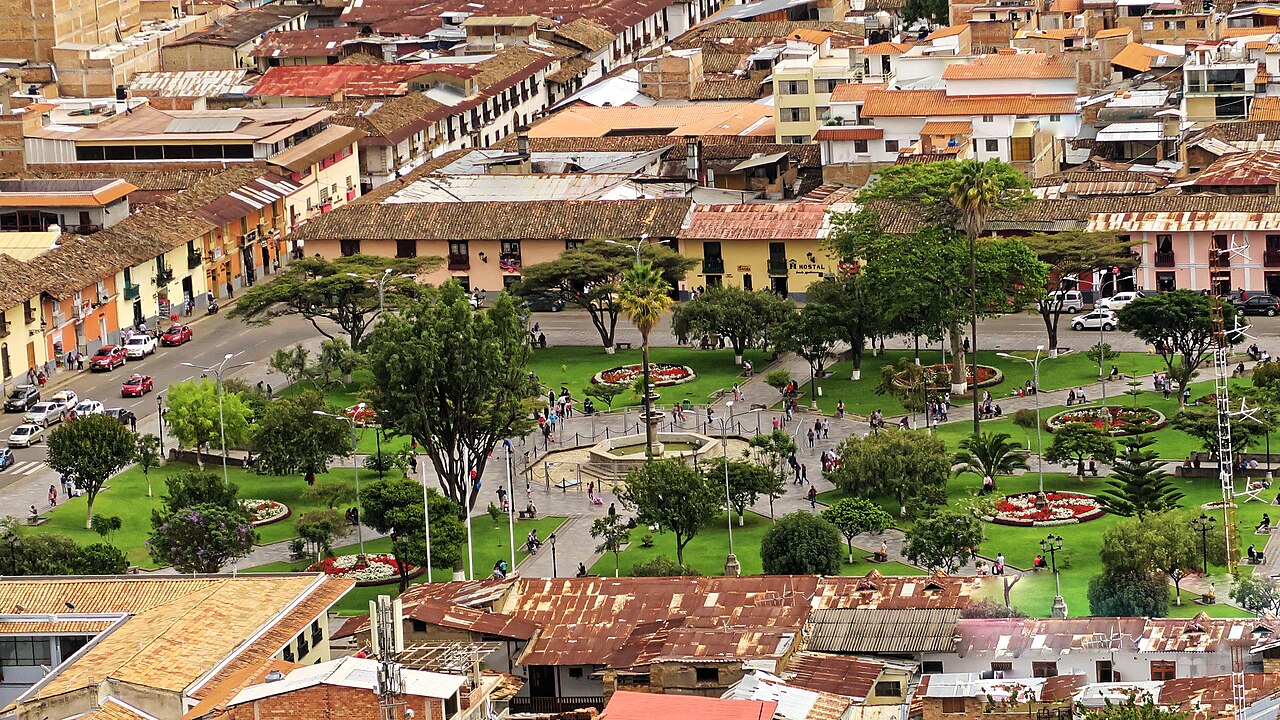
The Yanacocha mine sits about 48 kilometres (30 miles) north of Cajamarca, a highland regional capital in northern Peru. Senace places the new filing in the districts of Cajamarca, Los Baños del Inca and La Encañada.
Gestión reported that the changes stay within the existing Yanacocha Stage 2 pit. The region still remembers Conga, a copper and gold project Yanacocha planned nearby.
Construction at Conga stopped in 2011 at the request of Peru’s central government. That followed protests by anti-mining activists led by Cajamarca’s then regional president.
Newmont later reclassified Conga’s reserves as resources after permits expired at the end of 2015. It does not expect to develop Conga in the next ten years.
The project’s total assets stood at US$883 million at the end of 2025. Mining remains central to Peru, as its latest copper figures and this guide to its natural resources show.
What It Means for You
For Newmont shareholders, the filing would allow more gold from the Yanacocha mine in 2027 if Senace approves it. Newmont has already told investors to expect low-cost ounces from the site that year.
For residents and visitors in Cajamarca, the plan proposes no new pit and no increase in the pit’s approved capacity. It reworks digging inside an area that already holds a permit.
For anyone following Peru’s mining politics, the request is a routine permit step. It is not a revival of Conga or of the shelved sulfide expansion.
What Is Not Known
Senace has not yet ruled on the report, and its 15-working-day clock can pause if the regulator asks for corrections.
Gestión describes the ore only as low grade and gives no figure, so the gold the two zones could yield is not public. Newmont has not addressed the plan in its US securities filings.
It is also unclear how many Yanacocha jobs the extra mining would keep, given the severance program Newmont began in 2025.
More: Peru news in English, every day from The Rio Times.
Frequently Asked Questions
What is the Yanacocha mine?
The Yanacocha mine is an open-pit gold mine about 48 kilometres north of Cajamarca in northern Peru. It poured its first gold bar in 1993 and has been 100% owned by Newmont since 2022.
What did Newmont ask Peru’s regulator to approve?
A reworked mine plan for the Katia and Yanacocha Pinos zones, with about 19.7 million tonnes of ore mined through 2027. It was filed with Senace on 7 October 2026 as a short-form technical report.
Does this revive the Conga project?
No. Construction at Conga stopped in 2011. Newmont says it does not expect to develop the project in the next ten years.
How much gold does Yanacocha produce for Newmont?
It produced 272,000 ounces in the first half of 2026, about 11% of the gold attributable to Newmont. Its all-in sustaining cost was US$1,099 an ounce, the lowest in Newmont’s mine table.
Sources: Senace, Consulta Ciudadana: Octavo Informe Técnico Sustentatorio de la Segunda Modificación del EIA de la Unidad Minera Yanacocha (M-ITS-00213-2026), 7 October 2026; Senace, Resolución Directoral N° 00143-2024-SENACE-PE/DEAR (ITS rules and 15-working-day limit), 2024; Newmont, Form 10-Q for the quarter ended 30 June 2026 (SEC), 23 July 2026; Newmont, Form 10-K for 2025 (SEC), 19 February 2026; Newmont, Yanacocha operation page, accessed 10 October 2026; Gestión, Yanacocha plantea extender hasta 2027 la explotación minera en dos zonas de Cajamarca, 9 October 2026.
This article was produced by The Rio Times’ automated newsroom system. How we use AI · Report an error · Editorial responsibility: Matthias Camenzind, Editor-in-Chief