
MOROCCO · POLITICS & ECONOMY
Key Facts
- —The country Morocco is a North African kingdom of more than 36 million people and a close US partner. It sells cars, phosphates and holidays abroad.
- —What happened On Monday 19 October, head of government Fatima Ezzahra El Mansouri presented the Morocco government plan to both chambers of Parliament sitting together.
- —The targets Growth averaging 5% over 2027 to 2031, inflation near 2%, a deficit near 3% of output and debt near 62% by 2031.
- —The social pledges Monthly cash aid doubles to 1,000 dirhams (about US$102) and the minimum pension rises toward 3,000 dirhams (about US$306).
- —What comes next The 2027 finance bill is due on Tuesday 20 October, and the House of Representatives votes on confidence on Thursday 22 October.
- —Prediction markets Polymarket gives El Mansouri a 96.4% chance of being formally invested as prime minister (19 October, 9:23 p.m. ET).
- —What it means for you US exporters and bond investors get a written plan for a close ally, but its budget maths is untested.
The Morocco government plan, presented to Parliament on Monday 19 October, targets 5% average growth a year from 2027 to 2031. It also promises inflation near 2%, a deficit near 3% of output and public debt near 62% by 2031.
Morocco is a close US partner, so this five-year plan matters to American investors, exporters and bondholders. Lawmakers vote on whether to give the new government their confidence on Thursday 22 October.
What El Mansouri Told Parliament
El Mansouri, the first woman to lead a Moroccan government, presented the plan on Monday 19 October to both chambers of Parliament sitting together. The state news agency MAP had announced the joint session under Article 88 of the constitution.
She belongs to the leadership of the Authenticity and Modernity Party, known as PAM, a conservative party that heads the new four-party majority. Its partners are Istiqlal, a nationalist party, and two left-leaning parties, the Socialist Union of Popular Forces and the Party of Progress and Socialism.
Médias24, a Moroccan business news site, said the parties behind the Morocco government plan converged on purchasing power, jobs and social protection. Hespress, a leading Arabic-language news site, published the headline figures in Arabic the same evening.
The Five-Year Economic Targets
The Morocco government plan has growth averaging 5% a year in real terms over 2027 to 2031, according to Médias24. Success will be judged on the five-year average, so one year at 3% or 4% would not necessarily count as failure.
Inflation is to stay near 2% a year, and the budget deficit near 3% of gross domestic product, the value of everything produced. Public debt is to fall to about 62% of that output by 2031, Hespress reported.
The International Monetary Fund, a Washington lender, forecast on 13 October 4.5% growth this year, 4.2% in 2027 and debt at 66.6% of output. The Morocco government plan therefore asks for faster growth and lower debt than the Fund expects.
The Morocco government plan also aims to lift the private sector to two-thirds of national investment, Hespress reported. Médias24 notes the same goal already sits in the Investment Charter, the investment law, which looks to 2035.
Social Promises and Their Price
Direct aid to poorer households, paid monthly, would rise from 500 dirhams (about US$51) to 1,000 dirhams (about US$102) by the end of the term. Médias24 reported that eligibility would rest on household income, not the current scoring system.
The minimum main pension would rise progressively to 3,000 dirhams (about US$306) a month, with no timetable given. Widows would receive 100% of a late spouse’s main pension, up from 50%.
The Morocco government plan also promises to build or rehabilitate 100,000 rural homes, with 40,000 dirhams (about US$4,087) in direct aid per eligible household. Médias24 added that the programme sets no net jobs target, although the PAM had campaigned on one million jobs.
To fight high prices, the plan lists supply plans for key foods, reform of meat and fish sales channels and export limits during shortages. El Mansouri also pledged to make illicit enrichment a crime and to punish conflicts of interest, Hespress reported.
Energy, Water and Tourism Goals
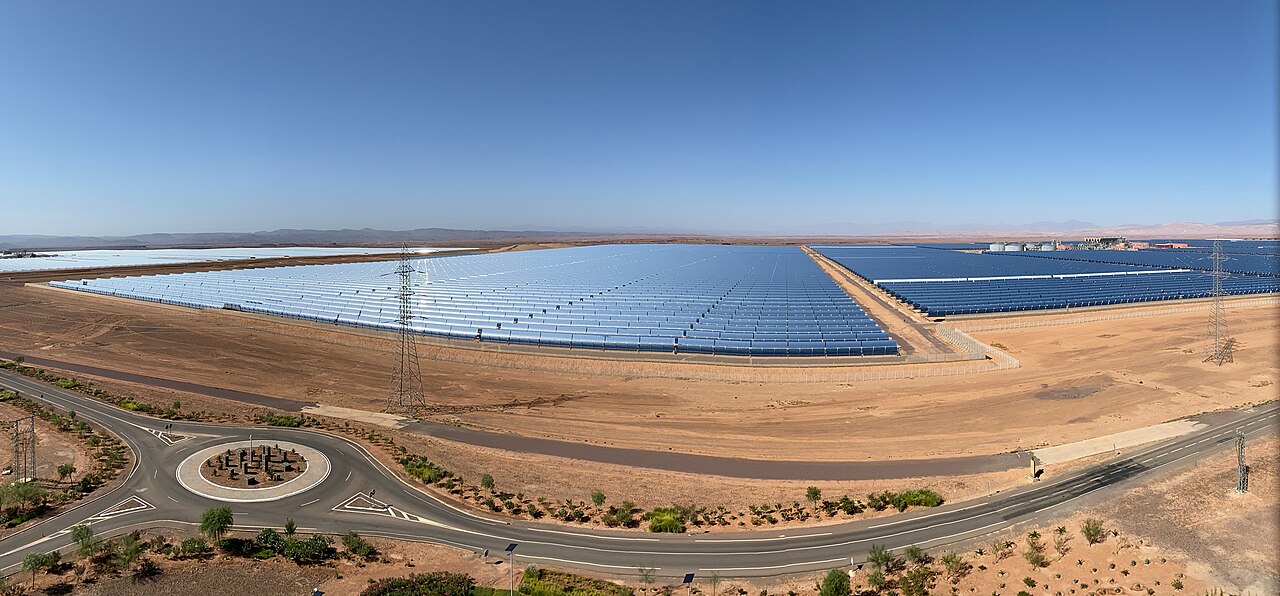
Renewable energy is to exceed 52% of Morocco’s energy mix by 2030, according to Hespress. The country already runs large solar plants, such as the Noor complex near Ouarzazate in the south.
The plan aims to mobilise 1.8 billion cubic metres of water by 2031, mainly via desalination plants and more dams, Hespress reported. It also seeks to raise the national share of seeds from 20% to 50% during the term.
For visitors, the target is 26 million tourists by 2030 under a tourism roadmap for 2027 to 2030. Morocco co-hosts the 2030 football World Cup with Spain and Portugal, which adds to the push.
What Prediction Markets Say
Polymarket, a US market for real-money bets, gave El Mansouri a 96.4% chance of formal investiture as prime minister (19 October, 9:23 p.m. ET). That bet had traded US$21,406, within an event page totalling US$38,213.
The price moved just 0.1 points in 24 hours. It stood near 94% on 13 October and near 97% after the cabinet took its oath on 16 October.
Why we show this: prediction markets turn real-money bets into a live probability that moves within minutes of the news, which is why investors, campaigns and newsrooms in the United States now follow them closely. We show them next to polls and official results, never instead of them.
What It Means for US Readers
Morocco is a major non-NATO ally of the United States and signed a free trade agreement with Washington in 2004. A written five-year plan shows US exporters, carmakers and aerospace suppliers which way policy in Rabat is heading.
Investors in Moroccan bonds will watch whether a 3% deficit and falling debt survive promises of higher aid and pensions. Médias24 says the budget balance will be demanding and asks what replaces the state’s innovative financing.
The 2027 finance bill, the new government’s first budget, is due to be filed on Tuesday 20 October, Médias24 reported. Its parliamentary examination can begin only after the confidence vote, so from Friday 23 October.
What Is Not Known
The Morocco government plan gives no figure for net new jobs and no date for the pension floor of 3,000 dirhams (about US$306). The income tax reform comes with no new rates, thresholds or timetable.
It is not yet clear how the state will pay for doubled cash aid while holding the deficit at 3% of output. The House of Representatives votes on Thursday 22 October, so the result is still open.
More: Morocco news in English, every day from The Rio Times.
Frequently Asked Questions
Who is Fatima Ezzahra El Mansouri?
El Mansouri is Morocco’s head of government, the post that works like a prime minister. King Mohammed VI named her on 29 September, and she is the first woman to hold it.
What does the Morocco government plan promise on growth?
The Morocco government plan targets real growth averaging 5% a year over 2027 to 2031, with inflation near 2%. The deficit is to stay near 3% of output and debt is to fall to about 62% by 2031.
When is the confidence vote?
The House of Representatives, the elected lower chamber, is due to vote on Thursday 22 October, according to Médias24. The 2027 finance bill can be examined only after that vote.
How much would Morocco’s direct social aid rise?
Direct aid would rise from 500 dirhams (about US$51) to 1,000 dirhams (about US$102) a month by the end of the term. Payments would be based on household income, Médias24 reported.
Why does the Morocco government plan matter to US investors?
Morocco is a major non-NATO ally and has had a free trade agreement with the United States since 2004. The plan sets the deficit, debt and growth path that bond investors and exporters will track.
Sources: Médias24, 19 October 2026; Médias24, 19 October 2026; Médias24, 19 October 2026; Médias24, 19 October 2026; Hespress, 19 October 2026; MAP, 17 October 2026.
This article was produced by The Rio Times’ automated newsroom system. How we use AI · Report an error · Editorial responsibility: Matthias Camenzind, Editor-in-Chief
LatAm Markets: Live Signals → — real-time movers, turnover leaders and FX across Latin America.