Milei’s Central-Bank Reform Would Ban Argentina’s Money-Printing
Argentina Policy
Key Facts
—Announcement. President Milei will detail the BCRA charter reform in a national broadcast on 30 July 2026.
—Single Mandate. The bill proposes restoring the Central Bank’s sole mission to preserving the currency’s value.
—Financing Ban. It explicitly prohibits BCRA financing of the national government, provinces, and municipalities.
—Privatisation Path. The separate Ley de Bases framework already authorises the sale of eight state-owned companies.
—IMF Alignment. The Fund has explicitly requested the charter reform to strengthen institutional independence.
Argentina central bank reform will enter Congress in early August 2026, as President Javier Milei seeks to constitutionally ban monetary financing of the state and enshrine a single mandate for the peso, while a parallel privatisation drive advances under existing law.
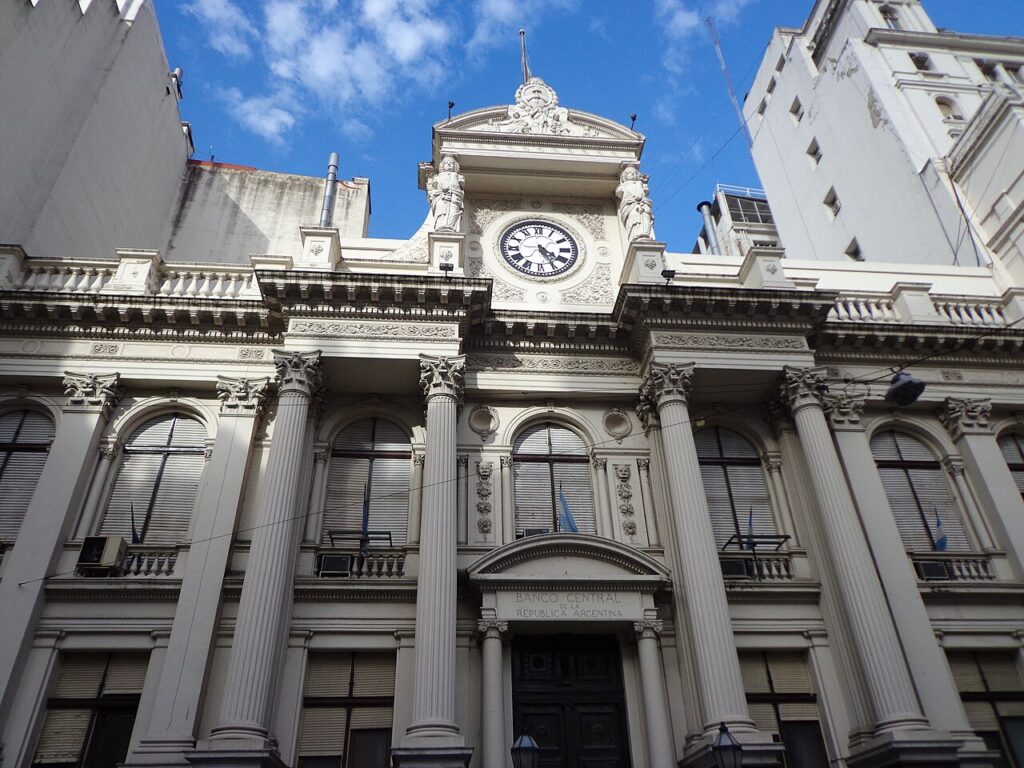
The Core of the Argentina Central Bank Reform
President Milei will outline the project in a pre-recorded national address on 30 July 2026 at 8:00 pm local time. The government then plans to send the legislation to Congress in the first days of August, though it has not yet decided whether the Senate or the Chamber of Deputies will debate it first.
The central pillar is a return to a single legal mandate for the BCRA: preserving the value of the currency. This would undo the 2012 reform that gave the bank multiple objectives, including employment and financial stability, which Milei calls a “declaration of ignorance.”
The bill explicitly prohibits the Central Bank from financing the State at any level. This covers the National Treasury, provincial governments, municipalities, and any primary-market purchase of public debt, effectively ending the practice of “adelantos transitorios” that historically funded deficits.
Governance, Independence, and the End of Letras Intransferibles
The reform strengthens institutional firewalls around the BCRA’s leadership. Removing the governor or board directors would require a two-thirds majority in both houses of Congress, a high bar designed to insulate monetary policy from political cycles.
A version under study also mandates Senate consent for appointments and removals of directors. The project further eliminates the 2012 charter changes and abolishes non-transferable Treasury letters, the instruments that swapped BCRA reserves for illiquid government paper for years.
On profits, valuation gains from price changes would be locked in a non-distributable technical reserve. Only results from active portfolio management could flow to the Treasury, and solely to cancel existing debt, closing a long-standing loophole.
A Second Phase: Criminal Penalties and Shutdown Mechanisms
The government is considering splitting the package to improve its legislative chances. A second tranche of bills would address the criminalisation of monetary issuance to fund the deficit, treating it as counterfeiting under the Penal Code.
This follow-up package would also introduce a “shutdown” mechanism. It would restrict or halt State operations when budget appropriations are exhausted, reinforcing the administration’s commitment to a zero-deficit rule.
As of late July 2026, this second legislative tranche has no fixed submission date. Officials indicate it may arrive within the second half of the year, giving the government time to build a coalition for the more contentious provisions.
The Privatisation Track: Ley de Bases in Action
While the BCRA reform grabs headlines, the privatisation of state-owned enterprises runs on a separate, already-operational track. The Ley de Bases, Law 27,742 of 2024, provides the legal framework for total or partial sale of eight public companies.
The US State Department’s 2025 Investment Climate Statement confirms the law aims to optimise resource allocation and reduce the fiscal burden of SOEs. An IMF staff report names Aerolíneas Argentinas, Energía Argentina, Radio y Televisión Argentina, Intercargo, and water utility AySA among the entities up for privatisation.
Four companies are already in the active privatisation pipeline, with five more under consideration. This process is not tied directly to the BCRA charter bill but forms part of the broader stabilisation programme that Milei is pursuing with IMF backing.
Political Reactions and the IMF Factor
A group of former BCRA presidents criticised the reform, arguing a single mandate is too narrow and rigid. Milei responded on 2 July by calling them “economic illiterates” and insisting the multi-objective framework allowed emission “for anything.”
The IMF has explicitly requested reform of the BCRA charter as part of its conditionality framework. Milei presents the project as fully aligned with the Fund’s requirements, which strengthens its credibility with international investors watching Argentina’s stabilisation effort.
The government remains uncertain of legislative support and is holding intensive briefing sessions with La Libertad Avanza legislators. Splitting the package into more digestible parts is the clearest signal yet that the administration is prepared to negotiate rather than gamble on a single high-stakes vote.
What the Argentina Central Bank Reform Means for Investors and Expats
For foreign investors, the reform is a structural signal. A legally independent Central Bank with a single mandate and no obligation to fund the Treasury removes a primary driver of Argentina’s chronic inflation, which averaged over 100% annually in recent years.
The parallel privatisation pipeline offers concrete opportunities in transport, energy, media, and utilities. The Ley de Bases framework provides a legal entry point for private capital, and the IMF’s involvement adds a layer of oversight that international players typically require.
Expats living in Argentina should watch the shutdown mechanism closely. If passed, it could mean more austere public services when budgets run dry, but also a more predictable macroeconomic environment if the zero-deficit rule holds and inflation continues its downward trend.
More: Argentina news in English, every day from The Rio Times.
Frequently Asked Questions
When will Argentina’s Central Bank reform be sent to Congress?
The government will announce the reform on 30 July 2026 and send it to Congress in early August 2026. The exact chamber of origin, whether the Senate or the Chamber of Deputies, has not yet been decided.
What are the main changes in the BCRA charter reform?
The reform establishes a single mandate of preserving the currency’s value, explicitly bans BCRA financing of the State at all levels, strengthens governance by requiring a two-thirds congressional majority to remove bank leadership, and eliminates non-transferable Treasury letters.
Which state-owned companies are being privatised in Argentina?
Under the Ley de Bases framework, eight companies are authorised for total or partial privatisation, including Aerolíneas Argentinas, Energía Argentina, Radio y Televisión Argentina, Intercargo, and water utility AySA. Four are already in the active pipeline, with five more under consideration.
Connected Coverage
Argentina’s Central Bank Pauses Dollar-Buying Streak After IMF Praise
Marriott’s First Autograph Collection in Buenos Aires for US$30M
Sources: President Milei; BCRA; IMF.
This article was produced by The Rio Times’ automated newsroom system. How we use AI · Report an error
In depth
Read More from The Rio Times