Argentina’s Central Bank Pauses Dollar-Buying Streak After IMF Praise
Argentina · Monetary Policy
Key Facts
—The pause. The BCRA did not buy dollars on 28 July 2026, ending a 135-session streak that began on 2 January 2026.
—Reserve build-up. The central bank accumulated roughly US$13 billion in gross reserves during the nearly seven-month buying streak.
—Gross reserves level. Gross foreign reserves stood at US$48.391 billion at the close of trading on the pause day.
—IMF encouragement. IMF Managing Director Kristalina Georgieva visited Buenos Aires days before and explicitly told authorities to “keep buying” dollars.
—Peso management. The pause was partly tactical, aimed at keeping the wholesale dollar from breaching the ARS 1,500 per US$ threshold.
Argentina’s central bank ended its historic dollar-buying streak on Tuesday, pausing after 135 consecutive sessions of purchases that added US$13 billion to reserves, just days after the IMF chief visited Buenos Aires and praised the accumulation programme.
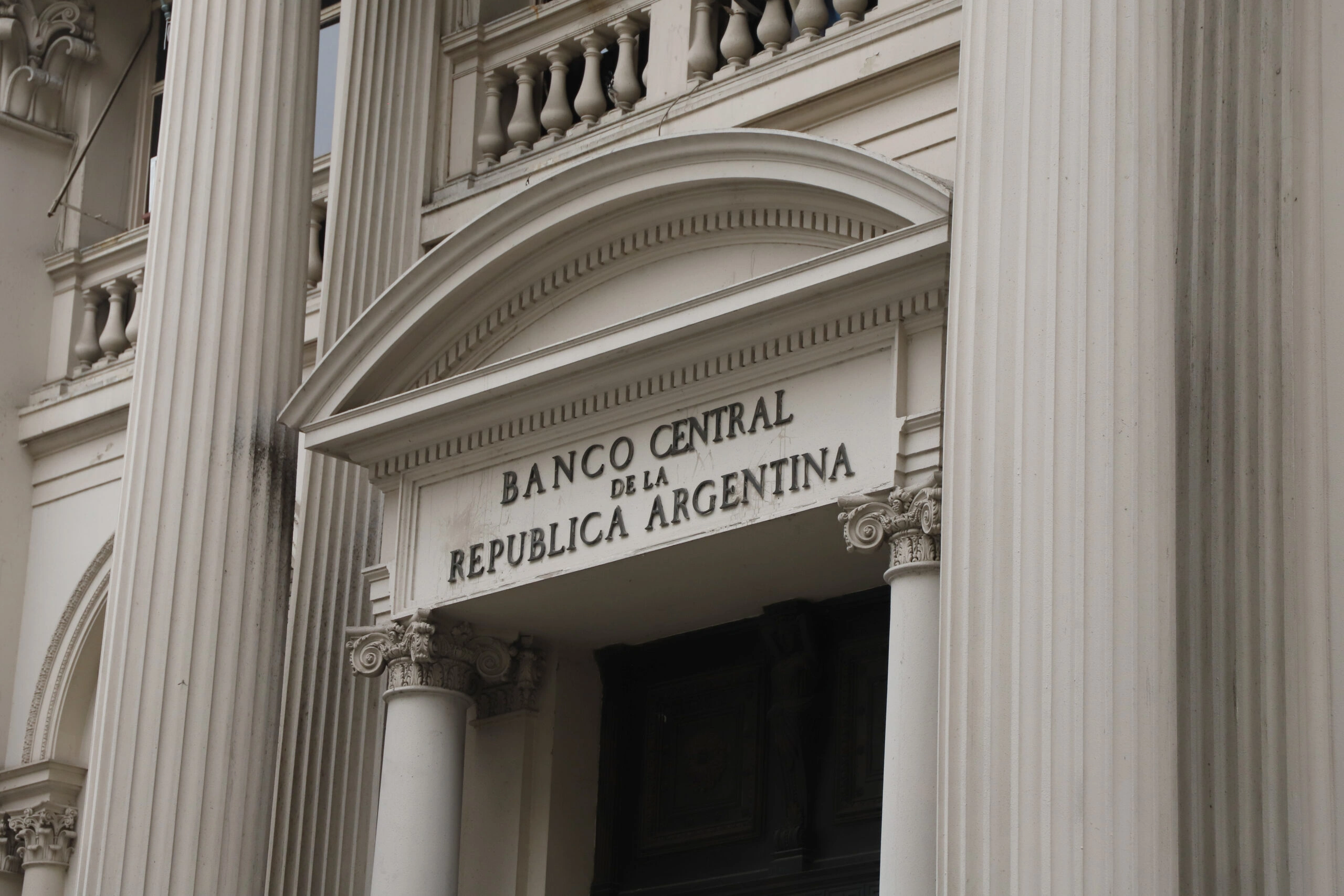
A 135-session dollar-buying streak comes to a tactical halt
The Banco Central de la República Argentina (BCRA) stepped back from the foreign-exchange market on 28 July 2026, breaking a run of daily dollar purchases that had stretched unbroken since 2 January. The central bank confirmed it made no intervention, citing heavy buying by energy-sector firms that supplied enough dollars to the market without official participation.
The pause was not a policy reversal but a calculated move to prevent the wholesale peso from weakening past the closely watched ARS 1,500 per US$ line. The wholesale exchange rate closed the session at ARS 1,499.84, barely inside the threshold that authorities have defended under the crawling-peg regime.
By halting purchases, the BCRA also slowed the injection of pesos into the economy, a side effect of its reserve-building that requires the Treasury to absorb excess liquidity through regular debt auctions. The decision highlighted the balancing act between shoring up reserves and maintaining exchange-rate stability.
Reserves surge to near US$49 billion on the back of aggressive buying
The BCRA’s sustained intervention transformed the country’s reserve position over the first seven months of 2026. Gross foreign reserves reached US$48.391 billion on the day of the pause, a level not seen since 2019, after starting the year significantly lower.
The accumulation averaged roughly US$98 million per day, with several outsized sessions punctuating the trend. A single-day jump of over US$1.2 billion on 7 July pushed gross reserves to US$49.536 billion, while a US$532 million purchase on 14 July marked the largest daily acquisition since late 2022.
By late July, year-to-date net purchases had surpassed US$13.1 billion, comfortably exceeding the BCRA’s annual goal of US$10 billion. The reserve build-up has been a cornerstone of President Javier Milei’s economic programme, aimed at rebuilding credibility with international creditors and eventually dismantling capital controls.
IMF chief visits Buenos Aires and says “keep buying”
The pause came just days after IMF Managing Director Kristalina Georgieva visited Buenos Aires and delivered a clear message on the reserve programme. Speaking during her late-July trip, Georgieva praised Argentina’s shift from fiscal deficit to primary surplus and the decline in annual inflation from over 200 percent in late 2023 to around 32.5 percent by early 2026.
She pointed specifically to the US$13 billion in reserve accumulation since January and told authorities to “keep buying.” The Fund had already modified Argentina’s net-international-reserves target earlier in 2026, effectively instructing the Milei government to continue the dollar-purchase programme while maintaining some exchange-rate flexibility.
Net reserves rose by about US$7 billion under the programme, putting Argentina very close to its US$8 billion end-2026 target under the IMF agreement. The Fund’s public endorsement signalled confidence that the buying streak, even with its tactical pauses, remains aligned with programme objectives.
The peso tightrope: crawling-peg discipline meets market pressure
The official peso has been managed through small daily depreciations under a crawling-peg policy, keeping it at the very top of its 52-week range. On the day of the pause, the official rate stood at ARS 1,497 per US$, virtually unchanged, before weakening 0.18 percent to ARS 1,500 the following session.
The tight management of the official rate contrasts with persistent premia in parallel markets. By mid-July, the blue dollar traded between ARS 1,510 and ARS 1,530, while the MEP dollar sat at about ARS 1,514 and the CCL dollar reached roughly ARS 1,560, reflecting continued demand for financial-dollar hedges.
The Merval stock index rose 0.65 percent to 3,305,316 points on the pause day, as markets digested the tactical shift without alarm. Investors appeared to treat the halt as a routine operational adjustment rather than a signal of stress in the FX programme.
What the dollar-buying streak pause means for investors and expats
For international investors, the pause reinforces that Argentina’s reserve-building strategy is pragmatic rather than dogmatic. The BCRA has shown it will step aside when private-sector flows are sufficient, prioritising exchange-rate stability over mechanical accumulation.
The broader trajectory remains one of reserve strengthening, which improves Argentina’s capacity to meet external obligations and edges the country closer to lifting capital controls. Expats and businesses operating in Argentina should expect the crawling-peg to persist, with the official peso continuing its gradual, controlled depreciation.
The key risk to watch is whether the BCRA can resume purchases without pushing the wholesale rate decisively above ARS 1,500. A sustained breach would test the central bank’s commitment to the crawling-peg framework and could trigger a faster pace of depreciation, with knock-on effects for inflation and parallel exchange rates.
More: Argentina news in English, every day from The Rio Times.
Frequently Asked Questions
Why did Argentina’s central bank pause its dollar-buying streak?
The BCRA paused purchases on 28 July 2026 for two stated reasons. Strong dollar buying by energy companies provided sufficient FX supply that day, and the central bank wanted to prevent the wholesale peso from weakening past the ARS 1,500 per US$ threshold.
The pause also slowed the injection of pesos into the economy, reducing the need for the Treasury to absorb liquidity through debt auctions.
How much did Argentina’s reserves grow during the dollar-buying streak?
The BCRA accumulated roughly US$13.128 billion in gross reserves between 2 January and 28 July 2026, averaging about US$98 million per day across 135 consecutive sessions. Gross foreign reserves reached US$48.391 billion on the pause day, the highest level since 2019, comfortably exceeding the central bank’s US$10 billion annual accumulation goal.
What did the IMF say about Argentina’s reserve-buying programme?
IMF Managing Director Kristalina Georgieva visited Buenos Aires in late July 2026 and explicitly encouraged authorities to “keep buying” dollars. She highlighted the US$13 billion reserve accumulation, the shift to a primary fiscal surplus, and the drop in annual inflation from about 210 percent to around 30 percent.
The Fund noted Argentina was very close to its US$8 billion net-international-reserves target for end-2026.
Connected Coverage
Milei’s Central-Bank Reform Would Ban Argentina’s Money-Printing
Marriott’s First Autograph Collection in Buenos Aires for US$30M
Sources: Banco Central de la República Argentina (BCRA); IMF Managing Director Kristalina Georgieva.
This article was produced by The Rio Times’ automated newsroom system. How we use AI · Report an error
In depth
Read More from The Rio Times