Mexico · Markets & Economy
Mexican Stocks Post Their Best Day Since June
Key Facts
- —The session. The S&P/BMV IPC closed Friday at 65,729.18, up 2.14%, its biggest one-day gain since 11 June. The FTSE BIVA rose 2.17%.
- —The peso. The Banxico FIX in force today is 16.9018 pesos to the dollar. The analyst consensus is that it weakens to 17.68 by year end, not that it strengthens.
- —The diesel. Fuel duty relief on diesel reached 82.59% for 22–28 August, worth 6.08 pesos a litre. That is the highest of 2026, above April’s 81.20%.
- —The underspend. The government spent 499,000 million pesos, about US$29.5 billion, less than programmed in the first half. Pemex accounted for 45,297 million of it.
- —The energy cut. Ramo 21, the energy budget branch, lost 61.7% of its approved first-half budget as transfers to Pemex were cut by 164,000 million pesos.
- —The bond. FONDO, one of the four public agricultural trusts run by the central bank, raised 4,500 million pesos, about US$266 million, in three tranches on the Mexican exchange.
A strong Friday on the exchange, the year’s largest diesel tax break, and half a trillion pesos the government did not spend.
A good Friday, after a bad week
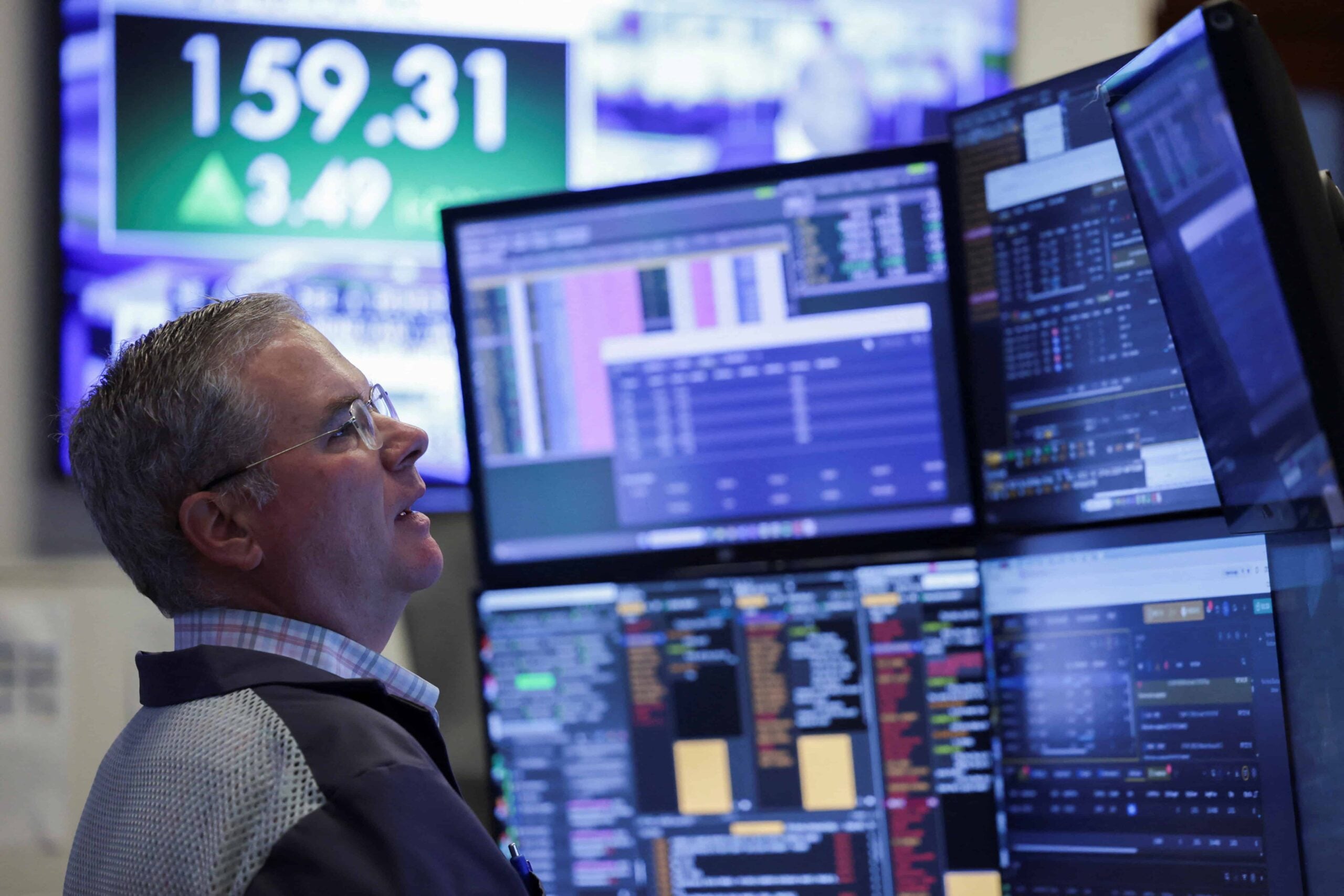
The S&P/BMV IPC closed on Friday at 65,729.18, up 2.14%. That is its largest single-day gain since 11 June, a gap of just over ten weeks, and it came three days after the index touched its 2026 low of 63,933.69. The FTSE BIVA, the rival exchange’s benchmark, rose 2.17% in step.
Grupo México led, up 4.17%, with GCC up 5.05%, Pinfra 3.16% and Cemex 2.40%. Walmex fell 1.55%, and the consumer names generally lagged — which fits the retail data. Sales were down 0.2% month on month in June, against expectations of a small rise.
One correction worth making plainly, because the number is circulating. There is no analyst forecast of 16.50 pesos to the dollar. The Citi survey published on 20 August, covering 37 institutions, has a year-end consensus of 17.68, with the most optimistic house at 17.00 and the most pessimistic at 19.03. The currency is near 16.90 now, so the consensus view is mild weakening, not strengthening.
The state is paying most of the diesel tax for you
The finance ministry publishes a fuel duty waiver every Friday in the official gazette. For the week of 22 to 28 August it set the diesel stimulus at 82.59%, worth 6.0813 pesos a litre and leaving drivers paying 1.2821 pesos of the duty.
That is the highest diesel relief of 2026. The previous peak was 81.20% in early April, and the year’s low was 14.63% in late June. Petrol relief is far smaller: 22.44% on regular, and 4.03% on premium.
The reason is upstream. Brent rose more than 6% in the week to 21 August and WTI more than 5%, on Iran sanctions and disruption around the Strait of Hormuz. Because the Mexican fuel excise is a fixed peso amount per litre rather than a percentage, it does not fall automatically when crude climbs — so the government waives it instead, and takes the hit on tax collection.
Live Market IntelligenceMexico — Live Market Board
Rio Times · Live Market Intelligence
Mexico — Live Market Board
-1.01%
206,220.24
+0.94%
64,653.33
-1.01%
11,024.22
+0.22%
2,839,033
+0.53%
2,537.35
+0.10%
60,766.81
-1.71%
| Instrument | Last | Change | YoY | Prev. | High | Low | Volume |
|---|---|---|---|---|---|---|---|
| IPC MEX | 64,653.33 | -1.01% | +12.17% | 65,312.46 | 66,121 | 65,405 | 108,886,187 |
| USD/MXN | 17.06 | -0.24% | -8.58% | 17.10 | 17.08 | 17.01 | — |
| WALMEX | 48.07 | -0.62% | -14.38% | 48.37 | 48.65 | 48.02 | 10,781,446 |
| GMEXICO | 223.28 | +0.35% | +73.59% | 222.50 | 226.18 | 222.17 | 1,325,556 |
| FEMSA | 201.19 | -0.24% | +25.67% | 201.67 | 206.71 | 199.56 | 750,706 |
| CEMEX | 19.32 | +0.89% | +19.10% | 19.15 | 19.35 | 19.04 | 14,327,054 |
| GFNORTE | 193.98 | +1.18% | +14.36% | 191.71 | 195.79 | 191.83 | 1,579,115 |
| BIMBO | 60.98 | -0.96% | +11.89% | 61.57 | 61.46 | 60.29 | 1,048,115 |
| TELEVISA | 9.71 | +0.21% | +12.78% | 9.69 | 9.75 | 9.60 | 577,851 |
| AMX | 19.80 | -0.95% | +12.53% | 19.99 | 20.05 | 19.70 | 58,058,525 |
| GAP | 366.23 | +0.43% | -21.21% | 364.68 | 370.85 | 362.82 | 226,946 |
| ASUR | 275.04 | +1.25% | -15.28% | 271.64 | 275.08 | 271.31 | 15,451 |
| OMA | 233.50 | +0.62% | -6.48% | 232.06 | 235.00 | 230.62 | 555,693 |
| KOF | 188.04 | +0.86% | +18.94% | 186.44 | 188.56 | 185.52 | 425,273 |
| GRUMA | 252.90 | +0.11% | -21.85% | 252.61 | 254.74 | 250.36 | 90,048 |
| KIMBER | 39.74 | +0.43% | +8.85% | 39.57 | 40.09 | 39.33 | 490,551 |
| AMX ADR | 23.38 | -0.23% | +22.25% | 23.43 | 23.49 | 23.06 | 1,347,445 |
The bigger fiscal story is what was not spent
The finance ministry’s second-quarter report, presented on 30 July, records net spending of 4.856 trillion pesos in the first half — 499,000 million pesos below what was programmed. Finance Secretary Edgar Amador Zamora said the pace of spending “will have to normalise”.
Energy took the deepest cut of any branch. Ramo 21, the budget line through which federal transfers to Pemex flow, lost 61.7% of its approved first-half budget, as the government withdrew 164,000 million pesos in subsidies to the oil company. Pemex’s own underspend was 45,297 million pesos, a 16.1% real contraction against its calendared budget, concentrated in physical investment, pensions and plant maintenance.
This is not an accounting curiosity. Pemex’s second-quarter profit fell 69.7% year on year, and fuel theft cost it 9,180 million pesos in operating losses between April and June, the worst since 2018. Deferred maintenance at a company in that condition is a liability being carried forward, not a saving.
Money for the countryside
On Friday FONDO placed 4,500 million pesos of long-term certificates on the Mexican exchange, about US$266 million. It came in three tranches: 1,337.5 million at a floating rate over 18 months, 2,234.25 million fixed at 9.11% over five and a half years, and a 928.25 million social bond at 8.84% over four and a half.
FONDO is one of four public trusts run by the Bank of Mexico under the FIRA umbrella. They are a second-tier development bank: they do not lend to farmers, they fund and guarantee the commercial banks that do, and they raise the money in the bond market. The paper carries top national-scale ratings from all three agencies that rated it. This was FONDO’s first long-term issue, though its sister trust FEFA placed 8,000 million pesos in July.
One story we are not running
A claim circulating on Monday held that the state tourism fund Fonatur will build its first new resort development in twenty years, in Nayarit, for 1,734 million pesos. We could not verify any element of it, and we are not publishing it.
Fonatur has announced no such project, in Nayarit or elsewhere; its August news was a sale of existing lots in Huatulco, Ixtapa, Loreto and Los Cabos. The agency’s own published strategy explicitly abandons the resort-building model. There is a large new development in Nayarit — Costa Nayarit, in Compostela, presented in April — but it is private, led by Grupo Prodi and partners, and worth more than 20 billion pesos, twelve times the figure quoted.
Why this matters if you are invested here
Two numbers frame Mexico this week. The policy rate is 6.50% and most analysts expect it to stay there through next year, which is what has been holding the peso up alongside remittances and nearshoring flows. Growth consensus for 2026 is 1.2%.
Against that, the state is forgoing fuel tax revenue at the highest rate of the year while running 499,000 million pesos behind its own spending plan, and the company at the centre of both is losing money faster than it is being recapitalised. Friday’s rally was real. The fiscal arithmetic behind it has not changed.
More: Mexico news in English, every day from The Rio Times.
Frequently Asked Questions
Is the Mexican peso expected to strengthen to 16.50?
No. The most recent Citi survey of 37 analysts, published on 20 August, puts the year-end 2026 consensus at 17.68 pesos to the dollar. The most bullish house in the survey is Barclays at 17.00. With the currency near 16.90 today, the consensus expects it to weaken from here, not strengthen.
What is the IEPS diesel stimulus and who pays for it?
IEPS is Mexico’s federal fuel excise, charged as a fixed number of pesos per litre rather than as a percentage of the price. When crude rises, the tax does not rise with it, so the government’s lever is to waive part of the duty each week. An 82.59% stimulus means the state forgoes 82.59% of the charge. It shows up as weaker tax collection rather than as spending.
Why did the energy ministry underspend so heavily?
Because federal transfers to Pemex flow through it. The finance ministry attributes the shortfall to “lower resources allocated to the financial strengthening of Pemex”. Ramo 21 lost 61.7% of its approved first-half budget while the state oil company’s own underspend concentrated in physical investment, pensions and maintenance.
What is FIRA, and what did it sell?
FIRA is a group of four public trusts administered by the Bank of Mexico that function as a second-tier agricultural development bank. They do not lend to farmers directly; they fund and guarantee the banks that do. FONDO, the oldest of the four, placed 4,500 million pesos in its first long-term issue, including a social bond at 8.84%.
Sources
- Banco de México — FIX exchange rate
- Diario Oficial de la Federación — ACUERDO 128/2026, fuel stimulus
- SHCP — second-quarter public finances report
- El Universal — Pemex subsidy reduction
- El Cronista — FONDO bond placement
This article was produced by The Rio Times’ automated newsroom system. How we use AI · Report an error · Editorial responsibility: Matthias Camenzind, Editor-in-Chief
LatAm Markets: Live Signals → — real-time movers, turnover leaders and FX across Latin America.