Mercosur–EU Deal Puts Paraguay’s Export Model On Trial, Not On Autopilot
Key Points
- Paraguay is betting the Mercosur–EU deal will lift exports, but only firms that scale up and comply with EU rules will win.
- Europe is moving the process forward, yet farm politics and safeguards mean access will be real, but not unlimited.
- Beef and soy sit at the center, and new traceability demands could separate winners from laggards.
Paraguay’s government is selling the Mercosur–European Union free-trade agreement as a long game with a clear prize: easier entry into one of the world’s highest-income markets.
Industry and Trade Minister Javier Giménez has argued that gradual tariff cuts can raise competitiveness, especially for meat, while giving consumers in both blocs more choice.
His caution is the most important part: nothing changes overnight, and the agreement’s benefits depend on whether Paraguayan industry can invest, expand, and meet demanding standards.
On the European side, the process advanced on January 9, 2026, when the EU Council approved the signature of two linked texts: the broader EU–Mercosur partnership agreement and an interim trade agreement designed to push the trade pillar ahead of the full package.
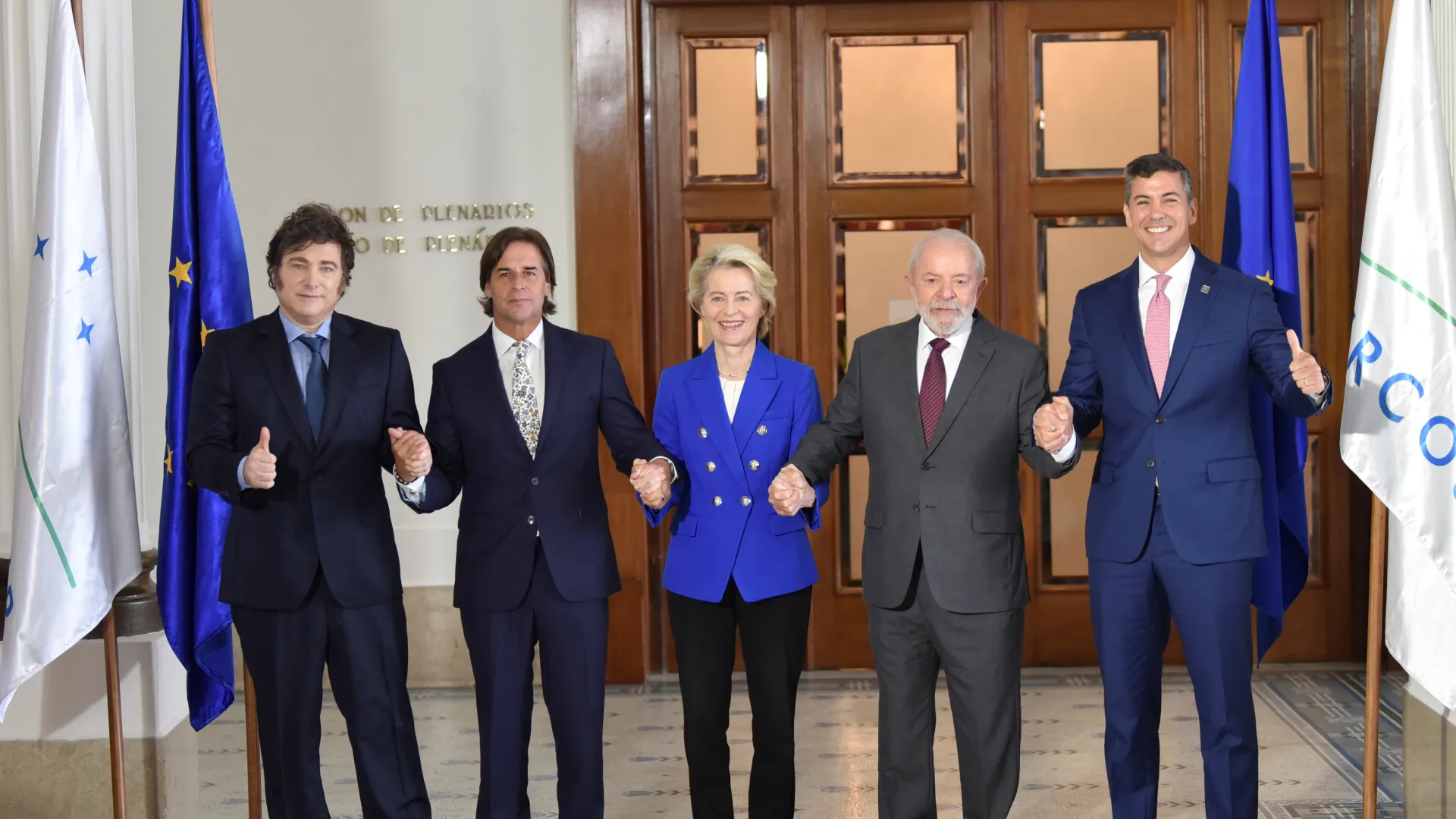
Major international outlets also reported plans for a signing ceremony in Paraguay on January 17, 2026. Even after signature, the route is political. The European Parliament still has a major say, and farm lobbies remain loud.
French farmers have staged tractor protests in Paris this week, warning that cheaper South American farm imports could undercut European producers. Paraguay’s interest is rooted in hard numbers.
Paraguay’s exports face EU rules
Official data published by Paraguay’s Ministry of Industry and Commerce show that by the end of November 2025, the country’s top 10 exports totaled more than $8.1 billion.
Soybeans led with $2.348 billion, followed by beef at $1.913 billion and electricity at $1.115 billion. Processed soy exports also ranked high, including soybean oil at $576 million and soybean meal at $574 million.
That export mix explains both the opportunity and the friction. European institutions have described a deal that removes tariffs on most trade, but agriculture is treated as sensitive. Products like beef, poultry, and sugar are expected to face quotas and safeguards, not a free-for-all.
A second hurdle is compliance. The EU’s anti-deforestation import rules are scheduled to apply from December 30, 2026 for large and medium operators, with a later deadline for smaller firms, and they cover key commodities including beef and soy.
For Paraguay, that pushes the real contest into traceability, paperwork, and supply-chain control. Pro-trade governments call this modernization; critics on the left call it pressure that favors big exporters. Either way, the deal rewards capacity, discipline, and investment, not slogans.
Related coverage: Brazil’s Morning Call | Paraguay’s Record Forestry Exports Signal a Shift From Raw M This is part of The Rio Times’ daily coverage of Paraguay affairs and Latin American financial news.
For the full picture, see our Mercosur EU Trade Deal: Complete Guide.
Key Facts
— Deep Dive
— For the complete picture, read our in-depth guide: Paraguay: Washington's Most Valued Ally in Latin America
This article was produced by The Rio Times’ automated newsroom system. How we use AI · Report an error · Editorial responsibility: Matthias Camenzind, Editor-in-Chief
Read More from The Rio Times