Lula Rejects US Terror Label on Brazil Gangs

BRAZIL · SECURITY
Key Facts
- The country Brazil is Latin America’s largest country and economy, and it elects its president in a runoff on Sunday 25 October.
- What happened On Thursday 15 October, Lula said on TV Globo that two big gangs are not terrorists in the sense Washington uses.
- The terror label The US State Department announced on 28 May that it treats both gangs as terrorist organizations, and the label took effect on 5 June.
- The stake The label lets Washington sanction banks and companies that deal with the gangs, which worries the Brazilian government and its banks.
- The offer Lula said Brazil has offered President Donald Trump a joint plan to fight organized crime, built on Federal Police experience.
- Prediction markets Polymarket gives Flávio Bolsonaro a 78% chance of winning the 25 October runoff (16 October, 6:55 a.m. ET). Polymarket puts Flávio Bolsonaro’s chance of winning at 78% and Kalshi at 78% (Lula: 22% and 22%), as of 16 October, 7:40 am ET; prices are bets, not polls.
- Power Index Brazil ranks 1st of 14 in The Rio Times Latin America Power Index, with 75.0 points (October 2026 edition).
Runoff · Sunday, 25 October
Brazil Runoff 2026: Lula vs Flávio
Date, polls, debates, odds and how the runoff works, updated every day.
Brazil election 2026 · Brazil election polls · Brazil election odds · Brazil runoff date and results start · Brazil election results · All election stories
President Luiz Inácio Lula da Silva rejected the US terror label for Brazil’s two biggest criminal gangs on Thursday 15 October. He said the groups are terrorists for the communities they rule, but not in the way Washington means the word.
The row matters to US readers because the label lets American authorities freeze assets and punish banks that deal with the gangs. It also sits in the middle of a tight presidential runoff, in which Lula faces the conservative senator Flávio Bolsonaro on 25 October.
What Lula Said on Jornal Nacional
Lula spoke on Jornal Nacional, the evening news show of TV Globo, Brazil’s biggest broadcaster, in an interview on Thursday 15 October. Poder360, a Brasília news site, reported that he called both gangs “terroristas para a comunidade brasileira”, or terrorists for the Brazilian community.
He said the United States uses the word for attacks such as the one on the Twin Towers and for coup attempts. The Brazilian gangs, he said, “só querem dinheiro”, or only want money.
Lula’s Offer to Trump
Lula said Brazil has proposed to President Donald Trump that the two countries fight organized crime and drug trafficking together, according to Poder360. He said the plan rests on the experience of the Federal Police, Brazil’s national investigative agency.
Blog do Paulo Pereira, a regional news site, said he described it as a security partnership with the Trump government. What the plan would contain has not been made public.
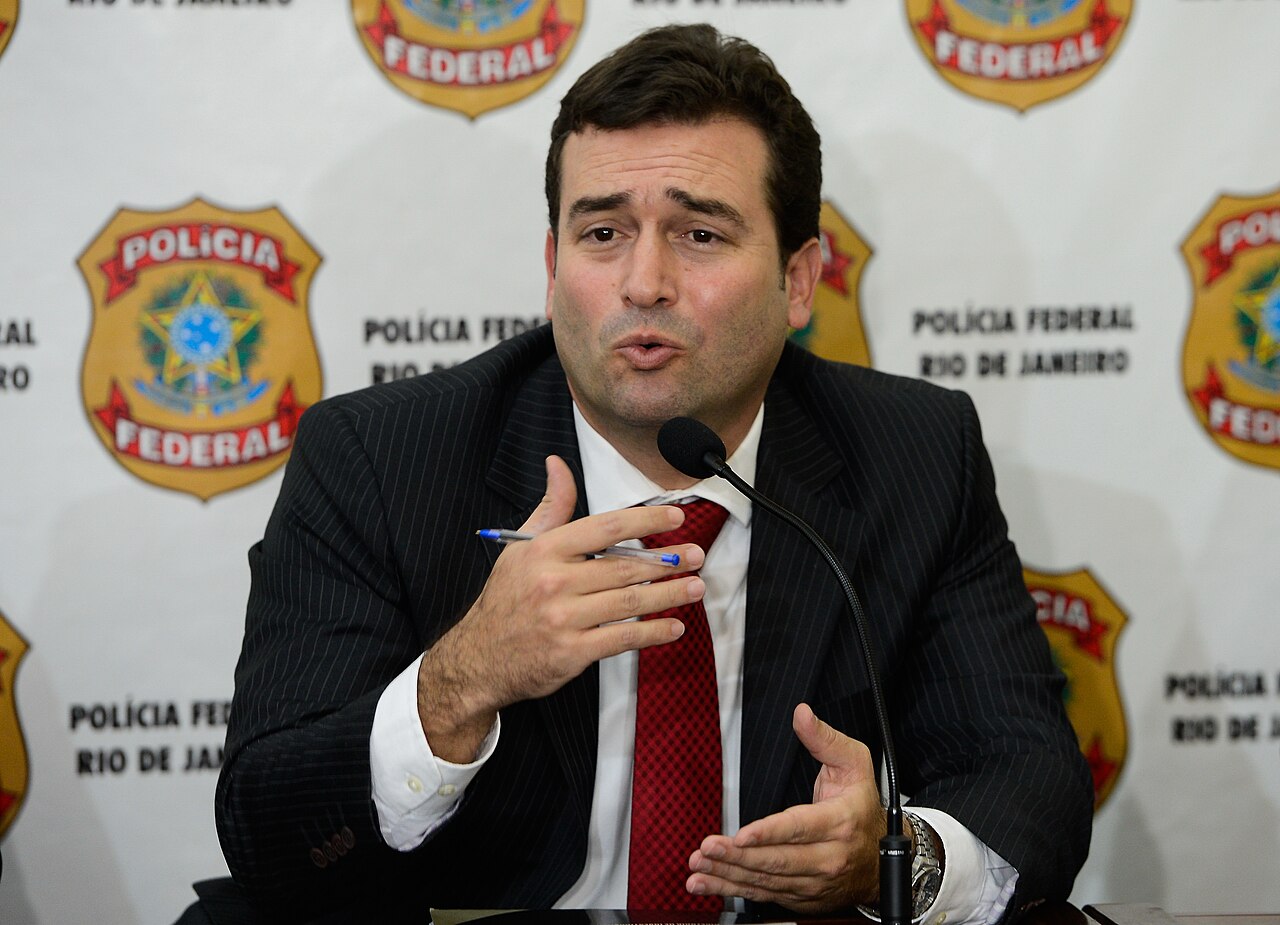
Who the PCC and Comando Vermelho Are
The PCC, short for Primeiro Comando da Capital, is a criminal group that grew out of São Paulo’s prisons. The Comando Vermelho, or Red Command, is a rival group with deep roots in Rio de Janeiro.
Both run drug trafficking and other illegal business, and the US government calls them among the most violent criminal groups in Brazil. Washington says each commands thousands of members and carries out brutal attacks on police, officials and civilians.
How Washington Created the Terror Label
The US State Department announced the designation on Thursday 28 May 2026, and Secretary of State Marco Rubio announced it on social media. Both groups were already listed as Specially Designated Global Terrorists, and Foreign Terrorist Organization status took effect on 5 June.
Under US anti-terror financing law, banks and companies that deal with a listed group can face sanctions, even without knowing the link. A Rio Times report in June described how Brazilian banks sought advice from Mexican lenders after the move.
Why Brazil Objects to the Terror Label
The Lula government says the gangs do not fit Brazil’s legal definition of terrorism, because they act for money and territory, not ideology. Poder360 said the presidential palace fears the label could expose Brazilian banks to automatic penalties.
Celso Amorim, a special adviser to the president, called the terror label a pretext for intervention, “inaceitável”, or unacceptable. Lula himself has said he did not discuss criminal gangs and terrorism with Trump when they met on 7 May.
Crime Becomes a Runoff Issue
Flávio Bolsonaro, a senator for Rio de Janeiro, met Trump on 26 May and asked him to name the gangs terrorist organizations. He is the eldest son of former president Jair Bolsonaro and the conservative Liberal Party’s runoff candidate.
Lula used the same interview to defend his own security plan, including the constitutional amendment on public security that Congress has not yet passed. He said he would create a Ministry of Public Security if re-elected and if Congress approves the amendment, Blog do Paulo Pereira reported.
What It Means for You
If you hold Brazilian bank shares or US-listed Brazilian stocks, the terror label is a compliance risk for any payment through the US financial system. Where the runoff stands is tracked in the Brazil runoff poll tracker.
If you travel to or do business in Brazil, the dispute over the terror label shows how far crime policy shapes ties with Washington. The outcome of the runoff could change how Brazil cooperates with US agencies on drugs and money laundering.
What Prediction Markets Say
On Polymarket, an online prediction market, bettors give Flávio Bolsonaro a 78.3% chance of winning the 25 October runoff (16 October, 6:55 a.m. ET). Lula stands at 21.5%, and Flávio’s price fell 2.4 points over the previous 24 hours while Lula’s rose 2.0 points.
The “Brazil Presidential Election” market has drawn about US$184.3 million in total bets. These are bets, not polls, and they can move quickly on new surveys.
Prediction markets · who wins the runoff
Implied chance of winning Brazil’s presidency on 25 October, from traders’ prices.
Polymarket
Flávio Bolsonaro 78.1% · Lula 21.5% (US$184 million traded)
Kalshi (regulated in the US by the CFTC)
Flávio Bolsonaro 78% · Lula 22%
As of 16 October, 7:40 am ET (12:40 Lisbon), updated every 20 minutes. Prices are bets, not polls, and can move fast.
Why we show this: prediction markets turn real-money bets into a live probability that moves within minutes of the news, which is why investors, campaigns and newsrooms in the United States now follow them closely. We show them next to polls and official results, never instead of them.
What Is Not Known
Neither the Lula government nor the Trump administration has published the details of the joint plan Lula described. It is not known whether Washington would drop or soften the terror label in return for such cooperation.
It is not known how Flávio Bolsonaro will use the label in the last days of the campaign. How much the issue will move voters before the 25 October vote is also open.
More: Brazil news in English, every day from The Rio Times.
Frequently Asked Questions
What did Lula say about the US terror label?
Lula said the PCC and Comando Vermelho are terrorists for the communities they control. He added that they are not terrorists in the way Washington uses the word, because they only want money.
When did the United States label the PCC and Comando Vermelho as terrorists?
The US State Department announced the designation on 28 May 2026. The terror label took effect on 5 June 2026, according to Poder360.
Why does the terror label matter to banks and investors?
US anti-terror financing law lets authorities sanction banks and companies that deal with a listed group. Brazilian lenders fear that any payment touching the US financial system could expose them.
Who is running in Brazil’s presidential runoff?
President Lula faces the conservative senator Flávio Bolsonaro in the runoff on Sunday 25 October 2026. The race is close in recent polls, and the Rio Times tracks every survey.
Sources: Poder360, 15 October 2026; Blog do Paulo Pereira, 16 October 2026; Poder360, 28 May 2026; Poder360, 5 June 2026; Poder360, 15 October 2026.
This article was produced by The Rio Times’ automated newsroom system. How we use AI · Report an error · Editorial responsibility: Matthias Camenzind, Editor-in-Chief