Record 70,177 Tonnes Lift Congo’s Kipushi Into Zinc’s Top Three
DR CONGO · MINING
Key Facts
—Record quarter: Kipushi produced 70,177 tonnes of zinc in the second quarter of 2026, up 8% on the first quarter.
—The pace: That rate is roughly 280,000 tonnes a year, inside full-year guidance of 240,000 to 290,000 tonnes.
—The ranking: Ivanhoe Mines says guidance-level output makes Kipushi one of the world’s three largest zinc mines. Independent tallies placed it fourth earlier this year.
—The price: Zinc traded near US$3,824 a tonne in London on 21 August, its highest since 2022 and up about a fifth this year.
—Who owns it: Ivanhoe Mines holds 62% and the Congolese state company Gécamines 38%.
—Where it goes: All output is sold as concentrate to CITIC Metal, Trafigura and Mercuria, and processed mainly in China.
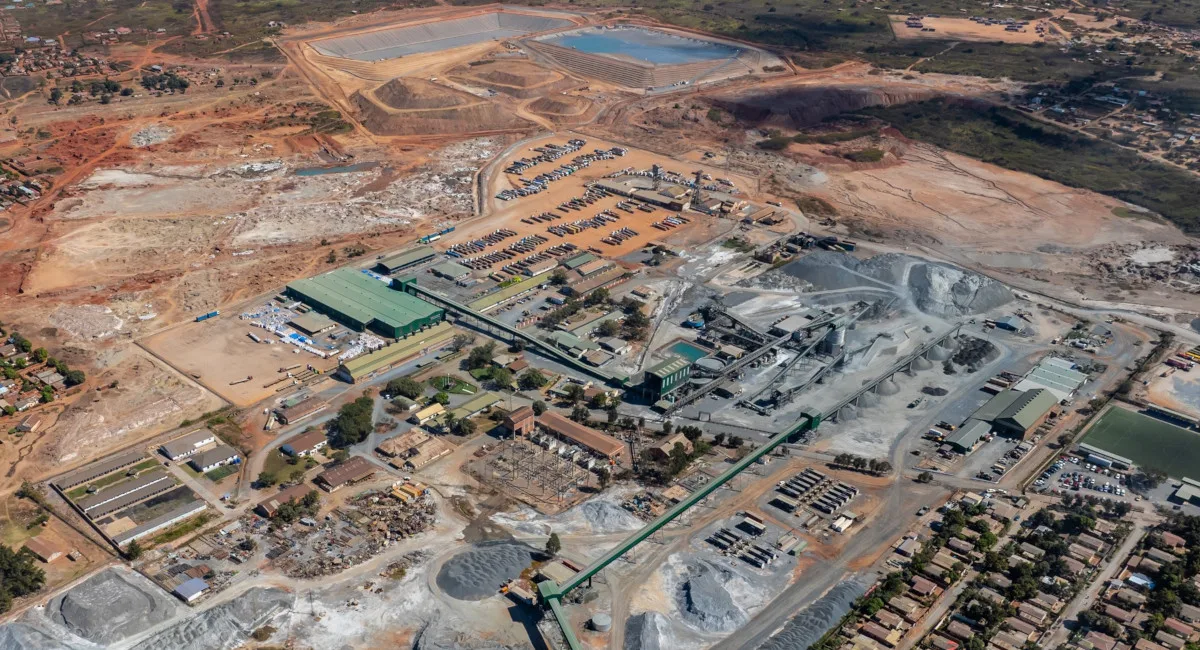
Kipushi zinc output hit a record 70,177 tonnes in the second quarter of 2026, an 8% rise on the previous three months. Ivanhoe Mines says the reopened Congolese mine now ranks among the world’s three largest zinc producers, just as prices reach their highest level since 2022.
What the Kipushi zinc numbers show
Ivanhoe Mines reported second-quarter production of 70,177 tonnes, a record and an 8% increase on the first quarter. The quarter also set records for ore processed, ore quality and recovery rates, at a cash cost of US$0.90 per pound.
The first half of the year reached 135,221 tonnes, against 84,534 tonnes in the same period of 2025. Full-year guidance of 240,000 to 290,000 tonnes is unchanged, and Ivanhoe says output at that level makes Kipushi one of the three largest zinc mines in the world.
Agence Ecofin reports that reaching guidance would put Kipushi behind only Rampura Agucha in India and Red Dog in the United States. Other tallies placed it fourth earlier this year, behind Peru’s Antamina — but Antamina and Red Dog are both cutting output while Kipushi ramps up.
Kipushi is an old mine, not a new discovery. It operated for much of the twentieth century, restarted in June 2024 after decades of closure, and was officially reopened by President Félix Tshisekedi in November of that year.
Since then, engineers have lifted the processing plant’s capacity by about a fifth. That is the simple reason the tonnages keep climbing: the same ore body, run through more machines, more efficiently.
Why the timing is fortunate
Zinc traded near US$3,824 a tonne on the London Metal Exchange on 21 August, its highest level since 2022. The metal has gained about a fifth since the start of the year.
The rally is about scarce supply, not booming demand. An explosion hit Glencore’s Kazzinc smelter in Kazakhstan in May, a fire stopped Nexa’s Cajamarquilla smelter in Peru, and industry forecasters now expect the zinc market to fall short of demand this year.
Zinc’s main job is to protect steel from rust, a process called galvanising used in construction, cars and household goods. It is an unglamorous metal — and right now, a profitable one.
A rising price on top of rising volume is an unusual combination for any producer. It means Kipushi’s revenue is growing considerably faster than its tonnage alone would suggest.
The metal nobody associates with Congo
The DR Congo is known abroad for cobalt and copper, and its policy fights are usually about those two. Zinc rarely features in the conversation.
Yet Kipushi, in Haut-Katanga province near the Zambian border, has quietly become a globally significant mine. It sits in the same mineral belt that made the country a copper power.
Ivanhoe Mines owns 62% of the operation and Gécamines, the state miner, holds 38% — a share set to rise to 43% next year under their agreement. That gives Kinshasa a direct stake in the price rally.
The ore body also carries germanium, a niche metal used in semiconductors and night-vision equipment that has become strategically sensitive. The United States has already shown interest in routing part of Kipushi’s output its way.
Concentrate, not metal
Everything Kipushi sells is concentrate — crushed and enriched ore, roughly half zinc by weight, that smelters abroad turn into refined metal. None of it is refined in Congo.
CITIC Metal and Trafigura take about two-thirds of output under 2024 agreements running to 2029. Mercuria takes the remaining third under a 2025 deal that included a US$20 million loan to the mine.
The concentrate is processed mainly in China. That is the same arrangement Kinshasa has fought over in copper and cobalt, where it has used export bans and quotas to press companies into processing more metal at home.
No such measure has been announced for zinc. Whether the government eventually applies the same pressure to Kipushi is an open question.
What this means for the wider market
New supply of this scale changes the arithmetic for a metal priced for scarcity. Kipushi alone could account for a meaningful share of global mine growth this year.
Latin American producers will be watching. Peru and Bolivia are major zinc exporters, and Nexa’s Peruvian and Brazilian operations compete for many of the same buyers.
A single mine rarely sets a global price. But when that mine is entering the top three and still ramping up, its production targets become something traders have to price in.
What is not yet known
There is no public figure for what Kipushi pays the Congolese treasury in royalties and taxes. That is the number that would show how much of the boom reaches the state.
The germanium contribution has not been broken out separately. And the final 2026 ranking among the world’s zinc mines depends on the second half delivering what the first half promised.
More: DR Congo news in English, every day from The Rio Times.
Frequently Asked Questions
How much zinc did Kipushi produce in the second quarter of 2026?
Kipushi produced a record 70,177 tonnes of zinc, up 8% on the first quarter. Ivanhoe Mines puts the annual pace at roughly 280,000 tonnes, inside full-year guidance of 240,000 to 290,000 tonnes.
Is Kipushi really one of the world’s three largest zinc mines?
Ivanhoe Mines says output at its 2026 guidance level makes Kipushi one of the top three. Independent tallies placed it fourth earlier this year behind Peru’s Antamina, but Antamina and Red Dog are both producing less while Kipushi produces more.
Who owns the Kipushi mine?
Ivanhoe Mines of Canada holds 62% and the Congolese state company Gécamines holds 38%. Gécamines’ share is set to rise to 43% in 2027 under their joint-venture agreement.
Is Kipushi zinc refined in the DR Congo?
No. All output is sold as concentrate to international traders and processed mainly in China.
Connected Coverage
Kinshasa has moved to force domestic processing by banning copper and cobalt concentrate exports, while Gulf money arrived through Qatari investment in the copper-cobalt belt. Congo’s minerals sit at the centre of Africa: The New Scramble, with more on our Central Africa desk.
This article was produced by The Rio Times’ automated newsroom system. How we use AI · Report an error · Editorial responsibility: Matthias Camenzind, Editor-in-Chief