Colombia · ECONOMY
Key Facts
- —What happened Ocampo urges keeping Colombia’s wealth tax for quake rebuild.
- —How big The tax raised COP 1 trillion (US$328 million) in 2024.
- —The real story Ocampo calls it the most progressive tax, offsetting hidden capital income.
- —The catch Any reform applies only from 2027, not the current budget year.
- —Who pays Only 32,397 taxpayers paid it in 2024, 0.5% of filers.
- —What comes next Government wants to phase it out, but no bill exists yet.
A former finance minister argues the levy is the fairest tax in Colombia, while the government wants it gone.
Keep Colombia wealth tax to help rebuild after the earthquake, former finance minister José Antonio Ocampo says. Ocampo publicly urged the government not to abolish the levy, which he called the most progressive of all taxes.
Ocampo’s Call to Keep Colombia Wealth Tax
However, José Antonio Ocampo, a former Colombian finance minister, has urged the government not to scrap the Colombia wealth tax. Infobae Colombia reported his argument on Sunday 23 August 2026, citing a column he wrote in El Tiempo.
Still, Ocampo said the tax should not be eliminated because it is the most progressive and offsets under-declared capital income. Infobae summarized his position, saying that keeping the wealth tax would be indispensable to inject resources for completing reconstruction of affected areas.
Ocampo served as finance minister under the previous government and designed the current wealth-tax structure. His column in El Tiempo, cited by Infobae, underscores his authority on the matter.
The wealth tax, known as the impuesto al patrimonio, is an annual levy on net worth. Ocampo’s stance reflects his design of the current structure.
Government Wants to Phase Out the Levy
President Abelardo de la Espriella’s government has stated it wants to eliminate the wealth tax gradually. El Espectador reported that De la Espriella has repeated that the levy hurts investment and its contribution to revenue is marginal.
However, the tax remains in force for now. Although no bill number or official title has been identified, reporting says it would form part of a new tax reform.
However, the government’s plan to phase out the tax faces a timing hurdle. Any tax reform applies only from 2027, not the current budget year.
However, the government’s plan lacks a specific bill or date. Meanwhile, the tax remains in force for now.
Wealth Tax Raises Little Revenue
El Espectador reported that the Colombia wealth tax raised barely COP 1 trillion (US$328 million) in 2024. That was about 0.6 percent of DIAN revenue.
Meanwhile, another outlet reported slightly higher figures: COP 1.21 trillion in 2023 and COP 1.47 trillion in 2024. These two estimates should be considered separately, as they come from different sources.
In fact, the tax’s contribution to state coffers is small. Meanwhile, the tax’s low yield—about 0.6 percent of DIAN revenue—supports the government’s view.
Still, Ocampo argues the tax’s progressivity outweighs its modest financial return. In addition, the tax’s yield is small compared to total revenue.
As a result, its fiscal impact is limited.
Few Taxpayers Are Affected
Only 32,397 taxpayers paid the wealth tax in 2024, around 0.5 percent of individual income-tax filers, El Espectador reported. This shows the tax is narrow in its reach.
The finance ministry set marginal rates starting at 0.5 percent on net wealth above COP 3 billion. It rises to 1 percent above COP 5 billion.
For four years only, the top rate reaches 1.5 percent above COP 10 billion (US$3.28 million). In addition, the tax’s narrow base means few individuals bear its burden.
This is because the threshold starts at COP 3 billion (US$984,000), limiting it to the wealthiest. Meanwhile, the tax’s narrow base means few individuals pay it.
However, the threshold starts at COP 3 billion, limiting it to the wealthiest.
Fiscal Room Is Thin After Earthquake
Moreover, Mauricio Salazar Sáenz told Blu Radio that Colombia faces the earthquake with little fiscal room. He added that any tax change now applies to 2027; therefore, a reform will not raise money for the current budget year.
This timing problem means that even if the government moves to scrap the wealth tax, the fiscal benefit would not come immediately. Meanwhile, the need for reconstruction funds is pressing.
Salazar Sáenz directs the Observatorio Fiscal at Universidad Javeriana, a public-finance watchdog. His comments highlight the fiscal constraints facing the government.
In addition, Salazar Sáenz’s comments highlight the fiscal constraints. As a result, the government faces tough choices on tax policy.
Wealth Tax Is Progressive, Ocampo Says
Ocampo’s defense of the Colombia wealth tax rests on its progressivity. He argued that it helps compensate for the under-declaring of capital income, making it a fairer levy.
In his quoted words, the wealth tax should not be scrapped because it is the most progressive of all taxes. By contrast, taxes like the financial-transactions tax hit all users equally.
However, the wealth tax’s progressivity contrasts with the 4×1,000, which hits all users equally. This difference is central to Ocampo’s defense of the levy.
However, the wealth tax’s progressivity contrasts with the 4×1,000. This difference is central to Ocampo’s defense of the levy.
Financial Transactions Tax Also Under Scrutiny
The 4×1,000, formally the Gravamen a los Movimientos Financieros or GMF, is Colombia’s financial-transactions tax. It charges four pesos on every thousand pesos moved out of a bank account, which is 0.4 percent of each transaction.
A bill filed in the Cámara de Representantes, the lower house of Congress, sets out the burden and size of this levy. In addition, the GMF is 0.4 percent of each bank transaction, paid by the user.
It raised COP 14 trillion in 2023, equal to 5 percent of all revenue. In addition, the 4×1,000 raised COP 14 trillion in 2023, a significant sum.
Still, no executive proposal to repeal it exists, only a legislative bill. Meanwhile, the GMF’s revenue is significant, but no executive repeal exists.
Still, the tax remains a burden on all users.
No Executive Proposal to End 4×1,000
No document, statement, or bill from the De la Espriella government proposing to remove or change the 4×1,000 was identified. The only repeal text found is a 2024 bill filed by legislators, not an executive proposal.
Analysts are not on record saying the earthquake will sink proposals to remove the 4×1,000. Instead, they note that fiscal room is thin and any tax change lands in 2027.
Meanwhile, analysts note that fiscal room is thin and any tax change lands in 2027. Thus, the earthquake’s fiscal pressure does not automatically kill repeal efforts.
In addition, analysts note that fiscal room is thin. However, any tax change lands in 2027, not now.
Debate Over Colombia Wealth Tax Continues
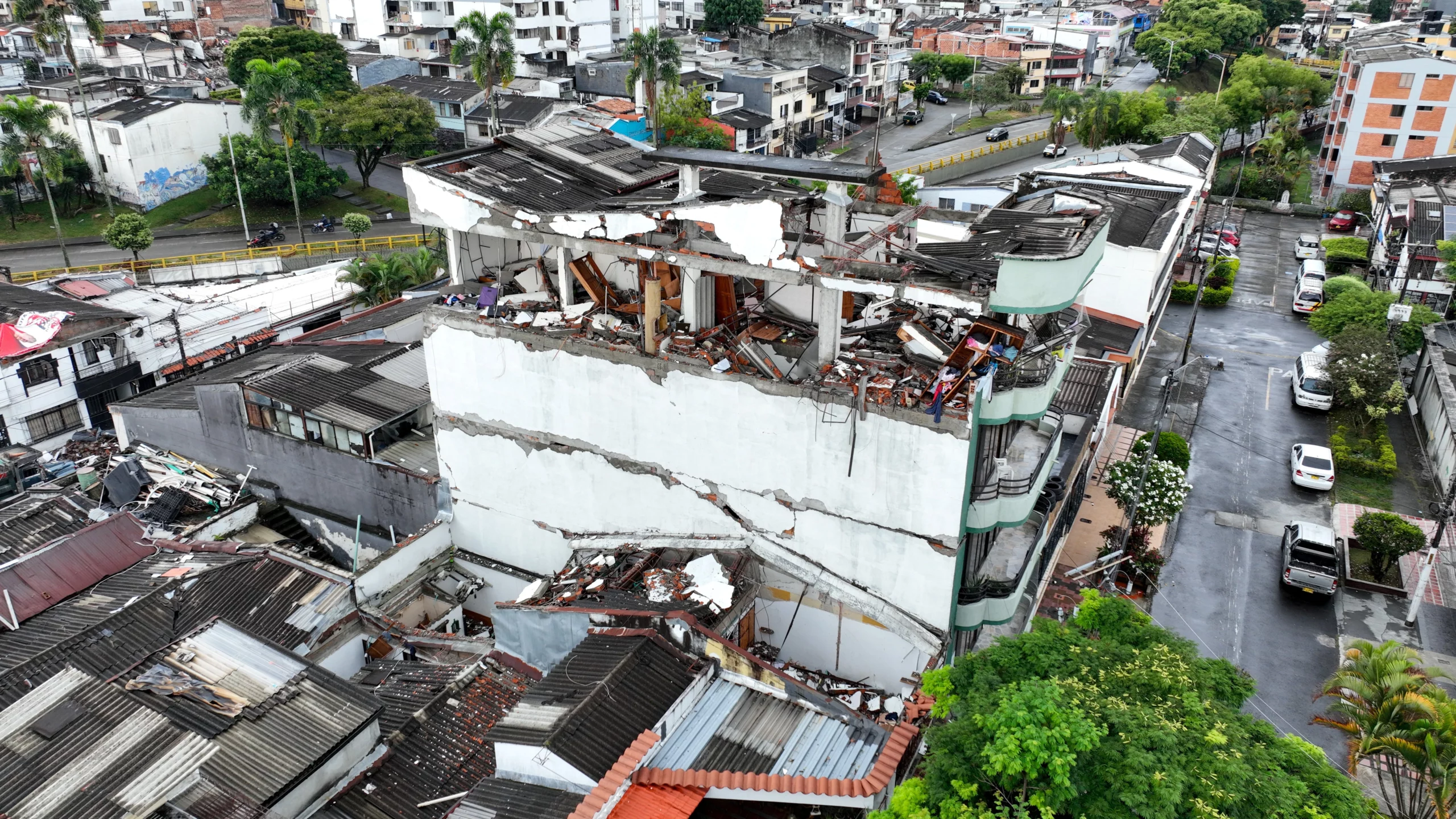
The debate over the Colombia wealth tax is now tied to the earthquake reconstruction effort. Ocampo’s call to keep the tax contrasts with the government’s desire to phase it out.
In short, the fiscal pressure from the disaster may strengthen the case for retaining the wealth tax, at least for now. However, any change to tax policy will only take effect in 2027, leaving the current budget year unaffected.
In addition, the wealth tax is an annual levy on net worth, distinct from income tax. This distinction shapes the debate over its fairness and utility.
Meanwhile, the debate is tied to reconstruction needs. However, any tax reform will only apply from 2027.
More: Colombia news in English, every day from The Rio Times.
Frequently Asked Questions
What is the Colombia wealth tax?
The impuesto al patrimonio is Colombia’s wealth tax, an annual levy on the net worth of individuals above a threshold. It is distinct from a tax on income, targeting accumulated wealth instead.
How much does the wealth tax raise?
In 2024, it raised barely COP 1 trillion (US$328 million), about 0.6 percent of revenue administered by DIAN, according to El Espectador. A separate outlet reported COP 1.47 trillion (US$482 million) for the same year.
Who pays the wealth tax?
Only 32,397 taxpayers paid it in 2024, around 0.5 percent of individual income-tax filers. The tax applies to net wealth above COP 3 billion (US$984,000), with rates up to 1.5 percent for the wealthiest.
Why does Ocampo want to keep the wealth tax?
Ocampo argues it is the most progressive of all taxes and helps offset under-declaring of capital income. Infobae reported that he also sees it as indispensable for injecting resources to complete reconstruction after the earthquake.
Connected Coverage
Sources: Infobae Colombia; El Tiempo; El Espectador; La República; Blu Radio; Ministerio de Hacienda y Crédito Público; DIAN; Cámara de Representantes.
This article was produced by The Rio Times’ automated newsroom system. How we use AI · Report an error · Editorial responsibility: Matthias Camenzind, Editor-in-Chief