
UGANDA · SOUTH SUDAN · TRADE
Key Facts
- —The country Uganda is South Sudan’s southern neighbour, and in August 2026 South Sudan was its second-largest formal export market in Africa, after DR Congo.
- —What happened On Monday, 5 October, Juba County’s caretaker commissioner, Kalisto Lado, announced a Juba retail ban on foreigners across the county, home to the capital.
- —Who was named He addressed Somalis, Ethiopians, Eritreans, Kenyans, Ugandans and “all other nationals”, telling them to move into wholesale, companies or factories.
- —What changed On Tuesday, 6 October, Lado called reports of a 7-day order to leave false and said expulsions are beyond a commissioner’s powers.
- —Trade at stake Uganda sold South Sudan about US$718 million of goods, informal trade included, in the 12 months to August, Bank of Uganda data show.
- —Still open Ugandan traders say the notice was verbal, and no written order, start date or penalty has been reported.
A Juba retail ban announced on Monday, 5 October, tells foreigners in South Sudan’s capital to leave small retail and motorcycle taxis to South Sudanese. It lands in a fragile, aid-dependent state where Washington counted nearly US$7.3 billion in humanitarian aid from 2011 to mid-2024.
Ugandan traders in Juba are in a panic, Uganda’s Daily Monitor reported; South Sudan bought about US$718 million of Ugandan goods in 12 months. On Tuesday, 6 October, the commissioner behind the ban denied social-media reports of a 7-day order to leave, Radio Tamazuj reported in Arabic.
What the Juba Commissioner Announced
Kalisto Lado is the caretaker commissioner of Juba County, the local government area of Central Equatoria State that contains South Sudan’s capital. The state’s caretaker governor, Augustino Jadalla Kamilo Wani, appointed him with effect from Thursday, 1 October.
He spoke on Monday evening at Kubri Haboba market in Juba’s Gudele Two area, the South Sudanese outlets Sudans Post and Eye Radio reported. The Juba retail ban applies across the county, not only at that market.
“No foreigner shall engage in retail business in Juba County,” Lado said, according to Eye Radio. He asked what South Sudanese women would sell if foreigners kept selling onions, chapati and tomatoes.
Lado also reserved motorcycle taxis, known locally as boda boda, and charcoal sales for South Sudanese youth. Foreigners who want to trade should open a company, run wholesale businesses or build factories, he said.
Sudans Post quoted him addressing “Somalians, Ethiopians, Eritreans, Kenyan, Ugandans and all other nationals.” He promised them security and a stay “without discrimination”, but said “the retail business is only for South Sudanese.”
Commissioner Denies a 7-Day Expulsion Order
Messages on social media then claimed that foreigners had 7 days to leave Juba County or South Sudan. On Tuesday, Lado called those reports untrue and beyond his powers, Radio Tamazuj, an independent outlet covering both Sudans, reported in Arabic.
“The commissioner never said that,” Lado said, adding that it is not a commissioner’s job to evict or expel people from South Sudan. He added that South Sudan stays open to foreigners who obey the law and stay out of crime.
The retail line stands, however. Lado said selling chapati, onions, tomatoes and other foodstuffs, and carrying passengers on boda bodas, should be left to South Sudanese citizens.
He tied the measures to a clean-up of Juba’s roads and markets, better security and preparations for elections due in December. Foreigners who respect the law have nothing to fear and “are allowed to do business”, he said.
A separate 7-day deadline does exist. At Kubri Haboba, Lado gave traders seven days to replace iron-sheet shops with concrete buildings, Eye Radio reported, warning: “No concrete, no business.”
Why the Ban Matters for Uganda
For Ugandans, the Juba retail ban lands in one of their biggest export markets. Leaders of Ugandan traders in Juba told the Daily Monitor on Tuesday that the notice was verbal and that no formal document had been issued.
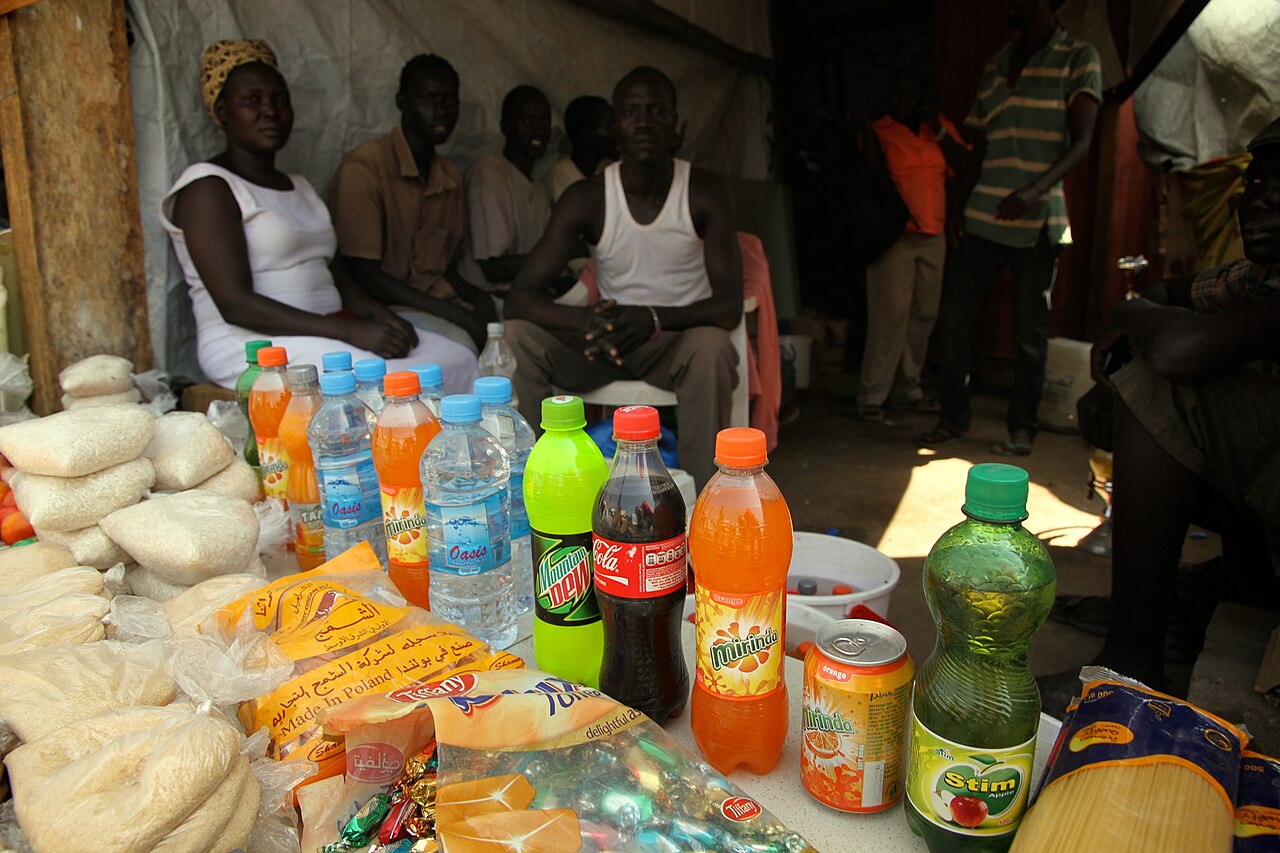
Ugandans own most shops and stalls in Juba’s Konyo Konyo and Gumbo markets, where most foodstuffs come from Uganda, the Monitor reported. Traders fear armed locals could seize or loot their businesses, as happened to Ugandans during fighting in 2013 and 2016.
The Bank of Uganda, the country’s central bank, tracks exports by destination every month. In August 2026, formal Ugandan exports to South Sudan reached US$50.0 million, second in Africa only to DR Congo at US$83.3 million.
The central bank also estimates informal cross-border trade, the small-scale business that customs records miss. Informal exports to South Sudan rose from US$6.7 million in February to US$26.8 million in August.
Over the 12 months to August, formal exports to South Sudan totalled about US$572 million and informal exports about US$146 million. Together that is roughly US$718 million.
Ugandan news site ChimpReports says many Ugandans in South Sudan run groceries, motorcycle taxis, salons and repair workshops. Lado took the same line in September 2021, when he was mayor of Juba City Council, Sudans Post reported at the time.
The Juba remarks follow a similar move in Kenya. In early September, Kenyan President William Ruto directed a crackdown on foreigners hawking or running small shops without licences, Uganda’s Daily Monitor reported.
Kenya then paused the crackdown for 90 days so East African traders could regularise their businesses. On Tuesday, 8 September, Uganda’s presidential office for diaspora affairs said it was engaging Kenya over delayed work permits and trading licences.
What East African Community Rules Say
The East African Community is an eight-member trade bloc headquartered in Arusha, Tanzania. South Sudan became a full member on 5 September 2016, joining Uganda, Kenya, Tanzania, Rwanda and Burundi.
The bloc’s Common Market Protocol, in force since 2010, promises free movement of people and labour and the rights of establishment and residence. Member states must not discriminate against each other’s citizens on grounds of nationality, the community says.
The protocol does allow limits on grounds of public policy, public security or public health. Sudans Post notes that South Sudan’s Investment Promotion Act gives national investors priority in retail commerce.
Several members already ring-fence small trade. Tanzania was the first to bar foreigners, East Africans included, from retail businesses, and Kenya followed in September, the Monitor noted.
Of the nationalities Lado named, Ugandans, Kenyans and Somalis come from fellow members. Ethiopia and Eritrea are not in the bloc, so its rules do not protect their traders in the Juba retail ban.
What It Means for US Readers
South Sudan, which won independence from Sudan on 9 July 2011, leans heavily on foreign aid. In July 2024, the US ambassador at the time, Michael Adler, put US humanitarian aid since 2011 at nearly US$7.3 billion, Radio Tamazuj reported.
Adler said about 9 million South Sudanese, roughly three-quarters of the population, needed humanitarian help. Disruption in Juba’s food markets would fall on a population already leaning on aid.
The US State Department rates South Sudan at Level 4, “Do Not Travel”, citing unrest, crime, kidnapping, landmines and health risks. Its advisory was last updated on 26 November 2025.
For investors, the Juba retail ban and Kenya’s crackdown test whether the bloc’s single market protects traders when local job pressure rises. A wider profile of the country is in South Sudan Explained 2026, the World’s Youngest Country.
The order does not, on Lado’s own account, expel anyone. Wholesale firms, companies and factories run by foreigners remain welcome, he said.
What Is Not Known
No written order, start date or penalty has been reported, and it is unclear how county officers would enforce the Juba retail ban. It is also unclear whether South Sudan’s national government backs the county’s line.
Lado gave no figure for how many foreign traders work in Juba’s retail markets. Whether Uganda or Kenya will raise the issue with Juba, or at the East African Community, is not known.
More: Uganda news in English, every day from The Rio Times.
Frequently Asked Questions
What is the Juba retail ban?
Juba County Commissioner Kalisto Lado said on Monday, 5 October, that foreigners may not run retail businesses in the county. He named chapati, onion, tomato and charcoal sales and motorcycle taxis as jobs for South Sudanese.
Are foreigners being expelled from South Sudan?
No, according to Lado. On Tuesday, 6 October, he called reports of a 7-day order to leave untrue, while keeping the Juba retail ban in place.
Who is affected by the Juba retail ban?
Foreign small traders in Juba County, which includes the capital. Lado named Somalis, Ethiopians, Eritreans, Kenyans and Ugandans, and said foreigners should move into wholesale, companies or factories instead.
Does the ban clash with East African Community rules?
The bloc’s Common Market Protocol bars discrimination against citizens of member states, though it allows limits on public policy, security or health grounds. Uganda and Kenya could question the Juba retail ban there, since all three countries are members.
Why does this matter to Americans?
South Sudan depends on foreign aid, including from the United States, and is due to hold elections in December. The Juba retail ban also touches Ugandan exports to South Sudan worth about US$718 million over the past 12 months.
Sources: Radio Tamazuj (Arabic): Kalisto Lado clarifies his remarks on foreigners in Juba, 7 October 2026; Eye Radio: “No foreigner shall engage in retail business,” Juba commissioner warns, 6 October 2026; Eye Radio: “No concrete, no business”, Kalisto orders Kubri Haboba traders to build permanent shops, 6 October 2026; Sudans Post: Juba commissioner orders foreigners out of small businesses, 6 October 2026; Daily Monitor: Ugandan traders in South Sudan panic after notice to ban foreigners in retail business, 6 October 2026; Eye Radio: Governor Jadalla appoints caretaker commissioners, Juba city mayor and deputies, 2 October 2026; ChimpReports: South Sudan orders Ugandans, Kenyans, Eritreans and Burundians in small businesses to leave, 6 October 2026; Bank of Uganda, Direction of Trade: Exports (data file, August 2026), 5 October 2026; East African Community: South Sudan, 7 October 2026; East African Community: Common Market, 7 October 2026; Daily Monitor: Uganda engages Kenya over delayed work permits, trading licences, 8 September 2026; Sudans Post: South Sudan capital’s mayor bans retail business for foreigners, 26 September 2021; Radio Tamazuj: US tells Juba to increase support to the vulnerable, 5 July 2024; US State Department: South Sudan Travel Advisory, 26 November 2025.
Editorial responsibility: Matthias Camenzind, Editor-in-Chief · Editorial standards · Report an error