Isolation in Brazil hits lowest levels since pandemic began – Datafolha
RIO DE JANEIRO, BRAZIL – At a time when the country has just been through the most lethal month of the pandemic and experts are considering a third wave of Covid-19 cases, Brazilians’ isolation rate is at its lowest since the start of restrictions imposed to contain the spread of the coronavirus.
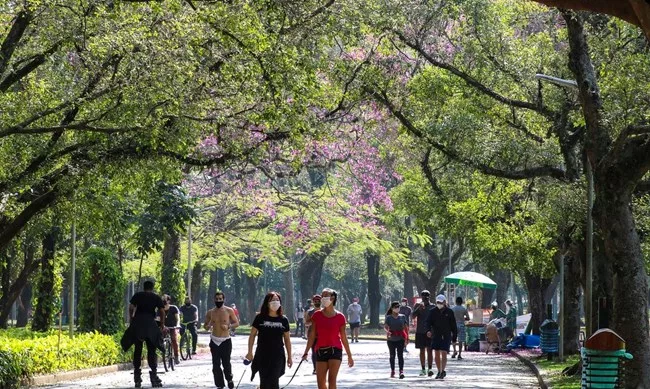
A Datafolha survey shows that only 3 out of 10 Brazilian adults (30%) are fully isolated or leave their homes only when strictly necessary. This percentage, which reached its highest in early April, at 72%, stood at 49% in March this year.
Of this 30%, 2% say they do not leave home under any circumstance – a drop of six percentage points from March 2021 (8%) and well off the 18% recorded in an April survey last year, at the very start of the pandemic.
Those who say they leave their homes only when strictly necessary total 28%, well below the 41% recorded in last March’s survey, when the country was experiencing the peak of the second wave of Covid-19, with shortages of ICU beds, oxygen, and medication for intubating patients.
Yet 63% of those who say they leave their homes for work and other activities say they take precautions. The rate is a record since the start of the pandemic and a leap from last March, when this group represented 47%.
On the other hand, 7% of respondents say they live a normal life, with no changes in their routine because of Covid-19.
Datafolha conducted 2,071 in-person interviews between May 11 and 12, in 146 municipalities, with Brazilians aged 16 and older, from all social classes and regions of the country. The survey’s error margin is 2 percentage points plus or minus, with a 95% reliability level.
Total isolation is the majority among people aged over 60 (considered a risk group for Covid-19), with 4% adherence. However, the rate is lower than in March, when 12% of respondents in this age group stated that they do not leave their homes. Between the two surveys, this was the group that benefited the most from the vaccination campaign against the disease in Brazil.
Among those who say they leave home only when strictly necessary, it is clear that caution is related to age. In the 16 to 24 age group, 19% avoid going out – a figure that reaches 49% among people over 60.
The low adherence of young people to social isolation was coupled with an increase in cases and hospitalizations for Covid-19. A survey by AMIB (Brazilian Intensive Care Medicine Association) showed that the percentage of deaths of patients aged between 18 and 45 in ICUs increased from 13.1% between September and November 2020 to 38.5% between February and March this year.
In the group of those who say they leave home to work and do other activities while being careful (63%), the highest rates were observed among men (68%, compared to 58% for women), among those aged 25 to 34 (72%), with more schooling (72% have higher education), and with family incomes of over 2 to 10 minimum wages (70%).
Among occupations, 84% of salaried workers, 82% of unregistered salaried workers, and 79% of entrepreneurs declare to be part of this group.
As for those who claim to be leaving home as normal, changing nothing in their routine, the highest percentages were observed among men (11%, compared to 4% for women), among those earning more than 10 minimum wages (10%), and those who always trust the words of President Jair Bolsonaro (14%).
Social isolation, a consensus among experts on how to curb a virus transmitted mainly by saliva droplets and aerosols, has been opposed by the president since the beginning of the pandemic. Bolsonaro has already used the words “hysteria” and “fantasy” to classify the population and the press’ reaction to the disease.
In a talk with supporters outside the Alvorada Palace on Monday morning, May 17, the president referred to people who stay home, obeying restrictive measures to prevent the spread of the coronavirus as “idiots”.
At Saturday’s event, from atop a sound truck, Bolsonaro again threatened to take action against a potential lockdown in the states. Last week, Bolsonaro said he had a decree ready to ban mayors and governors from implementing restrictive measures to fight the coronavirus, such as curfews and trade closures.
The president’s statement about the decree is another provocation to the STF (Federal Supreme Court), which has endorsed states and municipalities undertaking such measures in the fight against Covid-19.
PARTIES ARE THE MOST UNSAFE ACTIVITIES
Datafolha also assessed Brazilians’ sense of safety for some activities. Going to parties is considered the most unsafe. Only 4% of respondents say they feel very safe in such venues. Another 13% say they don’t feel very safe, and 82% don’t feel safe at all.
Going to churches and religious temples is pointed out as the activity with the least risk of contamination. According to the survey, 18% feel very safe, 42% somewhat safe, and 39% not safe at all in these places.
In March, President Bolsonaro included religious activities in the list of essential services, which should not be suspended even during the most critical phases of the pandemic.
Going out to work is rated as very safe by 14% of respondents, not very safe by 53%, and not safe at all by 31%.
Schools and colleges represent a very safe environment for 8% of respondents, not very safe for 43%, and not safe at all for 47%.
When asked about the opening of schools, 46% said that schools should remain closed during the whole pandemic. In contrast, 28% said they supported a partial opening, and 18% supported closing only during the most restrictive phases. Another 7% were in favor of opening with no restrictions, and 1% did not know.
A bill considering in-person classes of basic and higher education as essential services and activities was passed by the Chamber of Deputies in April. The text was sent to the Senate and had its vote deferred on May 6, after the approval of a request for a public hearing on the matter.
The bill bans the suspension of in-person classes, except when the health conditions in states and municipalities do not allow it, in a situation that must be based on technical and scientific criteria. In this case, the decision must be included in an official decree from the head of the state or municipal executive.
More: Brazil news in English, every day from The Rio Times.
This article was produced by The Rio Times’ automated newsroom system. How we use AI · Report an error · Editorial responsibility: Matthias Camenzind, Editor-in-Chief