Kenya Makes Solar Owners Pay for Power Fed to the Grid Without Approval
Kenya · ENERGY
Key Facts
- —The country Kenya, in East Africa, has about 57 million people and a US$136 billion economy, under a twentieth the size of Britain’s. Around nine-tenths of its electricity comes from clean sources.
- —Why it matters Rooftop solar is spreading fast among Kenyan firms and wealthier homes. Kenya Power, the national electricity distributor, says many systems are tied to its grid without permission, endangering staff and supply.
- —Why now The Energy and Petroleum Regulatory Authority (EPRA) is Kenya’s energy regulator. It changed Kenya Power’s tariff schedule in an official Gazette notice published on 18 September 2026.
- —What happened Solar power pushed into the grid without approval or a net-metering agreement is now “dumping”. It is billed at the base tariff, backdated to 1 July 2025.
- —The numbers Net-metering caps: up to 4 kilowatts (kW) for single-phase homes, 10 kW for three-phase homes, 1 megawatt for businesses. Each exported unit earns a bill credit worth half a unit.
- —What it means for you If you own or rent Kenyan property with grid-tied solar, check it has a net-metering agreement with Kenya Power. Without one, exported power can be billed.
- —Still open EPRA has not explained the backdating or published a fixed fine for dumping. It is unclear whether exports since July 2025 will be billed.
Kenya’s energy regulator now treats solar power pushed into the national grid without approval as “dumping”. Owners will be billed for it, under a rule backdated to July 2025.
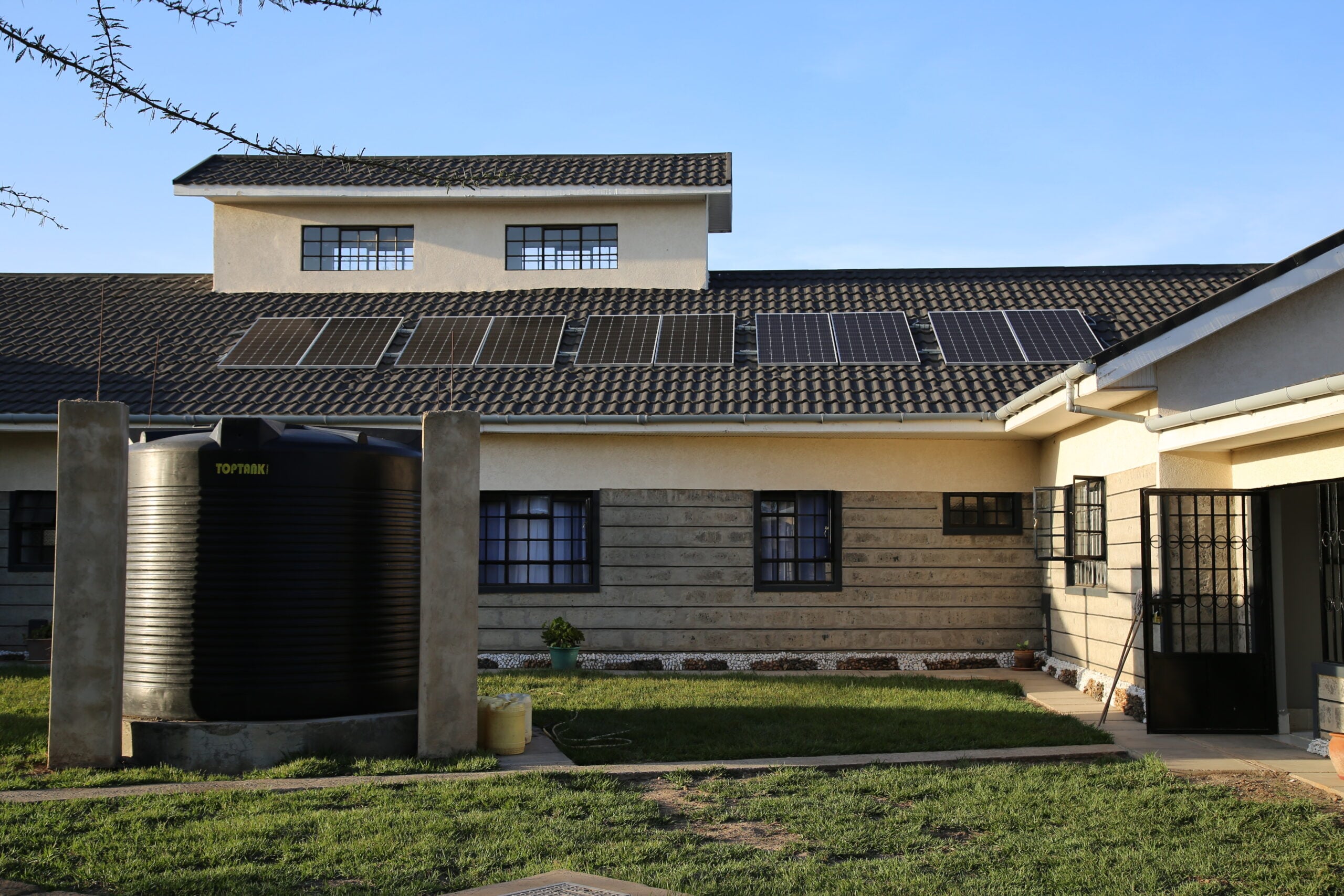
Kenya has started billing homes and businesses for illegal solar connections that push power into the national grid without approval. The rule comes from the Energy and Petroleum Regulatory Authority (EPRA), the country’s energy regulator.
It affects owners of rooftop and on-site solar systems, including foreign-owned firms and expatriate households. The grid itself is run by Kenya Power, the national electricity distributor.
What the new rule says
EPRA amended Kenya Power’s 2023 schedule of tariffs in a notice in the Kenya Gazette, the government’s official bulletin. The notice was published on Friday 18 September and is backdated to 1 July 2025.
It defines “dumping” as injecting electricity from a customer’s own generator into Kenya Power’s network without approval or a net-metering agreement. Such energy “shall be measured and charged at the applicable base tariff”, the notice says.
In plain terms, the owner pays for the power they gave away, at the normal price of grid electricity. Further action by Kenya Power or EPRA remains possible if the dumping causes injury or damages equipment.
What counts as illegal, and what does not
Net metering lets a customer export surplus power and draw it back later as a bill credit. Under the Energy (Net-Metering) Regulations of 2024, nobody may operate such a system without a signed agreement with the distributor.
Connecting without an agreement, breaching its terms or altering a system without approval is a criminal offence under those regulations. On conviction, it carries the fine set by the general penalty clause of the Energy Act of 2019.
Installation must be carried out by a person authorised by EPRA and must meet the national grid code. Systems above 10 kilowatts (kW) also need a feasibility study prepared by a licensed engineer.
The dumping charge concerns only power that flows into the grid. Solar power used entirely on site does not meet that definition.
The limits on legal exports
The regulations cap home systems at 4 kW on a single-phase supply and 10 kW on a three-phase supply. Businesses may go up to 1 megawatt (MW), limited to their peak demand over the previous 12 months.
Each exported unit earns a credit worth 50 percent of that unit, set off against later bills. Unused credits expire at the end of Kenya Power’s financial year, and no cash is paid out.
That 50 percent rate is not new; it dates from the 2024 regulations. The September notice simply writes it into the tariff schedule, as the trade publication pv magazine noted.
The national programme is capped at 100 MW of net-metered capacity for its first five years. Kenya Power must decide on each application within 60 days.
Why Kenya Power wants illegal solar connections stopped
Kenya Power’s managing director, Joseph Siror, said “uncontrolled grid-tied solar is one of our biggest issues currently”. He spoke on 25 September as the utility released results for the year to June 2026, Business Daily reported.
He said unauthorised connections had caused deaths and put technicians at risk during maintenance. Power fed back into a line that crews believe is switched off is a known electrocution hazard.
Siror also warned that when cloud cover cuts solar output, those users switch to the grid at once. That can cause a frequency dip and even a wider outage, he said.
According to EPRA data cited by Business Daily, Kenya had 326.7 MW of self-owned solar capacity at the end of 2025. That was 51.9 percent of all captive power, meaning private plants built for own use.
The bigger picture for Kenya’s grid
Kenya already gets most of its power from clean sources, mainly geothermal steam and hydropower. Its National Energy Compact, a 2025–2030 plan published with the World Bank, puts the clean share of generation at about 93 percent.
Effective installed capacity was 3,192 MW in December 2024, the compact says. Solar supplied 3.46 percent of the generation mix in 2023/24, while imports supplied 8.76 percent.
About three in four Kenyans had access to electricity in 2024, the compact adds. That makes a stable and solvent distributor central to the government’s goal of universal access by 2030.
What it means for foreign residents and investors
Anyone who owns or rents property with grid-tied solar in Kenya should ask for proof of a net-metering agreement. Without one, every unit the system exports can now be billed as dumped energy.
Companies planning rooftop plants above 1 MW cannot use net metering at all. They need separate embedded-generation or open-access arrangements, pv magazine reported.
The Energy Act also gives EPRA a general power to fine up to KSh100,000 (about US$772) per violation per day. That power runs for a maximum of 30 days, or KSh3 million (about US$23,200) per violation.
Conversions use KSh129.5 to the US dollar (open.er-api.com, 26 September 2026). For foreign-owned businesses, regularising illegal solar connections now costs less than the risk of back-billing.
What to watch next
EPRA has not explained why the notice is backdated by more than 14 months. It is unclear whether Kenya Power will bill past exports from July 2025 onwards.
No enforcement notices had been issued by 22 September, pv magazine reported. The first bills for dumped energy will show how strictly the rule is applied.
More background on the country is in our guide Kenya Explained. Kenya Power’s rising import costs are covered in our report on electricity bought from Ethiopia.
Frequently Asked Questions
What counts as an illegal solar connection in Kenya?
Any solar system that pushes electricity into Kenya Power’s grid without written approval or a net-metering agreement. EPRA classes that power as dumping and bills it at the applicable base tariff.
How much solar power can a home legally export in Kenya?
Homes may net-meter up to 4 kW on a single-phase supply and 10 kW on a three-phase supply. Each exported unit earns a bill credit worth half a unit, with no cash payout.
Is there a fixed fine for dumping solar power?
No fixed amount has been published; dumped energy is billed at the base tariff. Operating a net-metering system without an agreement is also a criminal offence under the 2024 regulations.
When does the new rule apply from?
The Gazette notice was published on 18 September 2026 but takes effect from 1 July 2025. EPRA has not explained the backdating.
Sources
- Business Daily, 25 Sep 2026
- pv magazine, 22 Sep 2026
- Pulse Kenya, 25 Sep 2026
- Kenyans.co.ke, 26 Sep 2026
- Energy (Net-Metering) Regulations, 2024 (Kenya Law)
- Energy Act, 2019 (Kenya Law)
- Kenya National Energy Compact (World Bank)
- World Bank data: Kenya
- open.er-api.com exchange rates
This article was produced by The Rio Times’ automated newsroom system. How we use AI · Report an error
LatAm Markets: Live Signals → — real-time movers, turnover leaders and FX across Latin America.
Read More from The Rio Times