IBOV 174,586.26 ▲ 0.01% IPSA 11,369.18 ▼ 0.71% IPC MEX 66,644.91 ▲ 0.53% MERVAL 3,024,971 ▲ 0.53% COLCAP 2,504.68 ▼ 0.15% BVL PERÚ 60,449.35 ▲ 0.30% USD/BRL5.13▼ 0.32% USD/MXN16.97▲ 0.05% USD/CLP920.93▲ 0.84% USD/COP3,122▲ 0.88% USD/PEN3.35▲ 0.26% USD/ARS1,514▲ 0.17% USD/UYU40.18▲ 1.55% USD/PYG5,957▲ 0.99% USD/BOB11.50▲ 1.47% USD/DOP58.01▲ 0.33% USD/CRC450.21▲ 2.07% USD/GTQ7.62▲ 2.21% USD/HNL26.82▲ 0.34% USD/NIO36.62▲ 0.79% USD/VES789.35▲ 0.36% USD/PAB1.00— 0.00% USD/BZD2.00— 0.00% USD/JMD 157.28 — 0.00% USD/TTD6.73▲ 1.10% EUR/BRL5.98▼ 0.35% BRENT 88.88 ▼ 0.03% WTI 83.11 ▼ 0.11% IRON ORE 161.91 — — COPPER 6.61 ▲ 0.03% GOLD 4,461 ▲ 1.78% SILVER 65.59 ▲ 1.26% SOY 1,184 ▲ 3.20% CORN 480.50 ▲ 10.02% WHEAT 655.00 ▲ 3.93% COFFEE 317.25 ▼ 5.51% SUGAR 16.43 ▼ 1.79% ORANGE JUICE 138.55 ▼ 0.47% COTTON 85.03 ▲ 2.33% COCOA 5,719 ▲ 3.18% BEEF 223.60 ▼ 3.93% CATTLE 339.10 ▼ 3.16% LITHIUM 75.20 ▲ 1.47% PETR4 41.64 ▼ 0.05% VALE3 72.97 ▲ 0.83% ITUB4 38.60 ▼ 1.03% BBDC4 16.85 ▲ 0.36% ABEV3 14.89 ▼ 0.80% BBAS3 19.37 ▲ 0.47% B3SA3 14.26 ▼ 0.21% WEGE3 47.59 ▲ 0.49% PRIO3 59.14 ▼ 0.19% SUZB3 41.33 ▲ 2.35% RENT3 34.68 ▼ 0.09% AZZA3 15.89 ▼ 2.63% CSAN3 3.22 ▼ 1.83% RAIZ4 0.25 — 0.00% PCAR3 2.75 ▼ 0.36% GMAT3 3.65 ▼ 1.08% PSSA3 48.13 ▼ 0.54% CVCB3 1.33 ▼ 2.92% POSI3 3.36 ▲ 2.44% SLCE3 13.34 ▲ 0.30% NATU3 8.14 ▼ 0.73% IBOV 174,586.26 ▲ 0.01% IPSA 11,369.18 ▼ 0.71% IPC MEX 66,644.91 ▲ 0.53% MERVAL 3,024,971 ▲ 0.53% COLCAP 2,504.68 ▼ 0.15% BVL PERÚ 60,449.35 ▲ 0.30% USD/BRL 5.16 ▲ 0.01% USD/MXN 17.06 ▼ 0.24% USD/CLP 913.98 ▲ 0.04% USD/COP 3,140 ▲ 0.03% USD/PEN 3.36 ▼ 0.66% USD/ARS 1,493 ▲ 0.10% USD/UYU 40.27 ▲ 1.24% USD/PYG 5,939 ▲ 1.68% USD/BOB 11.64 ▼ 0.76% USD/DOP 58.34 ▲ 1.25% USD/CRC 445.92 ▲ 0.89% USD/GTQ 7.62 ▲ 2.21% USD/HNL 26.79 ▲ 1.57% USD/NIO 36.62 ▲ 0.69% USD/VES 762.44 ▼ 0.13% USD/PAB 1.00 — 0.00% USD/BZD 2.00 — 0.00% USD/JMD 157.28 — 0.00% USD/TTD 6.70 ▲ 0.61% EUR/BRL 5.95 ▲ 1.01% BRENT 88.88 ▼ 0.03% WTI 83.11 ▼ 0.11% IRON ORE 161.91 — — COPPER 6.61 ▲ 0.03% GOLD 4,461 ▲ 1.78% SILVER 65.59 ▲ 1.26% SOY 1,184 ▲ 3.20% CORN 480.50 ▲ 10.02% WHEAT 655.00 ▲ 3.93% COFFEE 317.25 ▼ 5.51% SUGAR 16.43 ▼ 1.79% ORANGE JUICE 138.55 ▼ 0.47% COTTON 85.03 ▲ 2.33% COCOA 5,719 ▲ 3.18% BEEF 223.60 ▼ 3.93% CATTLE 339.10 ▼ 3.16% LITHIUM 75.20 ▲ 1.47% PETR4 41.64 ▼ 0.05% VALE3 72.97 ▲ 0.83% ITUB4 38.60 ▼ 1.03% BBDC4 16.85 ▲ 0.36% ABEV3 14.89 ▼ 0.80% BBAS3 19.37 ▲ 0.47% B3SA3 14.26 ▼ 0.21% WEGE3 47.59 ▲ 0.49% PRIO3 59.14 ▼ 0.19% SUZB3 41.33 ▲ 2.35% RENT3 34.68 ▼ 0.09% AZZA3 15.89 ▼ 2.63% CSAN3 3.22 ▼ 1.83% RAIZ4 0.25 — 0.00% PCAR3 2.75 ▼ 0.36% GMAT3 3.65 ▼ 1.08% PSSA3 48.13 ▼ 0.54% CVCB3 1.33 ▼ 2.92% POSI3 3.36 ▲ 2.44% SLCE3 13.34 ▲ 0.30% NATU3 8.14 ▼ 0.73%
since 2009
Thursday, August 27, 2026

Venezuela The Guyanas

Essequibo: with this process they will decide whether it belongs to Venezuela or Guyana

By · May 9, 2023 · 3 min read

Daily Brief

The morning intel from across Latin America. Free.

By subscribing you agree to our privacy policy. We never share your email.

By Sebastián Osorio Idárraga

The Essequibo, the geographic area currently occupied by the Republic of Guyana, continues to be a center of discussion and debate in Venezuela.

This dispute has spanned over 100 years and was stoked less than a decade ago by the territory’s natural resource wealth.

This extensive border conflict, for a territory of at least 159,500 square kilometers, passed into the hands of the International Court of Justice (ICJ) tribunal in 2018, an instance that Venezuela wanted to avoid but which the government of Nicolás Maduro ended up attending to claim a territory that it points out belongs to its country.

This territory comprises 160,000 square kilometers and has been in dispute at the International Court of Justice since 2018 (Photo internet reproduction)
One-stop reference
Company Intelligence
Every listed company in Latin America — financials, ownership and structure for 1,450+ companies across 26 exchanges, in one place.
Browse the directory →
RT
Ask Rio Times
17 years of Latin America reporting, on demand.
Open the full Ask Rio Times →

That year, the General Secretariat of the United Nations made public its decision to take this conflict between Venezuela and Guyana to the ICJ as part of the Geneva Agreement of 1966 (on which the Venezuelan government is based) since this conferred to the Secretary-General the power and responsibility to choose a means of peaceful settlement among those contemplated in Article 33 of the Charter of the United Nations.

It also states that if the means chosen do not lead to a solution, another one must be chosen by the General Secretariat.

WHAT IS THE PROCESS, AND HOW WILL IT BE DECIDED WHO OWNS THE ESSEQUIBO?

Venezuela revived the dispute over the Essequibo after, in 2015, the oil company Exxon Mobil Corp. announced the discovery of important oil deposits in the territorial waters of that region.

The company found an equivalent of 11 billion barrels of oil and gas offshore, some 190 kilometers off the coast.

After several years, last April, the ICJ court rejected Venezuela’s objections to its claim to the Essequibo by a vote of 14 judges to one, declaring the court competent to rule on the dispute and will proceed with hearings on the merits of this territorial dispute.

The timetable is not yet defined and could take months or years.
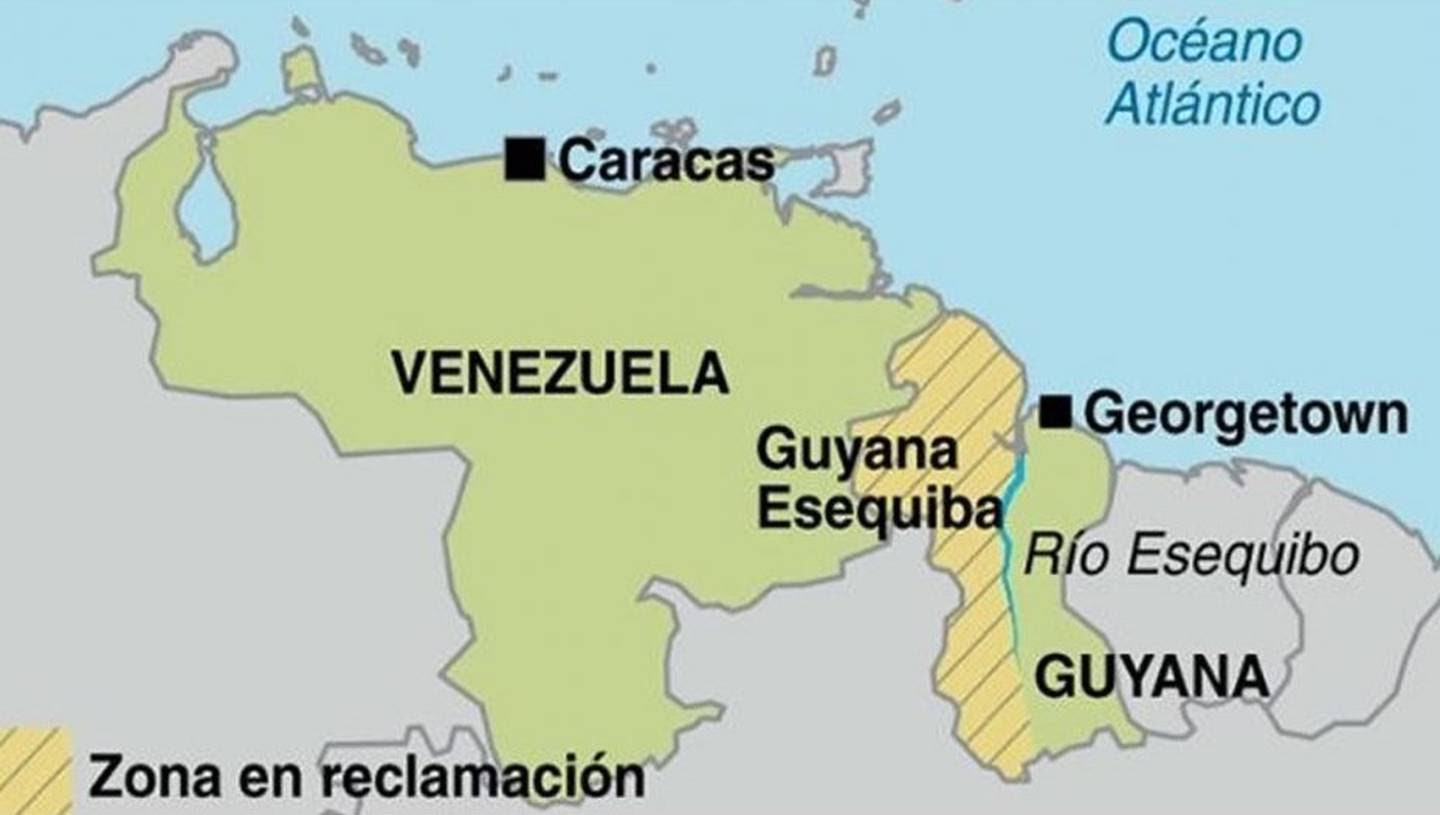
Map of Venezuela, Republic of Guyana, and Guyana Esequiba. In yellow and shaded, the disputed territory (Photo internet reproduction)

Making decisions on the issue’s merits will lead the ICJ to evaluate the two positions claimed by the nations.

The Republic of Guyana defends a territorial boundary established in 1899 in an arbitration court in Paris.

Venezuela, for its part, claims that it is the Geneva Agreement, signed in 1966 with the United Kingdom, which establishes the basis for a negotiated solution, ignoring the previous arbitration.

Given the ICJ’s decision, President Nicolás Maduro said in a communiqué that the Bolivarian Republic of Venezuela welcomed the judgment as it “makes clear the existence and validity of the Geneva Agreement of 1966, the only valid instrument to settle this territorial dispute”.

The text also points out that there is “illicit and fraudulent” conduct on the part of the United Kingdom in the dispute over this territory.

Meanwhile, the president of Guyana, Irfaan Ali, also showed optimism for what the highest UN court based in The Hague may decide on the case’s merits.

Ali said this was the second time the ICJ rejected Venezuela’s objections, hoping it would also confirm “its long-standing international boundary”.

He also said that all member states of the United Nations, “including Guyana and Venezuela, are bound under the UN Charter to comply with the judgments of the courts.”

With information from Bloomberg

Read More from The Rio Times

The Rio Times · Power Map
See who really holds power in Latin America
Click to open the Power Map

Rotate for Best Experience

This report is optimized for landscape viewing. Rotate your phone for the full experience.