Ecuador and Singapore Sign Cooperation Pact in Historic Visit
Ecuador · DIPLOMACY
Key Facts
- —What happened Ecuador and Singapore signed a cooperation memorandum on 24 August 2026 in Singapore.
- —How big The pact covers six areas—education, governance, digitalisation, sustainability, public health, and trade.
- —Who signs Singapore’s Foreign Minister Vivian Balakrishnan and Ecuador’s Foreign Minister Roberto Carlos Kury Pesantes signed.
- —The catch A memorandum is a framework, not money—no funded projects or budgets were announced.
- —What comes next Both governments will likely set up working groups to turn the framework into concrete actions.
The memorandum sets a framework for cooperation in six areas, but no money or projects were attached.
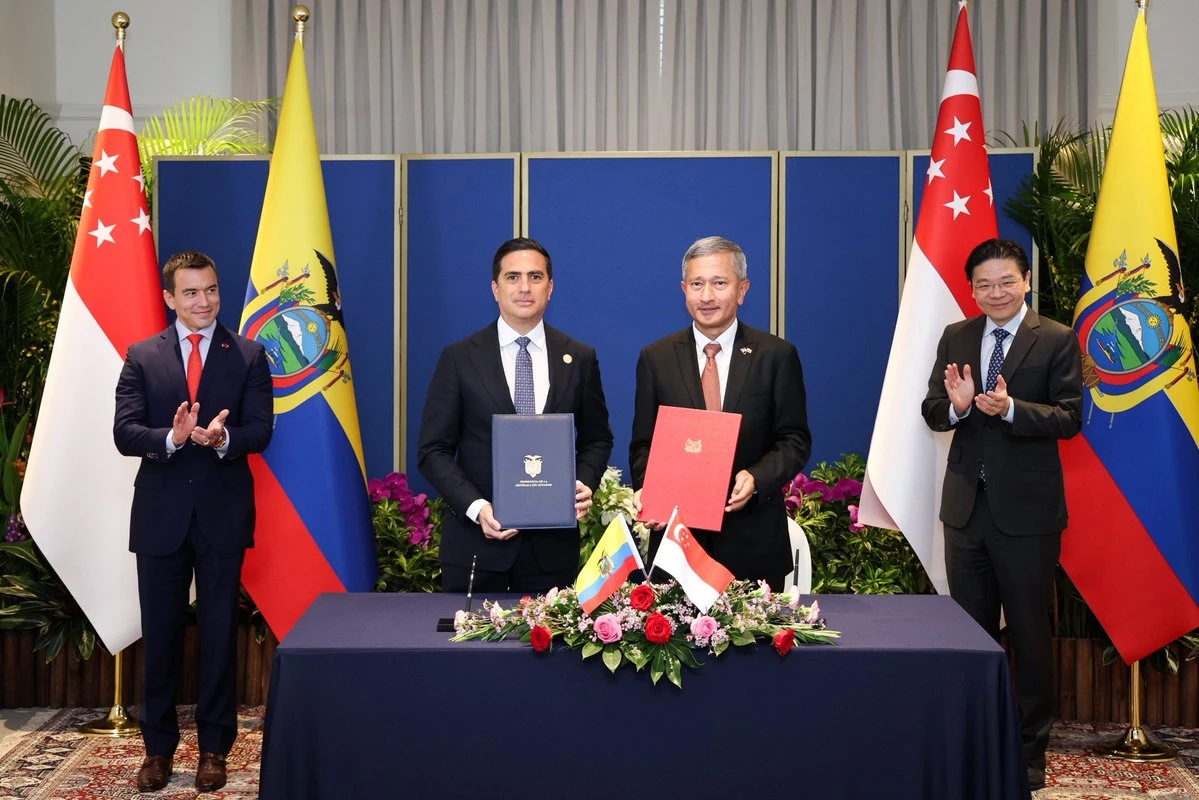
Ecuador and Singapore signed a cooperation memorandum on 24 August 2026 in Singapore, during President Daniel Noboa’s state visit. Foreign ministers Vivian Balakrishnan and Roberto Carlos Kury Pesantes signed the document, witnessed by both presidents.
A Historic First State Visit
President Daniel Noboa made the first state visit by an Ecuadorian leader to Singapore, arriving on 24 August 2026. His trip aimed to strengthen ties with one of Asia’s most dynamic economies.
Singapore’s President Tharman Shanmugaratnam received Noboa, highlighting the importance of the visit. The leaders oversaw the signing of a cooperation memorandum between the two nations.
The memorandum establishes a formal framework for collaboration across multiple sectors. It reflects a shared interest in learning from each other’s strengths and building long-term partnerships.
For Ecuador, the visit opens doors to Singaporean expertise in technology and governance. For Singapore, it expands its network of partners in Latin America.
What the Memorandum Covers
The Ecuador Singapore agreement names six main areas of cooperation: education, leadership and governance, digitalisation, sustainability, public health, and trade and economy. Each area is a broad field where both countries see potential for joint work.
Education and leadership may involve student exchanges and training programs for officials. Digitalisation could focus on smart government services and e-governance, areas where Singapore excels.
Sustainability and public health are global priorities, and the memorandum acknowledges shared goals. Trade and economy remain central, given Ecuador’s exports and Singapore’s role as a trade hub.
The memorandum does not specify budgets or timelines for these areas. It serves as a starting point for future negotiations and project development.
Signing Ceremony Details
The signing took place in Singapore on 24 August 2026, during Noboa’s official program. Foreign Minister Vivian Balakrishnan signed for Singapore, while Roberto Carlos Kury Pesantes signed for Ecuador.
Both presidents were present as witnesses, signaling high-level political backing. The ceremony was also attended by other officials from both governments.
The document is described as a memorandum of understanding, a common tool in international diplomacy. Such documents outline intentions but do not carry binding financial commitments.
This is the first such agreement between the two countries, according to reports from El Universo and The Straits Times. It marks a new chapter in bilateral relations.
Why Singapore Matters to Ecuador
Singapore is a global hub for finance, technology, and trade, making it an attractive partner for Ecuador. Its small size but high economic output offers lessons in efficient governance.
Ecuador seeks to diversify its economy beyond oil and agriculture, and Singapore’s expertise could help. The memorandum creates a channel for knowledge exchange and technical assistance.
Singapore, in turn, sees Latin America as a growing market and a source of natural resources. This agreement could open doors for Singaporean companies in Ecuador.
Trade between the two countries has been modest but has room to grow, and the memorandum supports that goal.
No Money, No Funded Projects
Despite the enthusiasm, the memorandum is not a funding deal. No budgets, loans, or grants were announced as part of the signing.
The document is a framework that guides future cooperation, not a commitment to specific projects. This is the key detail that observers should keep in mind.
Both governments will need to negotiate separate agreements for any concrete initiatives. The memorandum simply lays the groundwork for such discussions.
It is common for such documents to be followed by working groups or joint committees. These would then identify and propose specific projects.
Leadership and Governance Focus
One of the six areas is leadership and governance, which could involve training for public officials. Singapore is known for its clean and efficient civil service, and Ecuador may seek to learn from that model.
Exchange programs for mid-career professionals and joint seminars are likely outcomes. These would be low-cost but high-value activities.
The memorandum mentions ‘human development’ in some reporting, suggesting a focus on people. The Straits Times headline referred to cooperation in human development.
Such initiatives could improve public administration and policy-making in Ecuador over time.
Digitalisation and Sustainability
Digitalisation is a priority for both countries, and the memorandum includes it as a key area. Singapore is a leader in e-government and smart city solutions.
Ecuador could adopt similar technologies to improve services and transparency. The agreement may lead to technical cooperation in this field.
Sustainability is another shared interest, with both nations facing environmental challenges. Singapore invests in green infrastructure, while Ecuador has vast biodiversity to protect.
Joint research or pilot projects in sustainability could emerge from this framework.
Public Health and Trade Potential
Public health cooperation could involve sharing best practices in healthcare delivery and pandemic response. Singapore’s strong health system is a model for many countries.
Ecuador may benefit from training and knowledge transfer in this sector. The memorandum does not specify details, but it opens the door for future collaboration.
Trade and economy remain the core of the agreement, with both sides eager to boost commerce. Ecuador exports bananas, shrimp, and flowers, while Singapore is a major re-export hub.
The memorandum may lead to trade facilitation measures, but no concrete steps have been announced yet.
More: Ecuador news in English, every day from The Rio Times.
Frequently Asked Questions
What did Ecuador and Singapore sign on 24 August 2026?
They signed a memorandum of understanding on cooperation, covering education, governance, digitalisation, sustainability, health, and trade. The document was signed by the foreign ministers of both countries.
Who signed the Ecuador Singapore agreement?
Singapore’s Foreign Minister Vivian Balakrishnan and Ecuador’s Foreign Minister Roberto Carlos Kury Pesantes signed on behalf of their governments. Presidents Tharman Shanmugaratnam and Daniel Noboa witnessed the signing.
Does the memorandum include any money or funded projects?
No, it is a framework without funding commitments. No budgets or projects were announced at the signing.
What are the six areas of cooperation?
The areas are education, leadership and governance, digitalisation, sustainability, public health, and trade and economy. These were named in the reporting.
What happens next after the memorandum?
Both governments are likely to set up working groups to develop specific projects. No timeline has been announced.
Connected Coverage
Chile’s Kast Defends Security Reform Amid ‘Illiberal’ Criticism
Sources
This article was produced by The Rio Times’ automated newsroom system. How we use AI · Report an error · Editorial responsibility: Matthias Camenzind, Editor-in-Chief