Ecuador Jails Gang Boss Fito’s Wife and Daughter in La Roca After Colombia Expels Them
ORGANISED CRIME · ECUADOR
Key Facts
- —The country Ecuador uses the US dollar and has become a main cocaine exit route. Gang wars over that trade have made it one of Latin America’s most violent countries.
- —What happened Colombia expelled the wife and daughter of gang leader “Fito” on 29 September 2026. Since 30 September both are held in a Guayaquil prison, El Universo reported.
- —The numbers Prosecutors say the laundering network moved more than US$25.8 million. The wife had about US$1.3 million in unexplained income from 2020 to 2024 (El Comercio, 29 September).
- —What it means for you Ecuador, Colombia and the FBI are working together against gang money. Their stalled trial can now resume in Ecuador.
- —Still open Neither woman has been convicted. No date has been set for the resumed hearings.
The wife and daughter of Ecuador’s best-known gang leader are now in La Roca, a prison in Guayaquil. Colombia expelled them on Tuesday 29 September, two days after their arrest.
Both face trial for money laundering in a case prosecutors put at more than US$25.8 million. Their part of that trial had been paused while they were on the run.

From Santander to Guayaquil
The women are Inda Mariela Peñarrieta Tuárez and Michelle Jamileth Macías Peñarrieta. They were detained on 27 September in Sabana de Torres, in Colombia’s Santander department.
Ecuador’s police, its intelligence centre, Colombian forces and the FBI took part. The arrest was first covered in Colombia Holds Ecuador Gang Boss’s Wife, Daughter in US$25M Laundering Case.
They landed at the police air base in Guayaquil at about 23:00 on 29 September, El Universo reported. Interior Minister John Reimberg said Colombia expelled them for using false identities.
Their husband and father is José Adolfo Macías, alias “Fito”, leader of the Los Choneros gang. He was recaptured in June 2025 and extradited to the United States, where he faces drug and weapons charges.
What La Roca is now
The prison once held Fito himself before his extradition. In November 2025 the government moved its male inmates out and rebuilt the prison for high-risk women.
It also takes women charged in major corruption cases, according to El Universo. In April 2026, 61 women were moved there.
Reimberg called it a maximum-security prison for women on 29 September, El Comercio reported. El Universo notes he earlier classed it as medium security, with the nearby Encuentro prison as the top tier.
Inmates are kept one to a cell, with doors that limit contact with guards. Fito’s partner, Verónica Briones, is already held there after a first-instance ten-year sentence in the same case.
The money behind the case
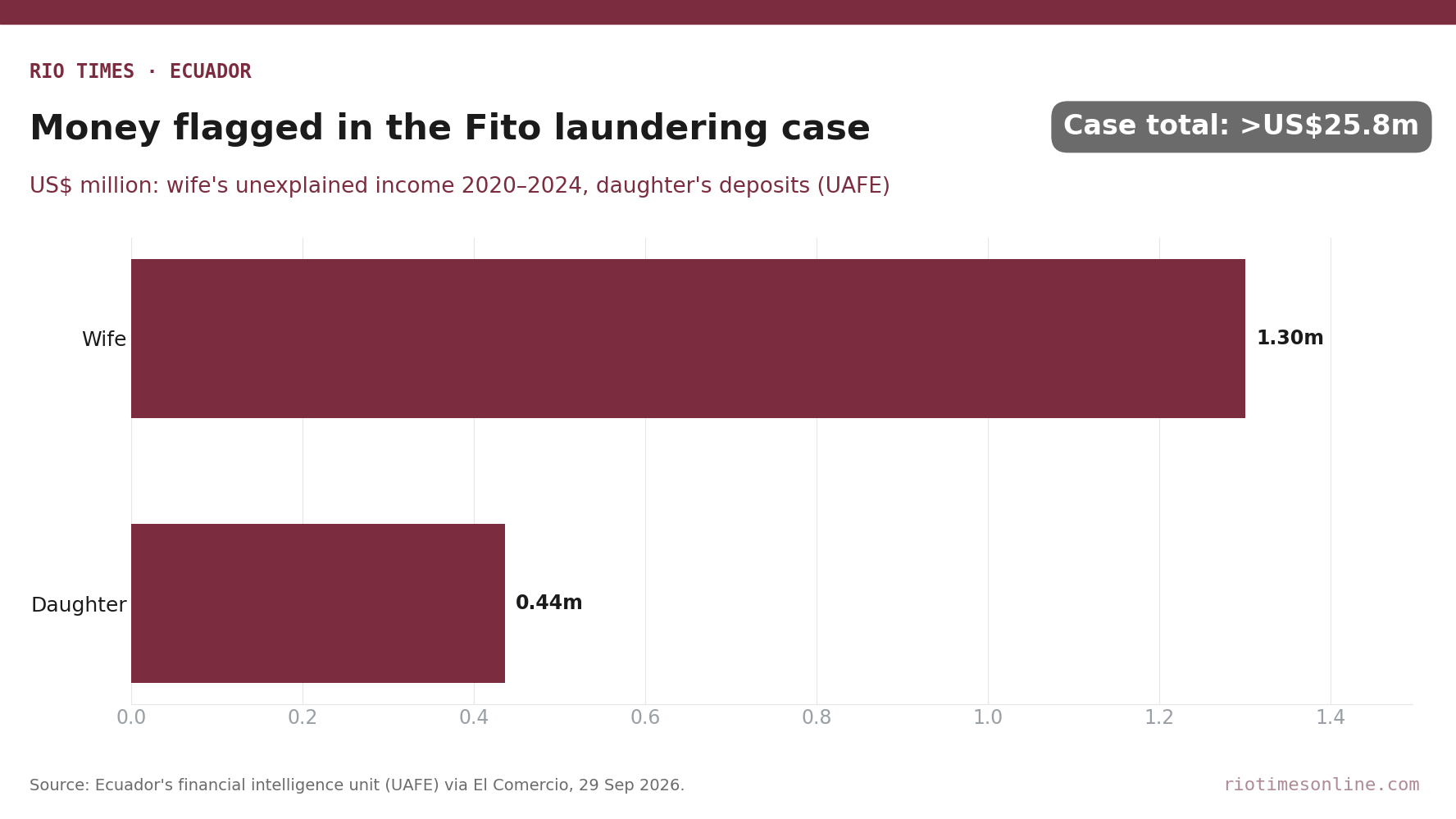
The case is known as Blanqueo Fito. Prosecutors say a network of companies and relatives moved more than US$25.8 million linked to the gang leader.
Ecuador’s financial intelligence unit (UAFE) flagged about US$1.3 million in unexplained income for the wife between 2020 and 2024, El Comercio reported. It flagged US$435,900 in deposits for the daughter.
In March 2026 a judge sent 17 people and four companies to trial. Reimberg said on 29 September that both women ran cash lending for Los Choneros, a claim not yet tested in court.
A second deportation, a different outcome
Argentina deported the same women in January 2024. They walked free in Ecuador then, because no arrest warrants were active.
This time they arrived with Interpol red notices, international wanted alerts, and valid warrants. That is why prison, not release, followed the flight. For wider context, see Ecuador Explained: The Country, the Security Crisis, the Economy and What to Watch.
What Is Not Yet Known
No date has been set for the women’s resumed hearings. It is also unclear whether US prosecutors will seek either woman in Fito’s own case.
Their defence has not been reported publicly. Neither woman has been convicted, and both are presumed innocent.
Sources: El Universo, 29 September 2026 and 30 September 2026; El Comercio, 29 September 2026 and 29 September 2026; statements by Interior Minister John Reimberg, 29 September 2026.
Read More from The Rio Times