Dollar Dips Amid Federal Reserve Speculation, Ibovespa Follows Suit
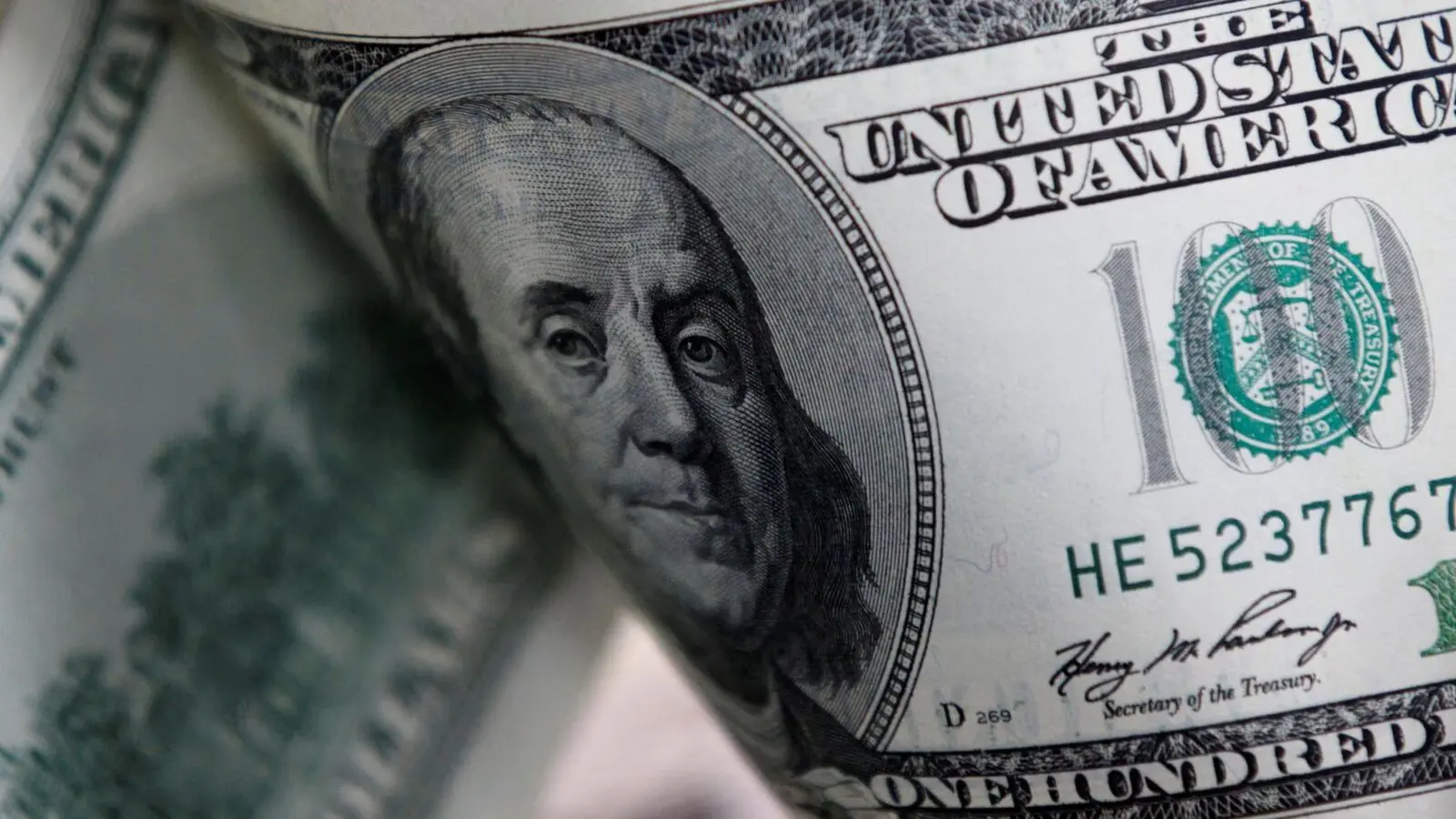
On August 2, 2024, Brazil’s financial markets experienced notable shifts. The US dollar closed at R$5.7109, marking a 0.44% decline from the previous day’s trading.
Earlier in the day, the dollar had approached R$5.80 but lost momentum as trading progressed. This decline mirrored a broader retreat of the US currency in global markets.
Investors speculated that the Federal Reserve might implement a significant interest rate cut in September. This expectation was fueled by recent economic data indicating a slowdown in the US economy.
The Federal Reserve‘s policy decisions are closely watched by global markets, and any hint of monetary easing can significantly impact the dollar’s value.
Despite the daily dip, the greenback still posted a 0.93% gain for the week, highlighting ongoing volatility in currency markets.
At 17:04, the first-maturity futures dollar on B3 fell by 0.74%, trading at R$5.7290.
Factors Influencing the Dollar
Several factors influenced the dollar’s performance on August 2, 2024:
Federal Reserve Expectations:
The anticipation of a potential interest rate cut by the Federal Reserve in September led to a weakening of the US dollar.
This expectation was fueled by recent economic data indicating a slowdown in the US economy.
US Economic Data:
Weaker-than-expected job creation figures and an increase in the unemployment rate in the US raised concerns about the health of the US economy.
This data reinforced the possibility of monetary policy easing by the Federal Reserve, which in turn affected global markets.
Global Market Sentiment:
The broader retreat of the US dollar in international markets was also a factor. With other central banks like the ECB and Bank of England expected to ease policies, the US dollar’s appeal wanes.
However, this dynamic allows other currencies to gain ground against the dollar.
Outlook
Looking ahead, analysts remain divided on the dollar’s trajectory. Some predict further weakening if the Fed confirms rate cuts.
Others caution that the real world may face pressure until monetary policy changes materialize.
There is also the possibility that if the US economy starts to cool sharply, the Federal Reserve might have to act aggressively, which could lead to a stronger dollar as investors seek safe-haven assets.
For the Ibovespa, current bearish trends might present buying opportunities. Long-term prospects for Brazil’s market remain positive, especially if US monetary easing begins.
Conclusion
As global economic winds shift, Brazil’s financial landscape continues to evolve. Investors and policymakers alike watch closely.
They navigate the complex interplay of domestic and international factors shaping the country’s economic future.
The performance of the dollar and the Ibovespa on August 2, 2024, underscores the interconnected nature of global financial markets and the significant impact of US monetary policy on emerging economies like Brazil.
Key Facts
— Deep Dive
Live Market IntelligenceBrazil — Live Market Board
Rio Times · Live Market Intelligence
Brazil — Live Market Board
+0.23%
204,787.81
+0.23%
67,663.29
+1.31%
11,010.12
+0.35%
2,860,760
+0.06%
2,574.78
-0.22%
60,210.69
+0.10%
| Instrument | Last | Change | YoY | Prev. | High | Low | Volume |
|---|---|---|---|---|---|---|---|
| IBOV | 204,787.81 | +0.23% | +21.85% | 204,324.26 | 168,310 | 167,142 | — |
| USD/BRL | 5.16 | +0.01% | -5.13% | 5.16 | 5.18 | 5.14 | — |
| SELIC | 14.00% | — | — | — | — | — | |
| PETR4 | 41.64 | -0.05% | +35.19% | 41.66 | 41.97 | 41.15 | 41,499,400 |
| VALE3 | 72.97 | +0.83% | +30.75% | 72.37 | 73.54 | 72.66 | 17,658,000 |
| ITUB4 | 38.60 | -1.03% | +4.57% | 39.00 | 39.34 | 38.39 | 29,487,800 |
| BBDC4 | 16.85 | +0.36% | +3.50% | 16.79 | 16.90 | 16.67 | 19,416,900 |
| BBAS3 | 19.37 | +0.47% | +0.73% | 19.28 | 19.44 | 19.16 | 11,069,200 |
| B3SA3 | 14.26 | -0.21% | +12.73% | 14.29 | 14.47 | 14.11 | 33,037,800 |
| ABEV3 | 14.89 | -0.80% | +21.91% | 15.01 | 15.07 | 14.81 | 16,453,100 |
| WEGE3 | 47.59 | +0.49% | +29.99% | 47.36 | 48.08 | 47.36 | 3,364,600 |
| PRIO3 | 59.14 | -0.19% | +50.67% | 59.25 | 59.81 | 58.74 | 3,325,600 |
| SUZB3 | 41.33 | +2.35% | -23.55% | 40.38 | 41.48 | 40.35 | 3,914,900 |
| RENT3 | 34.68 | -0.09% | +0.84% | 34.71 | 34.96 | 34.35 | 7,979,100 |
| AZZA3 | 15.89 | -2.63% | -53.76% | 16.32 | 16.42 | 15.82 | 1,330,300 |
| CSNA3 | 4.30 | +0.47% | -42.65% | 4.28 | 4.41 | 4.26 | 10,076,100 |
| GGBR4 | 24.69 | +2.19% | +51.38% | 24.16 | 24.85 | 24.18 | 7,047,600 |
| ENEV3 | 24.21 | -1.38% | +70.49% | 24.55 | 24.64 | 23.99 | 9,297,000 |
— For the complete picture, read our in-depth guide: Latin America Stock Markets 2026: Ibovespa, Merval, COLCAP, IPSA and IPC Guide
This article was produced by The Rio Times’ automated newsroom system. How we use AI · Report an error · Editorial responsibility: Matthias Camenzind, Editor-in-Chief
LatAm Markets: Live Signals → — real-time movers, turnover leaders and FX across Latin America.