Colombia Uribe Investigation: Mancuso Backs None of the Claims
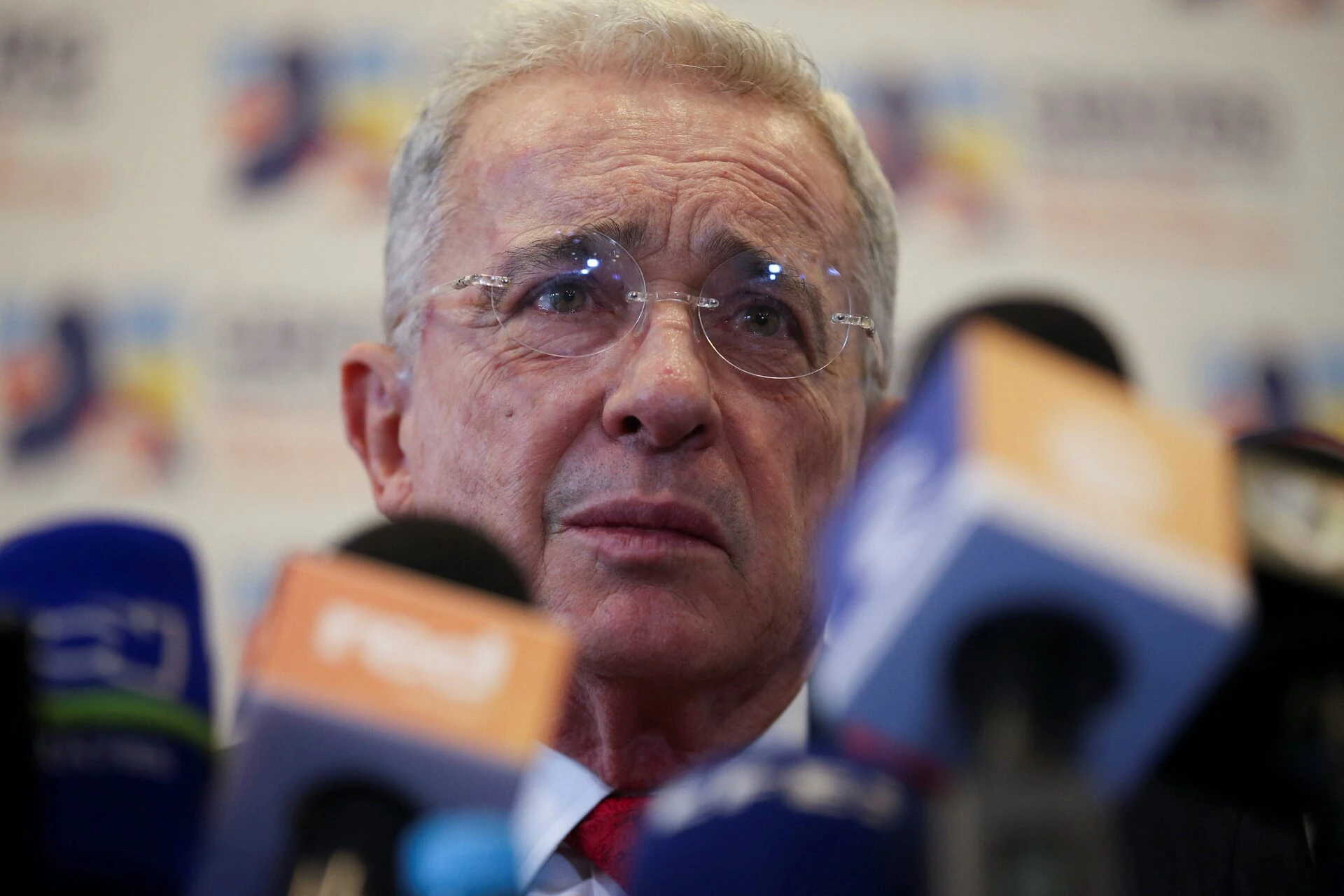
COLOMBIA · POLITICS
Key Facts
- —What happened Salvatore Mancuso testified for about three hours in Montería on September 3 about massacres investigated in Antioquia.
- —What he said Asked repeatedly about Álvaro Uribe’s knowledge or orders, he answered that he had no direct knowledge.
- —The real story The prosecution’s own witness did not support the central claim the investigation is built on.
- —The catch He did confirm that a former Antioquia government secretary asked paramilitaries for help with illegal actions.
- —Who appeared next Uribe attended his own questioning at the prosecutors’ Bogotá headquarters on the morning of September 4.
- —What comes next A separate case, in which Uribe was acquitted on appeal, is still before the Supreme Court.
Prosecutors called the most senior surviving paramilitary commander in Colombia to talk about Álvaro Uribe. He answered, at length, that he could not confirm anything.
Prosecutors in Colombia spent three hours this week asking a former paramilitary commander about a former president. The Colombia Uribe investigation got very little from the answers.
The witness was Salvatore Mancuso, once a senior commander of the AUC. The AUC was the umbrella group of right-wing paramilitary armies that fought Colombia’s guerrillas in the 1990s and 2000s.
He testified on Wednesday, September 3, in Montería, capital of Córdoba department. The questioning was led by Gloria Marcela Abadía, the third delegate prosecutor before the Supreme Court.
Reports of the length differ slightly. Publimetro put it at three hours, Semana at three and a half.
What the Colombia Uribe Investigation Is About
This is not the case most readers will remember. It is a separate inquiry into events in Antioquia in the late 1990s.
Three episodes are at its centre. They are La Granja in June 1996, San Roque in September 1996, and El Aro in October 1997.
Four people were killed at La Granja. Seventeen were killed at El Aro.
The killing of the lawyer Jesús María Valle is also part of it. Valle had denounced paramilitary activity in Antioquia and was shot on February 27, 1998.
Álvaro Uribe was governor of Antioquia during that period. The question prosecutors are asking is whether he knew about, ordered or supported any of it.
What Mancuso Actually Said
The short answer is that he said no, or that he did not know, to almost everything. His most quoted phrase was that it did not stand to him as fact.
On El Aro, he said he could not confirm that any instruction had come directly from Uribe. He used the Spanish phrase no me consta, which means he had no personal knowledge of it.
On La Granja he was asked whether Uribe ordered, supported or suggested the attack. He answered that he did not know.
He gave the same answer about whether Uribe belonged to the Bloque Metro, an AUC unit in Antioquia. Again, no personal knowledge.
One question concerned an alleged meeting at a place called La Marranera. Mancuso denied it outright, saying he never took part in any meeting of that kind.
He added that he had never had any communication with Uribe. He also denied that Uribe was present at a ceremony decorating paramilitary troops.
That last denial matters because another witness, Francisco Villalba, had placed Uribe there. Mancuso did not support him.
On the killing of Jesús María Valle, Mancuso pointed elsewhere. He attributed it to Carlos Castaño Gil, the AUC’s founder.
The One Answer That Cut the Other Way
Mancuso did not say nothing at all. He ratified under oath one earlier statement about the Antioquia government of that period.
He confirmed that Pedro Juan Moreno, the department’s former government secretary, asked the AUC for support. The support requested was for illegal actions in Antioquia.
Moreno was Uribe’s closest collaborator in the governor’s office. He died in a helicopter crash in 2006.
That statement is about Moreno, not about Uribe. It is the only part of the testimony that helps the prosecution, and it is indirect.
Uribe’s Own Turn, One Day Later
The former president was questioned the next morning. He arrived at the prosecutors’ headquarters in Bogotá on Friday, September 4, at nine o’clock.
He spoke briefly on the way in. “I have not been a murderer,” he said.
He added that he came with the firm conviction that he had not taken part in creating paramilitary groups. That has been his position throughout.
The session had been rescheduled more than once. It was first set for July, then moved to August, before landing on this week.
The Other Case, and Where It Stands
Most international coverage of Uribe concerns a different matter entirely. That is the witness-tampering case, and its status is frequently reported wrongly.
A judge convicted him on July 28, 2025 of witness bribery and procedural fraud. On August 1, 2025 she sentenced him to twelve years of house arrest.
That conviction did not stand. On October 21, 2025 the Superior Tribunal of Bogotá overturned it and acquitted him.
Prosecutors and victims then appealed to the Supreme Court in January 2026. That appeal, called a casación, is still pending.
It was briefly frozen in February over a challenge to the reporting magistrate. The court rejected the challenge on February 4, 2026 and the appeal resumed.
So the accurate description today is narrow. Uribe stands acquitted at appeal, with a further appeal against that acquittal undecided.
Why This Week Mattered Anyway
A prosecution that calls a witness expects something from him. In this Colombia Uribe investigation, the most senior available insider placed him nowhere near the events.
That does not end the inquiry. Prosecutors have other witnesses, documents and the record of earlier confessions from demobilised commanders.
It does change the weather around it. The Colombia Uribe investigation now rests less on insider testimony and more on paper.
For a country that has argued about Uribe for twenty years, the argument is not going to be settled by one deposition. But this week it moved, and it moved in his favour.
More: Colombia news in English, every day from The Rio Times.
Frequently Asked Questions
What is the El Aro and La Granja investigation?
It is a Colombian prosecution inquiry into whether former president Álvaro Uribe knew about or supported paramilitary massacres in Antioquia in 1996 and 1997, when he was governor.
Did Salvatore Mancuso incriminate Uribe?
No. Asked about El Aro, La Granja and an alleged meeting, he said he had no personal knowledge and denied ever meeting or communicating with Uribe.
Did Mancuso say anything against the former Antioquia government?
Yes. He ratified that Pedro Juan Moreno, the department’s former government secretary and a close Uribe collaborator, asked paramilitaries for support for illegal actions.
Is Uribe currently convicted in the witness-tampering case?
No. He was convicted in July 2025 and sentenced in August, but the Superior Tribunal of Bogotá acquitted him on appeal on October 21, 2025.
Is that case finished?
Not yet. Prosecutors and victims filed a further appeal to the Supreme Court in January 2026. It was briefly suspended in February and remains undecided.
Sources: Semana, Infobae Colombia, Publimetro, El Tiempo, El Colombiano, CNN en Español, El País, La Patilla, Centro Nacional de Memoria Histórica, Rio Times.
This article was produced by The Rio Times’ automated newsroom system. How we use AI · Report an error · Editorial responsibility: Matthias Camenzind, Editor-in-Chief
In depth