Colombia’s Peso Breaks 3,200 as 2027 Deficit Is Seen Worse Than the Pandemic
COLOMBIA · ECONOMY
Key Facts
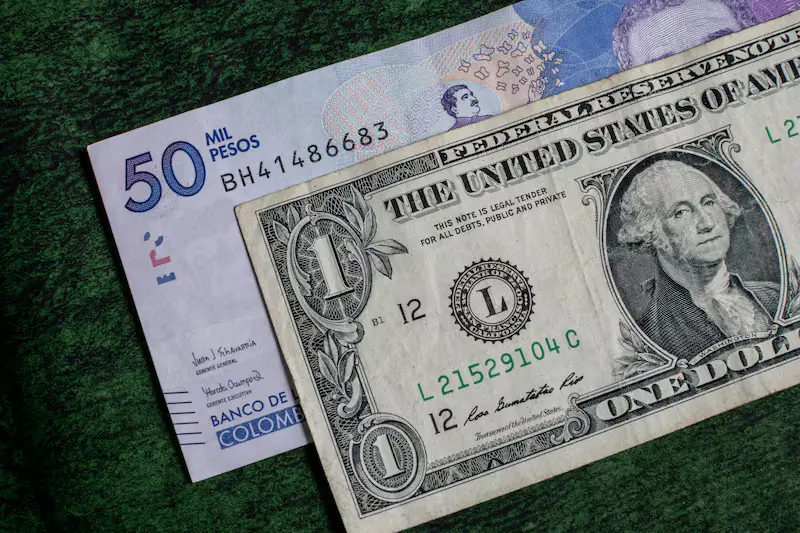
What happened: Colombia’s peso weakened past 3,200 per dollar after five straight sessions of losses.
How big: The official rate fixed at 3,202.79 on Monday, a slide of about 5 percent in a week.
The real story: New analysis puts the 2027 deficit at 9.4 percent of GDP, above even the pandemic year.
The catch: The government’s own adjustment plan would still leave the deficit above 7 percent of GDP.
Who pays: Financing needs nearly double to COP 238.6 trillion (US$74.5 billion), crowding out investment.
What comes next: Congress debates the budget while a rescue law aims to cut up to COP 40 trillion (US$12.5 billion).
Colombia’s peso broke through 3,200 per dollar on Monday as warnings over the Colombia 2027 budget escalated. A new analysis puts next year’s deficit at 9.4 percent of gross domestic product, deeper than the pandemic year itself.
The peso tells the story first
Colombia’s currency has fallen through five consecutive sessions. The official exchange rate, known as the TRM, fixed at 3,202.79 pesos per dollar for Monday 31 August.
The TRM, short for Tasa Representativa del Mercado, is the reference rate published daily by the Financial Superintendency. A week ago it stood near 3,048, so the peso has lost roughly 5 percent in seven days.
Currency moves like this are rarely about one headline. They are the market’s running verdict on the Colombia 2027 budget numbers.
A deficit deeper than the pandemic’s
The starkest warning comes from Andrés Pardo, head of Latin America macro strategy at XP Investments and a former deputy finance minister. His reading of the Colombia 2027 budget, published by Forbes Colombia, puts the 2027 deficit at 9.4 percent of gross domestic product (GDP).
That is more than double the 4.5 percent foreseen in the government’s own medium-term fiscal framework. It would also exceed 2020, the pandemic year, when the central government deficit reached 7.8 percent of GDP.
The deterioration starts earlier. The updated financial plan raises this year’s deficit estimate from 5.3 to 7.2 percent of GDP.
Even full success would not be enough. If the government delivered its entire planned adjustment, XP calculates the Colombia 2027 budget deficit would still top 7 percent of GDP.
Where the money goes: interest first, investment last
The interest bill alone rises from 3.9 to 4.9 percent of GDP in the new scenario. The primary balance, which excludes interest, swings from a projected 0.5 percent deficit to 4.5 percent.
Debt issuance needs nearly double as a result. They climb from COP 125.6 trillion (US$39.2 billion) to COP 238.6 trillion (US$74.5 billion), an increase of almost 90 percent.
Of the new total, COP 150.9 trillion (US$47.1 billion) would be domestic debt and COP 87.7 trillion (US$27.4 billion) foreign. Central government net debt would reach 66.2 percent of GDP, against 58.9 percent previously expected.
The bigger budget does not buy more investment. Operating spending rises from COP 368 trillion to COP 393 trillion (US$122.7 billion), while investment falls from COP 90 trillion to COP 87 trillion (US$27.2 billion).
What the government says it will do
Deputy Finance Minister Juan Sebastián Betancur acknowledged the scale this week. Stabilising the debt requires an adjustment of more than four points of GDP, he said, and a “drastic” correction is not possible quickly.
The plan is to spread the fix over four years, favouring spending cuts over tax rises. Richard Francis of Fitch Ratings reached a similar conclusion, saying an adjustment of at least four points cannot be done in one year.
The government will file a fiscal adjustment law and act by executive decree. Together the measures aim to cut up to COP 40 trillion (US$12.5 billion), close to two points of GDP.
XP considers even that target optimistic given the politics. Colombia’s Congress has spent much of the year blocking revenue measures.
The warnings are piling up
Anif, the research centre backed by Colombia’s banks, warned last week that ordering the public finances could take four, six or eight years. It sees debt ending near 66 percent of GDP even under a credible plan.
This morning, industry chief Bruce Mac Master called the fiscal situation extraordinarily severe. He spoke as president of ANDI, the country’s largest business association.
For foreign readers, the chain is straightforward. A bigger deficit means more borrowing, more borrowing means higher interest costs, and higher interest costs mean a weaker peso.
The next checkpoints for the Colombia 2027 budget are the debate in Congress and the text of the rescue law. The peso’s five-session slide suggests investors are not waiting for either.
More: Colombia news in English, every day from The Rio Times.
Frequently Asked Questions
Why is Colombia’s peso weakening?
A run of fiscal warnings over the Colombia 2027 budget has hit confidence. The official TRM rate fixed at 3,202.79 per dollar on 31 August after five sessions of losses, a slide of about 5 percent in a week.
How big is Colombia’s 2027 deficit?
XP Investments calculates 9.4 percent of GDP, against 4.5 percent in the government’s medium-term framework. That would exceed even 2020, the pandemic year, when the deficit reached 7.8 percent.
What are Colombia’s 2027 financing needs?
Debt issuance needs nearly double to COP 238.6 trillion (US$74.5 billion), from COP 125.6 trillion (US$39.2 billion). COP 150.9 trillion would be domestic debt and COP 87.7 trillion foreign.
What does the government plan to do?
It will file a fiscal adjustment law and act by decree to cut up to COP 40 trillion (US$12.5 billion). Even fully delivered, that would leave the 2027 deficit above 7 percent of GDP.
What is the TRM?
The Tasa Representativa del Mercado is Colombia’s official dollar exchange rate. The Financial Superintendency calculates it daily from market transactions.
Connected Coverage
This follows this morning’s Colombia’s 2027 Budget Is a Stabilisation Operation, Warns Industry Chief Bruce Mac Master and last week’s Colombia’s 2027 Budget Draws an Eight-Year Warning from Anif. For the market detail, see Friday’s COLCAP and peso wrap.
Sources: Forbes Colombia, XP Investments, Anif, Fitch Ratings, Superintendencia Financiera de Colombia (TRM), Ministry of Finance.
This article was produced by The Rio Times’ automated newsroom system. How we use AI · Report an error · Editorial responsibility: Matthias Camenzind, Editor-in-Chief
In depth