Colombia Moves to Bring Car Assembly Back, With Mazda First in Line
COLOMBIA · AUTOMOTIVE
Colombia latest: Colombia news — latest coverage · Colombia Starts Clearing 553 Stalled Infrastructure Permits
Key Facts
What happened: Colombia’s president confirmed talks for Mazda to resume vehicle assembly in Colombia after twelve years away.
How it ended: Mazda’s Bogotá assembler built its last car on 30 April 2014, cutting about 500 jobs.
The wider push: Toyota is discussing hybrid and electric assembly after ministerial meetings in Tokyo in late August.
The catch: Every project is still a negotiation, with no signed investment, no chosen site and no date.
The incentive: A June decree offers zero tariffs on imported assembly kits and machinery for electric vehicle plants.
What comes next: Colombia and Japan have resumed talks on an economic partnership agreement to lower trade barriers.
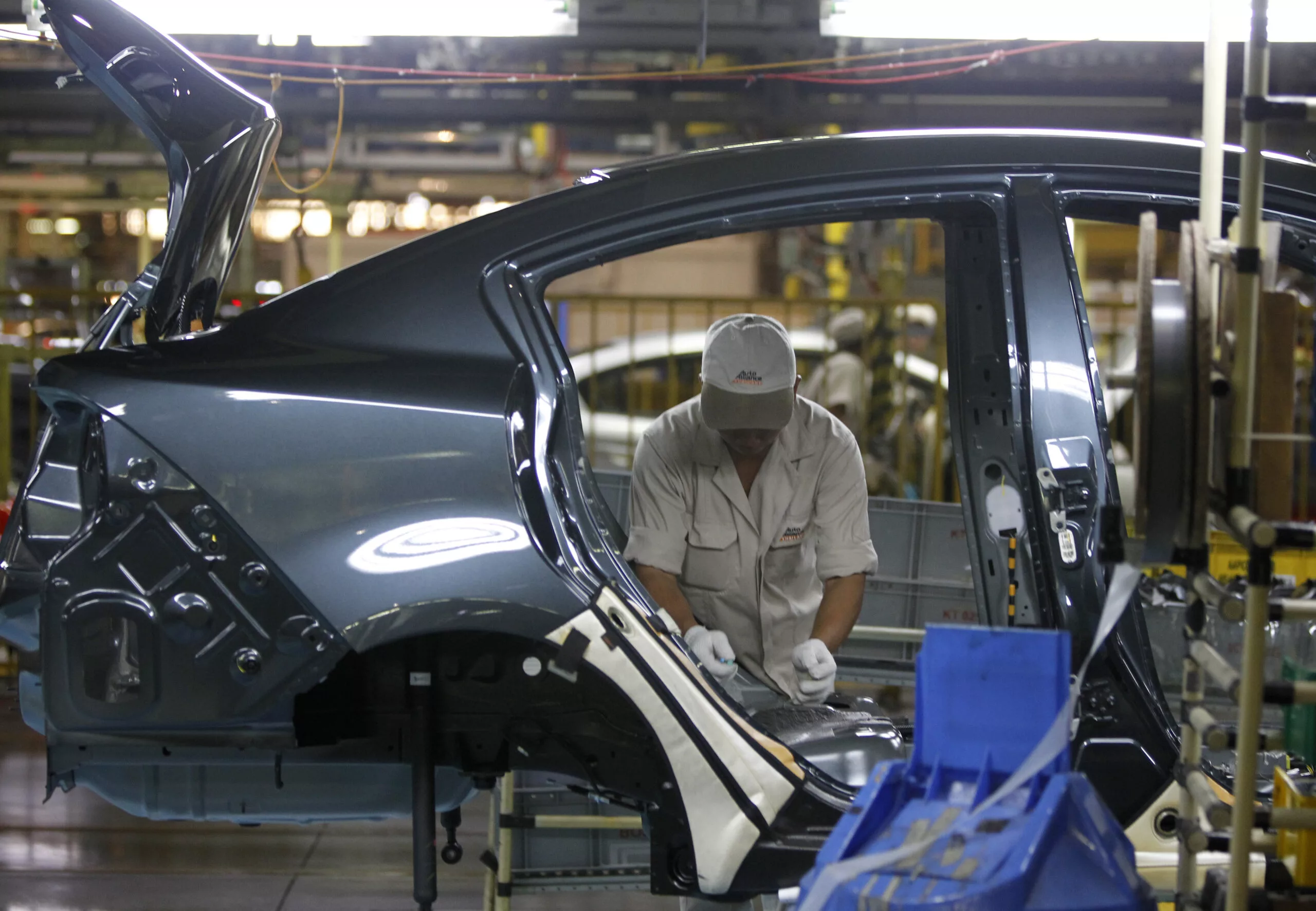
Colombia’s government confirmed at the weekend that it is negotiating Mazda’s return to local car assembly, twelve years after the last Mazda left a Bogotá production line, with Toyota and an electric-vehicle programme close behind.
What the government confirmed about Mazda
President Abelardo de la Espriella said his government is working so that Mazda can assemble vehicles in the country once more. The statement was reported by the news outlet La Veintitrés on 30 August 2026.
The wording matters. De la Espriella spoke of work in progress, not of a signed agreement or a construction start.
Mazda Motor Corporation has not announced any decision of its own. For now, assembly in Colombia is an offer from the government, not a commitment from the carmaker.
Even so, a sitting president naming a brand on the record is unusual. It signals that the talks have moved beyond a first phone call.
Twelve years after the last Mazda left Bogotá
Mazda began assembly in Colombia in 1983, through a Bogotá firm called the Compañía Colombiana Automotriz, or CCA. The partnership ran for three decades and built the 323 and 626 into national favourites.
The last car left that plant on 30 April 2014. The closure cost about 500 jobs, according to La Veintitrés.
Mazda’s own statement at the time gave the reasons plainly. Exports to neighbouring markets had shrunk, and imported cars had become cheaper. A new plant in Mexico had also changed the company’s map of the region.
Since then every Mazda sold in the country has arrived fully built, mostly from Japan and Mexico. Mazda set up its own Colombian sales company in May 2014 to manage that import business.
Toyota, Tokyo and the Japan trade talks
The Mazda overture sits inside a wider Japanese mission. Commerce minister Mauricio Gómez Amín led a delegation to Tokyo in late August, the ministry reported on 26 August 2026.
In Tokyo, Gómez Amín met Japan’s minister of economy, trade and industry, Toshiro Ino. The two discussed reviving and concluding an economic partnership agreement, or EPA, a trade deal the two countries have floated for years.
The delegation also sat down with Hiroshi Nanbu, a president for business planning and operations at Toyota Motor Corporation. Colombia proposed a larger Toyota role in the country, focused on hybrid and electric assembly, charging infrastructure and local supplier development.
Toyota’s relationship with Colombia runs for more than five decades. The two countries already hold agreements on investment protection and double taxation. An EPA would widen that existing frame rather than start one.
The electric-vehicle decree behind the pitch
The government’s bargaining chip is Decree 0595, issued on 11 June 2026. It lets companies import electric and hybrid vehicle kits, known in the trade as CKD and SKD kits, at a zero tariff.
CKD means completely knocked down, a car shipped as a box of parts. SKD means semi knocked down, partially assembled before shipping.
Plant machinery, test benches and calibration software also enter duty-free. While a factory ramps up, its builder may import up to 20,000 finished vehicles a year at a 5% tariff, a quota that runs through 2026 and 2027.
In exchange, the decree demands local roots. Colombian content starts at 2% in 2027 and rises to 8% from 2030, and at least 70% of assembly labour must be Colombian.
The catch is the starting point. Colombia has no operating electric vehicle assembly plant today, and industry data show it exported exactly two electric buses across 2024 and 2025.
China’s BYD shows the model can work at small scale. It is assembling 215 electric buses with local partner Hino in Cota, near Bogotá, a contract worth about US$65 million in revenue.
Why Colombia wants carmakers back
Colombia’s assembly industry has thinned for decades as import tariffs fell. Each closure has meant lost factory jobs and a thinner base of local parts suppliers. A revival of assembly in Colombia would rebuild both.
For foreign investors, the pitch is a foothold in the Andean market with tariff protection for local production. For expatriates, the more visible effect would be cheaper locally built cars and more dealership jobs.
The market itself is growing and shifting towards hybrids. We track the brands Colombians actually buy in our coverage of the country’s car market and Barranquilla’s IndyCar date.
What to watch from here
The first marker is a formal investment project filed under Decree 0595. Paperwork, not speeches, will show whether assembly in Colombia is returning.
The second is Toyota. A feasibility study or a site search would turn the Tokyo conversation into something bankers can price.
The third is the EPA timetable with Japan. A concluded agreement would lower barriers for the parts trade that any new assembly plant would depend on.
Frequently Asked Questions
Is Mazda returning to assembly in Colombia?
President Abelardo de la Espriella confirmed on 30 August 2026 that the government is negotiating Mazda’s return. No investment has been signed, and Mazda itself has not announced a decision.
When did Mazda stop assembly in Colombia?
The Compañía Colombiana Automotriz built its last Mazda in Bogotá on 30 April 2014, after three decades. The closure cost about 500 jobs, and Mazdas have since been imported from Japan and Mexico.
What is Toyota negotiating with Colombia?
Colombia’s commerce ministry proposed a larger Toyota role in hybrid and electric vehicle assembly, charging infrastructure and local suppliers. The proposal was made during meetings in Tokyo in late August 2026.
What incentives does Colombia offer for car assembly?
Decree 0595 of June 2026 sets a zero tariff on imported assembly kits and plant machinery for electric and hybrid vehicles. Builders may also import up to 20,000 finished vehicles a year at 5% while their plants ramp up.
Are Colombia and Japan negotiating a trade agreement?
Yes. Ministers from both countries met in Tokyo in August 2026 to revive an economic partnership agreement. Colombia and Japan already hold investment protection and double taxation agreements.
Connected Coverage
For the demand side of this story, see our report on Colombia’s car market and Barranquilla’s April 2028 IndyCar race, which tracks the country’s top-selling brands.
Sources: La Veintitrés; Colombia’s Ministry of Commerce, Industry and Tourism (MinCIT); Mazda Motor Corporation; El Colombiano; El Carro Colombiano.
This article was produced by The Rio Times’ automated newsroom system. How we use AI · Report an error · Editorial responsibility: Matthias Camenzind, Editor-in-Chief
In depth