Colombia Pension Reform Locks the Door on Government Hands in the Savings Pot

COLOMBIA · POLITICS
Key Facts
What happened: Colombia’s Constitutional Court upheld most of the pension reform and shielded workers’ savings from government use.
The protection: Pension savings cannot fund public investment or pay down Colombia’s debt, the upheld articles confirm.
What returns: Nine articles go back to the Chamber of Representatives for a fresh debate on procedural grounds.
The catch: The reform is upheld but not in force; it starts on 1 April 2027, and only after Congress repairs the defects.
The opposition answer: Centro Democrático is drafting a corrective bill, and Álvaro Uribe wants Colpensiones closed to new members.
What is at stake: Private pension funds hold some COP 550 trillion (US$173.5 billion) of Colombian workers’ savings.
The fate of the Colombia pension reform is settled but contested. The Constitutional Court has upheld the law and barred any government from spending pension savings on investment or debt, while nine articles go back to Congress and the opposition prepares a corrective bill.
A ruling that settles the fate, not the fight
On Tuesday 25 August the Constitutional Court upheld most of Law 2381 of 2024, the pension reform passed under former president Gustavo Petro. The vote was seven to one, in case file D-15989.
We covered the ruling in detail when it landed. You can read our report on the nine articles sent back to Congress and our account of the opposition’s counter-reform plans.
What has become clearer since is what the decision locks in. The Colombia pension reform now stands on firm constitutional ground, with entry into force set for 1 April 2027.
The full bench confirmed the four-pillar design. There is a solidarity pillar for the poor, a semi-contributory pillar for incomplete contribution records, and a contributory pillar split between the public fund and private savings.
Hands off the savings pot, the Court tells the president
The most consequential confirmation concerns the money itself. The Court upheld the articles that make individual pension savings private property, separate from state resources.
In plain terms, President Abelardo de la Espriella cannot use pension savings to finance public investment or pay down Colombia’s debt. Valora Analitik reported the finding on 27 August, and Infobae laid out the reasoning on 31 August.
That matters because Petro’s government spent its last year trying to steer the savings homeward. A January 2026 decree capped foreign investment by pension funds at 30 percent, forcing a gradual repatriation of about COP 125 trillion (US$39.4 billion).
Critics said the real goal was a captive buyer for government bonds. The Financial Superintendency at the time openly framed the savings as a cure for weak domestic investment.
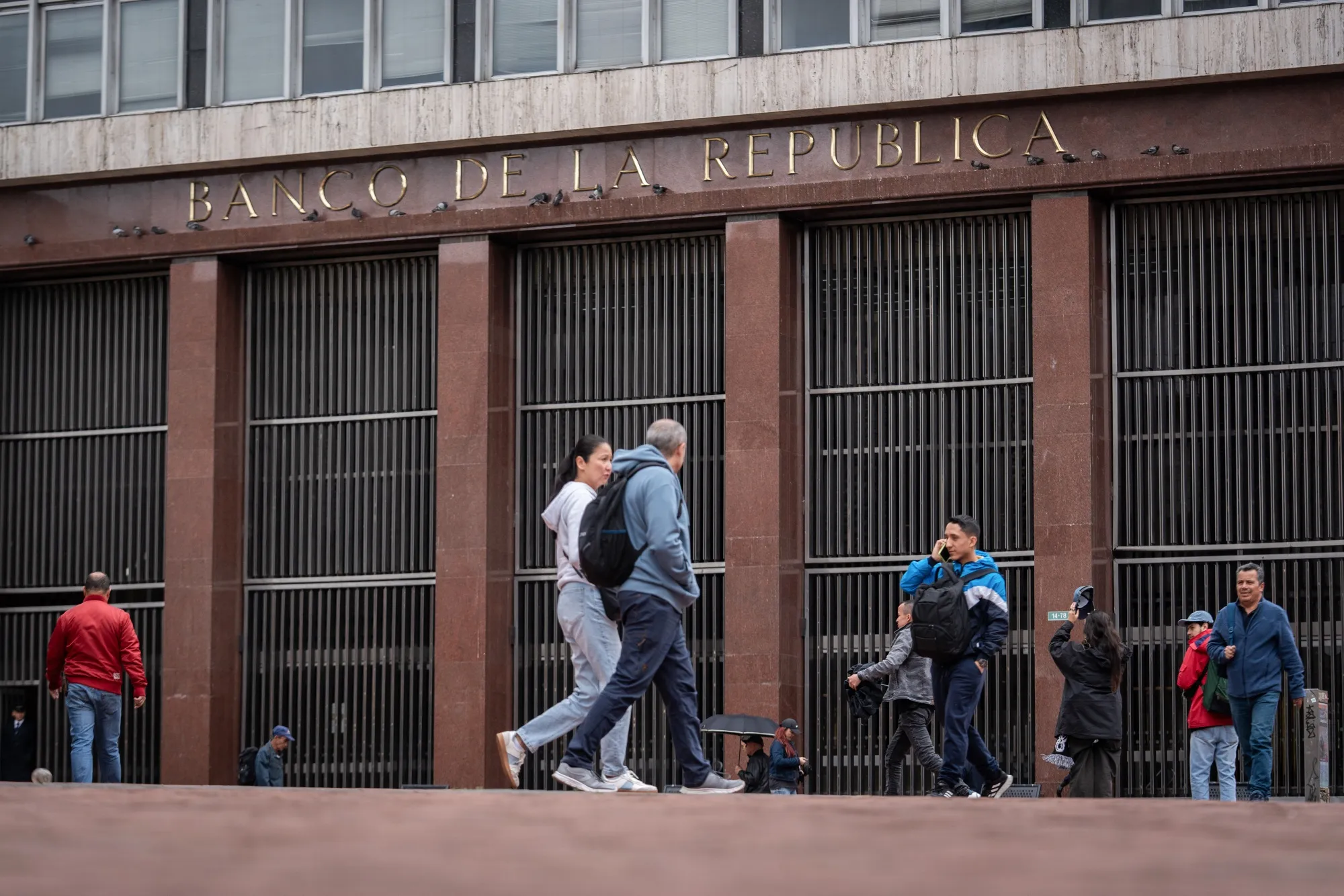
The Court has now closed that door for any administration. The savings fund that will back the public component must be administered by the Banco de la República, the central bank, under principles the law itself fixes.
De la Espriella, ironically, campaigned on exactly this protection. He called the Colombia pension reform a fiscal trap and promised that no government would lay hands on workers’ savings.
The nine articles Congress must debate again
The Court found procedural defects, not substantive ones, in nine articles or parts of articles. The Chamber of Representatives must debate them again within 30 working days of notification.
The list touches the system’s plumbing. It includes the clause declaring individual savings private property, the rules for calculating the pension, and the provision on where those savings are invested.
Also returning are the 0.7 percent commission cap for fund administrators during the transition. And the 50-week contribution credit for each child, up to three children, for mothers short of the requirement.
The generational funds scheme goes back too. So does the income-tax threshold for pensions and the principles governing the central bank’s management of the common savings pool.
The final items are the reduced requirements for indigenous, black and peasant communities, whose life expectancy runs below the national average. A proposed new article must also be debated afresh.
While Congress works, challenges to the substance of the Colombia pension reform remain suspended. The Court will only resolve them once the procedure is repaired.
The corrective bill waiting in the wings
The opposition accepted the ruling within 48 hours and moved to plan B. Centro Democrático, the party founded by former president Álvaro Uribe, will file a corrective bill.
Uribe has sketched a system without new members in Colpensiones, the public pension fund. The opposition says COP 550 trillion (US$173.5 billion) of private savings are at risk under the new design.
The numbers explain the anxiety. All workers will contribute to Colpensiones up to 2.3 minimum wages, or COP 4,027,081 (US$1,270) a month in 2026 terms, with anything above that going to private savings accounts.
Contributions stay at 16 percent of the income base, with employers paying three quarters. The solidarity pillar pays roughly COP 230,000 (US$73) a month to elderly Colombians in poverty.
A separate fight continues over roughly COP 25 trillion (US$7.9 billion) already moved by decree toward Colpensiones for people who switched regimes. The Council of State suspended that transfer, and the courts must still decide.
What to watch from here
First, the clock. Congress has 30 working days from the formal notification to repeat the debates in the Chamber.
Any stumble restarts the uncertainty around the Colombia pension reform.
Second, the corrective bill. Whether De la Espriella’s government backs Uribe’s approach or drafts its own will define the pension politics of 2027.
Third, the money. With the savings pot constitutionally shielded, the government must fund its investment plans from taxes or markets, not from workers’ retirement accounts.
The big picture: Colombia explained — economy, politics, society and daily life in one read.
More: Colombia news in English, every day from The Rio Times.
Frequently Asked Questions
Did Colombia’s Constitutional Court approve the pension reform?
Yes. On 25 August 2026 the Court upheld most of Law 2381 of 2024 by seven votes to one, with entry into force set for 1 April 2027.
Can the government use pension savings for investment or debt payments?
No. The Court upheld articles that make individual pension savings private property, so the government cannot spend them on public investment or paying down Colombia’s debt.
Which articles return to Congress?
Nine articles or parts of articles go back to the Chamber of Representatives for procedural repairs. They cover savings ownership, pension calculation, investment rules, commission caps, mothers’ week credits and tax thresholds.
What does the opposition plan to do?
Centro Democrático will file a corrective bill against the Colombia pension reform. Former president Álvaro Uribe wants Colpensiones closed to new members.
How much money is involved?
Private pension funds hold about COP 550 trillion (US$173.5 billion) in workers’ savings. A separate dispute covers COP 25 trillion (US$7.9 billion) already ordered transferred toward Colpensiones and suspended by the Council of State.
Sources & Connected Coverage
Sources: Valora Analitik, 27 August 2026; Infobae, 31 August 2026; La FM and El Espectador, 26 August 2026; Semana, 13 June 2023. Earlier coverage: Colombia Court Upholds Pension Reform but Returns Nine Articles and Colombia Pension Reform Survives Court Test as Uribe Drafts a Counter-Reform. More on our Colombia hub.
This article was produced by The Rio Times’ automated newsroom system. How we use AI · Report an error · Editorial responsibility: Matthias Camenzind, Editor-in-Chief
In depth