Tanzania and Congo Bet on One Rail Route to Move Their Minerals

DR CONGO · BUSINESS
Key Facts
- —What happened Tanzania and DR Congo signed a minerals partnership in Zanzibar on 18 August.
- —How big a jump DRC-bound cargo through Dar es Salaam rose 30% year on year, hitting 7.77m tonnes.
- —The catch The deal is an agreement to write an agreement, with no money moved.
- —What it means Tanzania’s real interest is transit fees, not buying minerals, as trade runs 33 to one in its favour.
- —Who it touches The rival Lobito Corridor in Angola, backed by Washington, competes for the same copper and cobalt.
- —What comes next A dry port in Dar es Salaam is the most concrete step, but no cost or timetable was given.
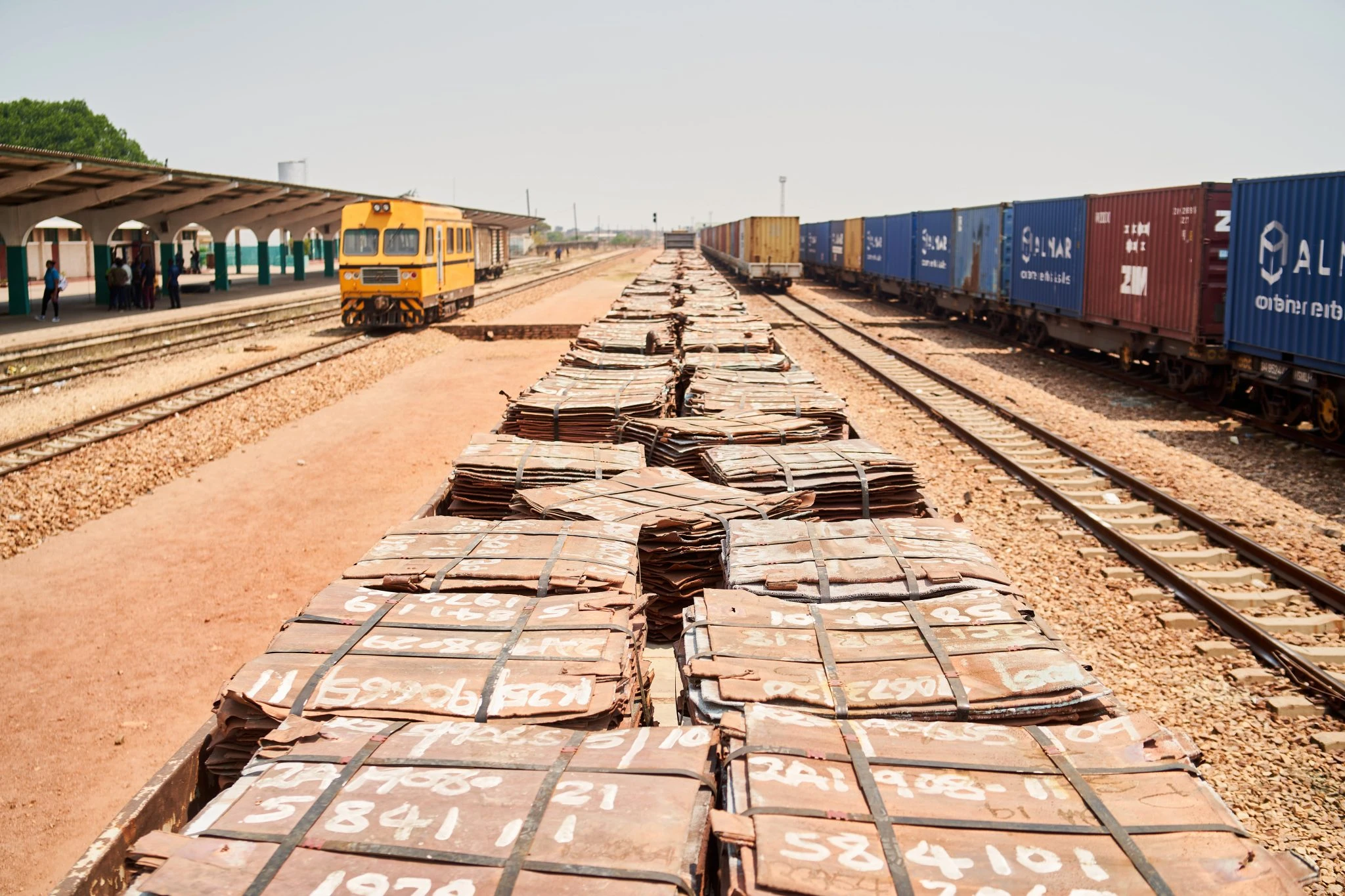
The Central Corridor has a new sales pitch for Congolese copper and cobalt. Tanzania and the Democratic Republic of Congo agreed a minerals partnership in Zanzibar on 18 August, and Kinshasa said it has begun preparing a dry port of its own in Dar es Salaam.
What the Central Corridor partnership actually says
Tshisekedi arrived in Tanzania on 17 August for a two-day visit and held talks with Samia at State House in Zanzibar the following day. The two governments then issued a joint communiqué.
On minerals, it establishes a Strategic Partnership covering critical minerals, geological data, mineral processing, value addition and responsible investment. Officials were directed to prepare a memorandum setting out priority actions.
That last clause is the honest measure of where this stands. It is an agreement to write an agreement, and no money has moved.
The document ranges wider than minerals. It covers oil and gas exploration, storage and refining, electricity interconnection, renewables, a proposed Kigoma–Kalemie fibre-optic link and the revival of a joint permanent commission.
One caveat is worth making plain. The communiqué has not been published by either presidency, and its contents are known through outlets that quoted it directly in English and French.
A dry port in Dar es Salaam
The most concrete thing announced was not in the minerals section at all. Tshisekedi said the DRC has begun preparations to build its own dry port in Dar es Salaam.
The facility would offer customs services, cargo handling, mineral certification and quality control. Certification is the interesting word in that list.
Congolese minerals have long been dogged by questions about where exactly they came from, and a certification point at the port of exit is a direct answer to buyers who need provenance. It is also a way for Kinshasa to hold a piece of the value chain outside its own borders.
No cost, financing or timetable was given. But a dry port is a smaller, faster commitment than a railway, and it is the kind of thing that actually gets built.
The trade is going almost entirely one way
Samia put trade between the two countries at about TSh794bn last year. A Tanzanian State House statement gives the breakdown, and it changes the meaning considerably.
Tanzania exported roughly TSh795bn of goods to the DRC in calendar 2025 and imported about TSh24bn. That is not balanced trade, it is a ratio of roughly 33 to one.
Converted at 2,645.73 shillings to the dollar on 19 August, that is around US$300m going north and US$9m coming back. Total two-way trade is about US$310m, which is modest for two neighbours of this size.
The imbalance is precisely why the corridor argument matters to Dar es Salaam. Tanzania’s interest is not in buying Congolese minerals, it is in charging to move them.
That is a transit business, and transit businesses are won on cost and reliability rather than diplomacy. The partnership is a bid for the traffic, not a guarantee of it.
How much Congolese cargo really moves through Dar
Samia told reporters that more than 60% of cargo passing through the port of Dar es Salaam is destined for the DRC. The port’s own figures do not support that as stated.
Tanzania Ports Authority data for 2025/26 put total cargo through Dar es Salaam at 33.71m tonnes, of which 14.61m tonnes was transit cargo. DRC-bound cargo was 7.77m tonnes.
That works out at 53% of transit cargo and 23% of total throughput. Both are substantial numbers and neither is more than 60%.
The growth is the genuinely striking part. DRC-bound volumes rose 30% year on year, and Zambia, Rwanda, Malawi, Burundi and Uganda account for the rest of the transit trade.
So the direction of travel supports the pitch even where the headline figure does not. Dar es Salaam is winning Congolese cargo, just not four fifths of everything it handles.
The Lobito comparison, carefully
The obvious rival is the Lobito Corridor, the Angolan route to the Atlantic backed by Washington and European lenders. The two are competing for the same copper and cobalt.
The US International Development Finance Corporation held its financial close in December 2025 on a package supporting the Lobito mineral port and roughly 1,300 km of rehabilitated line to Luau on the Angolan border. It expects capacity to rise about ten-fold to 4.6m tonnes and transport costs to fall by up to 30%.
The Zambian leg moved again this month, with the African Development Bank approving a US$255m loan and a US$10m grant for roughly 550 km of railway. Further mobilisation of up to US$500m is envisaged.
A word of caution on comparing the two. Dar es Salaam’s 7.77m tonnes is port throughput arriving by every mode, overwhelmingly road, while Lobito’s 4.6m tonnes is rail capacity.
Setting those side by side as though they measured the same thing would flatter the Central Corridor. What can be said is that one route is moving real tonnage today and the other is building toward it.
The line about foreign forces
The security half of the communiqué drew more attention than the minerals half. The two presidents reaffirmed support for Congolese sovereignty and called for a cessation of hostilities and the withdrawal of foreign forces from Congolese territory.
Some coverage has reported this as Tanzania denouncing Rwandan aggression. The text says foreign forces, and it does not name Rwanda.
That restraint is deliberate and it is why the wording is interesting. Tanzania sits in the East African Community alongside Rwanda, and Tanzanian troops served in the SADC mission in eastern Congo before it was wound up through 2025.
The leaders also backed the disarmament and dissolution of the FDLR and endorsed coherent, coordinated implementation of the Washington and Doha processes. The Washington track most recently met in Geneva on 12 and 13 August, where Kinshasa presented its FDLR disarmament plan.
For investors the security language is not decoration. A corridor through Kalemie and Lake Tanganyika only works if the eastern DRC is calm enough for freight to move, and that is still the open question behind every line of this agreement.
What the Central Corridor competes with
The Central Corridor is not the only way out. Congolese copper also leaves through Durban in South Africa and, increasingly, through Lobito in Angola.
Durban is the established route and the longest. The Lobito line has Western backing and points at the Atlantic rather than the Indian Ocean.
The Central Corridor’s case is distance and a shorter rail haul to a working port. Its problem has always been the condition of the track.
That is why the money matters more than the memorandum. A corridor is a promise until the rolling stock arrives.
Frequently Asked Questions
What did Tanzania and the DR Congo agree in Zanzibar?
They agreed a Strategic Partnership on Minerals covering critical minerals, geological data, processing, value addition and responsible investment. Officials were directed to draft an implementing memorandum, and no value or timeline was attached.
Is most cargo through Dar es Salaam bound for the DR Congo?
No. Tanzania Ports Authority figures put DRC-bound cargo at 7.77m tonnes in 2025/26, which is 53% of transit cargo and 23% of total throughput of 33.71m tonnes.
How much do Tanzania and the DR Congo trade?
Tanzania exported about TSh795bn of goods to the DRC in 2025 and imported roughly TSh24bn, around US$300m against US$9m at 2,645.73 shillings to the dollar on 19 August 2026.
Does the communiqué blame Rwanda for the fighting in eastern Congo?
No. The two presidents called for the withdrawal of foreign forces from Congolese territory, and the text does not name Rwanda.
How does the Central Corridor compare with the Lobito Corridor?
Dar es Salaam handled 7.77m tonnes of DRC-bound cargo in 2025/26, mostly arriving by road, while the Lobito rail line is being taken to a capacity of 4.6m tonnes. The two figures measure different things and are not directly comparable.
Connected Coverage
The competing Atlantic route is covered in our reporting on the Lobito Corridor and the railway for African copper and on the moment Congo approved a US$1.26 billion railway for it. The broader fight over the continent’s minerals is tracked in our pillar, Africa: The New Scramble.
This article was produced by The Rio Times’ automated newsroom system. How we use AI · Report an error · Editorial responsibility: Matthias Camenzind, Editor-in-Chief