India Brakes BRICS De-Dollarization as Brazil Pushes On
Geopolitics · Markets
Key Facts
- —The goal BRICS groups Brazil, Russia, India, China and South Africa, now joined by more countries. Members want to settle more trade in their own currencies, relying less on the US dollar.
- —The pioneer Brazil has pushed de-dollarised trade since 2023, first inside the South American bloc Mercosur, then across BRICS.
- —The brake India’s central bank, the Reserve Bank of India (RBI), still keeps the rupee only partly convertible, so most trade still clears in dollars.
- —The catch Expect payment pilots, not a shared currency — no BRICS currency has been proposed. The dollar was still on one side of 89.2% of currency trades in 2025.
- —The date The New Delhi summit on 12–13 September 2026 is where the working groups report back.
Few phrases generate more heat and less light than “de-dollarization.” Strip away the slogans, and a slower, more technical story appears.
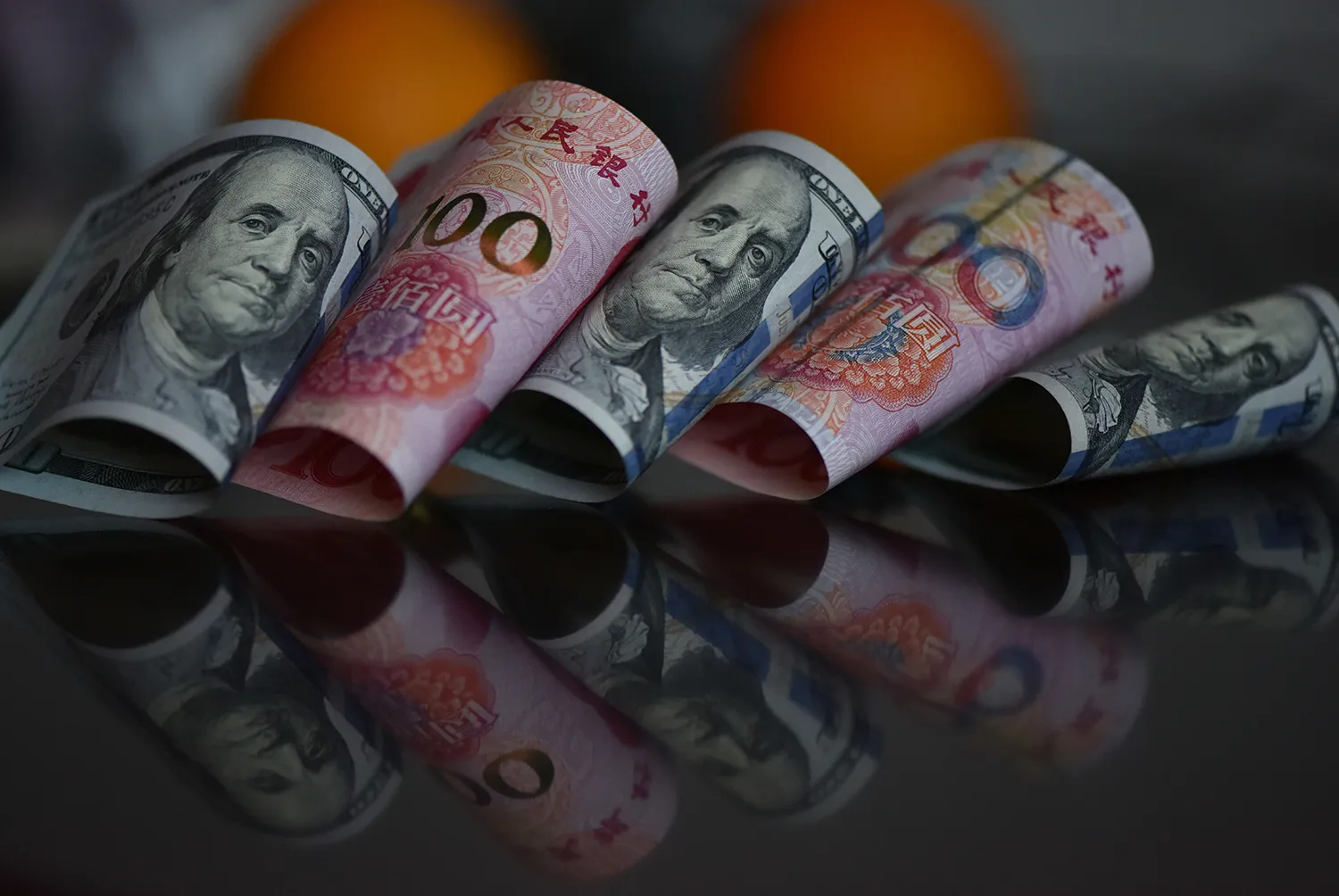
It is measured in payment corridors, not new banknotes. This piece checks the real shifts against the numbers behind them.
What de-dollarization actually means
It does not mean replacing the dollar. It means settling more bilateral trade directly in two national currencies, skipping the dollar and the US banking system.
The plumbing works at a small scale today. Central-bank swap lines and direct currency pairs already exist between several BRICS members.
Russia is the bloc’s most motivated user, since Western sanctions cut it off from dollar clearing after 2022. For everyone else, de-dollarization is mostly about cost and insurance, not survival.
The two numbers that matter
The US dollar made up 57.13% of the world’s identifiable foreign-exchange reserves in the first quarter of 2026. That is the latest published data from the International Monetary Fund (IMF).
That share has slipped from about 71% in 2000, though the fall has been slow. It also ticked up slightly from 56.42% just one quarter earlier.
Currency turnover tells a similar story. The Bank for International Settlements (BIS) is the hub for the world’s central banks.
Its triennial survey — held every three years — is the benchmark for currency trading. In the 2025 edition, the dollar was on one side of 89.2% of all trades.
That was up slightly from 88.4% in the 2022 survey, not down.
Why India is the brake
A serious BRICS payment system would settle mainly in renminbi, China’s currency. It is the only BRICS currency with enough trade volume and financial depth to anchor one.
India will not build that system. New Delhi backs the rupee for its own bilateral deals.
The RBI did ease one rule in August 2025. Banks no longer need the RBI’s prior sign-off to open a rupee account for a foreign bank.
The rupee still is not freely convertible for big capital flows, so large cross-border transfers stay restricted. RBI Governor Sanjay Malhotra said in August 2026 that India would keep internationalising the rupee step by step, not all at once.
India will not support a renminbi-led zone, though, and its 2026 chairmanship sets the summit agenda.
Call it the bloc’s triangle. Russia needs de-dollarization, China would gain most from it, and India controls the pace.
Brazil’s longer game
Brazil has argued for trading without the dollar since at least 2023, when it proposed de-dollarised settlement inside Mercosur. Its reasoning is practical: every dollar leg adds cost and exchange-rate risk for exporters.
A wider real-yuan pilot with China, Brazil’s biggest customer, is the most likely near-term step. A shared BRICS unit, the idea that excites headlines, remains unproposed by any BRICS government.
The plumbing, honestly described
Swap lines between the People’s Bank of China and several members let central banks borrow each other’s currency in a squeeze. China also runs CIPS, the Cross-Border Interbank Payment System, its main channel for renminbi transfers, now linking banks across 192 countries.
India’s rupee payments for imports surged to about US$14.6 billion in March–May 2026, more than triple the prior quarter. Most of that was for Russian crude oil, which hit US$17.13 billion in the same period, up 30% from a year earlier.
The basic problem has not gone away: rupees only help Russia if it spends them on Indian goods. When it cannot, they pile up as an unusable balance.
Rupee-settled Indian exports spiked in March 2026, then fell again in April and May. That suggests Russia cannot spend its rupee earnings fast enough.
A “BRICS Pay” linking project is still in early testing between national systems. It is not a currency, and it is not yet fully operating.
Reserve status is not decided by a vote. It rests on deep bond markets, the rule of law, and a country’s will to run deficits the world can hold.
The oil question
Bloc members under sanctions pressure, including Russia and Iran, already sell some crude oil priced in yuan or rupees. Gulf producers still price oil in dollars and show no sign of changing.
That group includes the United Arab Emirates (UAE), a BRICS member since 2024.
Until a major Gulf exporter prices oil in another currency by choice, de-dollarization stays a sanctions-driven practice. It is not yet a system-wide change.
What it means for Latin American exporters
For a Brazilian soybean trader or a Chilean copper producer, the shift is practical. More contracts quote in yuan, and more letters of credit come from Chinese banks.
The benefit is lower conversion cost and less exposure to US financial policy. The cost is new dependence on Beijing’s capital controls and on a corridor that stays open only while politics allow it.
The bloc’s development bank, the New Development Bank (NDB), also matters here. Its president, Dilma Rousseff, has said the bank aims for 30% of its loans in members’ own currencies rather than dollars.
Sanctions as the accelerant
Every expansion of dollar-based sanctions has pushed more countries toward alternatives. Russia’s exclusion from Western payment channels after 2022 turned de-dollarization from theory into a necessity for the bloc’s second-largest economy.
Even members on good terms with Washington now treat dollar-free channels as insurance. That insurance is expensive to build and slow to use, which is why it stays small.
Background: BRICS Just Got Bigger — Who’s In, Who’s Still Out, and Why It Matters.
More: Latin America news in English, every day from The Rio Times.
The honest scoreboard
The dollar is still the main trade currency for BRICS members, based on invoicing data. Even China-Brazil trade, the bloc’s biggest bilateral link, mostly settles in dollars today.
The trend, though, points slowly toward national currencies in payments, reserves and bank lending alike. Both things are true at once, and the New Delhi declaration is likely to stress only the second.
No BRICS currency exists or has been agreed by any member government. Brazil’s president, Luiz Inácio Lula da Silva, said as much in February 2026, denying any proposal for one.
If the current pace continues, analysts expect the shift to matter within a decade. It will not happen this year, or by declaration alone.
Connected Coverage
30+ Nations Await a BRICS Seat — New Delhi Votes in September
Iran Says It Will Join the BRICS Bank — Bank Can’t Confirm
BRICS+ Builds Coordinated Critical-Mineral Strategy
The Big Picture
BRICS Expansion — all our coverage of the bloc’s growth and its limits
Latest developments
- Suho Plays São Paulo on 20 December 2026 — 13 October 2026
- Mazatlán Marathon on 6 December 2026 — 13 October 2026
- French Montana Plays Cape Town on 4 December — 13 October 2026
- Sharks vs Stormers in Durban on 5 December — 13 October 2026
This article was produced by The Rio Times’ automated newsroom system. How we use AI · Report an error · Editorial responsibility: Matthias Camenzind, Editor-in-Chief