Brazil’s Hunger Fuels 38% Spike in Paraguayan Corn Exports Amid Domestic Ethanol Push
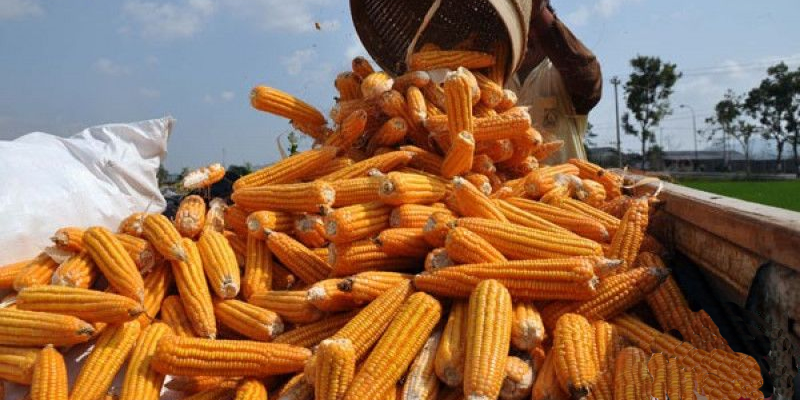
Paraguay shipped 439,700 tons of corn from January to April 2025, a 37.9% increase compared to the same period in 2024, generating $81.9 million in revenue according to the Paraguayan Chamber of Cereal and Oilseed Exporters (Capeco).
Brazil absorbed 91% of these shipments, driven by shortages in its livestock feed stocks and competitive pricing from Paraguayan suppliers.
This short-term spike contrasts sharply with broader trends: exports for the 2024 harvest (June 2024–January 2025) fell 50% year-over-year to 1.5 million tons due to drought-reduced yields and rising domestic consumption.
Brazil’s reliance on Paraguayan corn stems from its own agricultural shifts. Southern Brazilian states, home to 299 million monthly poultry slaughters and 14 million pigs, face corn deficits as domestic production shifts to ethanol in central regions.
Paraguayan corn fills this gap, with logistics favoring cross-border trade—processing plants in Paraná and Santa Catarina lie just 150–400 kilometers from Paraguayan ports.
Brazilian cooperatives have even established grain collection hubs within Paraguay to streamline supply chains.
Domestic demand now competes with exports. Paraguay’s ethanol sector consumed 1.5 million tons of corn in 2024–25, with a third plant set to open in 2026, requiring 450,000 tons annually.
Brazil’s Hunger Fuels 38% Spike in Paraguayan Corn Exports Amid Domestic Ethanol Push
This growth aligns with a USDA forecast of record 2.4 million tons of domestic corn use in 2025–26, reducing exportable supplies by 12% to 2.9 million tons.
Farmers face a trade-off: sell to Brazilian buyers at $230–250/ton or secure stable contracts with local ethanol producers.
The 2024 drought exposed vulnerabilities. Corn production dropped to 5.2 million tons, forcing exporters like Agrofértil and C.Vale to explore drought-resistant sorghum for ethanol—a crop requiring less investment but yielding lower returns.
With stocks equivalent to one month’s domestic use, Paraguay’s storage limitations and cash-flow pressures favor pre-harvest sales, tightening long-term export capacity.
This duality—short-term export gains versus structural domestic shifts—highlights how climate risks and energy policies are reshaping South America’s agricultural economy.
Paraguay’s corn, once a reliable export commodity, now straddles competing demands between regional trade partnerships and homegrown industrial ambitions.
Key Facts
— Deep Dive
— For the complete picture, read our in-depth guide: Paraguay: Washington's Most Valued Ally in Latin America
More: Brazil news in English, every day from The Rio Times.
This article was produced by The Rio Times’ automated newsroom system. How we use AI · Report an error
Read More from The Rio Times