Brazil’s Ambitious $125 Billion Fund to Preserve Tropical Forests
Brazil has launched a groundbreaking financial initiative to conserve tropical forests worldwide. The Tropical Forest Finance Facility (TFFF) aims to mobilize $125 billion (R$ 700 billion) to support the preservation of approximately one billion hectares of tropical forests.
The Brazilian government plans to operationalize this fund by COP 30 in 2025, which will be hosted in Brazil. The proposal gained significant attention at the Biodiversity Conference, COP 16, in Cali.
Meetings in Washington, alongside G20 finance ministers and environment ministers, also highlighted this issue. They will present the initiative again at COP 16 on October 28.
Key figures such as Susana Muhamad from Colombia and Marina Silva from Brazil are expected to attend. Garo Batmanian, director of the Brazilian Forest Service and one of the architects of TFFF, emphasized the global nature of this initiative.
He stated that the goal is to collaborate with other countries to shape the fund and address the needs of all developing nations with tropical forests. Currently, 71 developing countries are eligible for this mechanism.
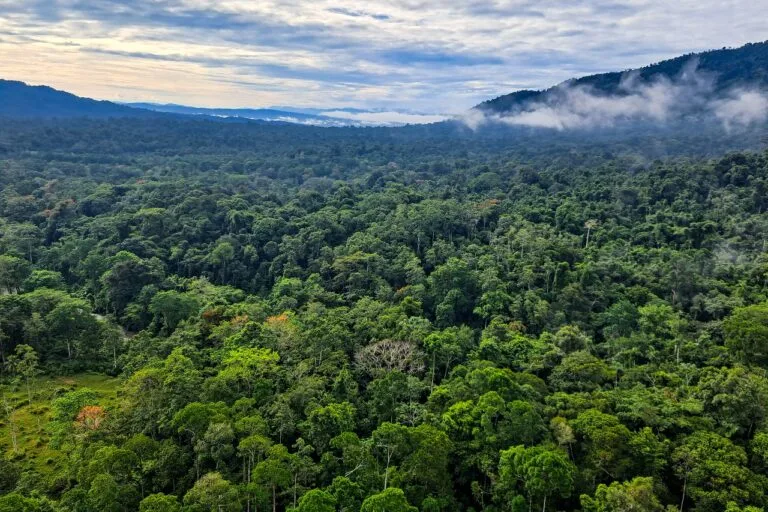
A key feature of TFFF is its focus on paying for conserved forest hectares rather than avoided carbon emissions. Existing funds typically reward reductions in deforestation emissions.
In contrast, TFFF compensates countries for maintaining standing forests, ensuring continued investment in forest conservation even after deforestation is controlled.
Targeting Tropical Forests for Sustainable Financing
The initiative targets all humid tropical and subtropical forests in developing countries with controlled deforestation rates. By paying for standing forest stock rather than reducing deforestation flow, TFFF incentivizes forest restoration and preservation efforts.
Batmanian explained that TFFF will offer a fixed price per hectare of conserved forest, simplifying monitoring through satellite imagery. He stressed that forests represent more than just carbon; they encompass biodiversity and sociocultural values.
Luiza Sidonio, an economist at Brazil‘s Ministry of Finance involved in the Ecological Transformation Plan and TFFF, noted that Finance Minister Fernando Haddad refers to TFFF as the “forest bank.”
Unlike other funds, TFFF provides payments based on preserved hectares rather than specific projects. The fund seeks stable and predictable resource sources by creating an investment-grade fund that can secure low-interest market loans and reinvest them.
The resources for forest countries will come from the difference between what they pay to investors and what they earn through investments.
Sidonio highlighted that TFFF offers more predictable and stable financing. It achieves this by combining institutional investor resources with sovereign investments from sponsoring countries.
They invest these resources in a diversified portfolio that focuses on developing countries and sustainable investments. This initiative operates independently of climate and biodiversity conventions.
This independence allows it to attract funds from wealthy nations as well as sovereign wealth funds from Qatar, Singapore, Saudi Arabia, and the United Arab Emirates.
More: Brazil news in English, every day from The Rio Times.
This article was drafted with automated assistance and reviewed before publication. How we use AI · Report an error · Editorial responsibility: Matthias Camenzind, Editor-in-Chief