Brazil should more than double the supply of offshore natural gas for the domestic market in the next five years.
If such an expansion materializes, it will ensure that growing demand can be met, a representative of the local distributors’ association Abegás told BNamericas.
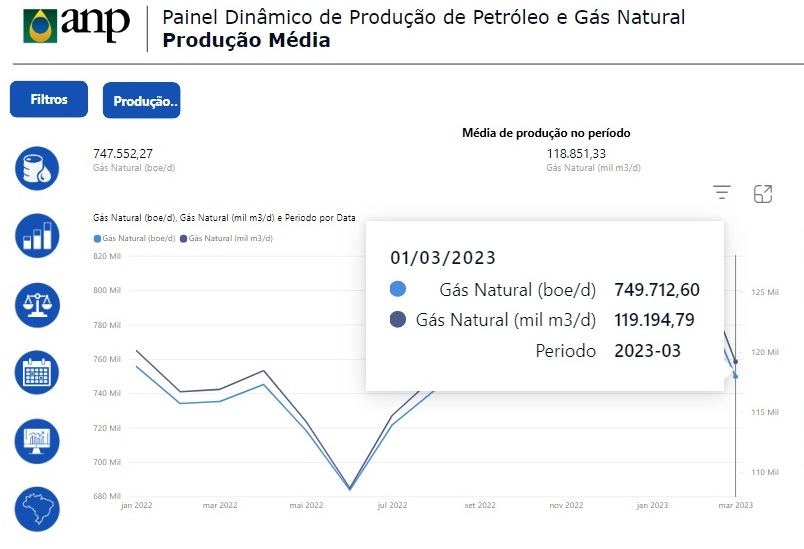
Domestic offshore production is around 120 million cubic feet daily (Mm3/d).

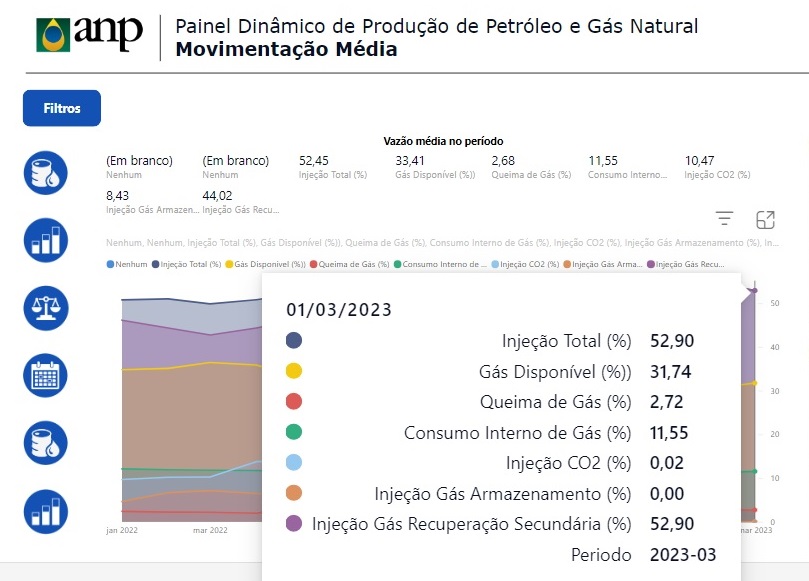
Still, only 32% of that total, or 38 Mm3/d, reaches the industrial, commercial, residential, vehicle, and thermoelectric sectors after reinjection (53% of the total), consumption on production platforms (11.6%) and flaring (2.7%).
However, three major gas projects due to start operations by 2028 are expected to pump another 50 Mm3/d into the national natural gas grid.
Petrobras’ Rota 3 pipeline will start operating in 2024, bringing an additional 18 Mm3/d of gas onshore from pre-salt fields.
Three years later, the state-owned company plans to install two FPSOs in the Sergipe-Alagoas basin to produce 9 Mm3/d of natural gas each.
And starting in 2028, Equinor will begin pumping 14 Mm3/d of gas into the Brazilian grid through the BM-C-33 project, a development involving total investments of US$9 billion.
The Norwegian company announced the final approval of the investment decision on Monday in partnership with Petrobras and Repsol Sinopec Brasil.
Located in the Campos pre-salt basin in the state of Rio de Janeiro, the block is about 200km offshore at water depths of up to 2,900 m.
Three gas and oil/condensate accumulations were discovered in BM-C-33: Pão de Açúcar, SEAT, and Gávea, and more than 1 billion barrels of oil equivalent are expected to be recovered.
The project is based on production by wells connected to an FPSO with the capacity to process oil/condensate and gas and separate them for sale.
The natural gas will be exported to the coast through a subsea pipeline connected to the Cabiúnas Terminal (Tecab) reception infrastructure and then connected to the gas transportation network.
“BM-C-33 is one of the country’s main projects to supply new gas volumes. The gas delivered could represent 15% of Brazil’s total demand at the start of production,” said Equinor’s executive president in Brazil, Veronica Coelho, in a statement.
Marcelo Mendonça, strategy and market director of Abegás, said that the increase in the volume of gas offered to the market would be very welcome, as demand is currently somewhat limited.
He highlighted the heavy-duty vehicle segment, which has great potential to replace diesel with gas, helping Brazil reach its greenhouse gas emission reduction targets and, at the same time, reduce fuel imports.
“If we consider only what Brazil imports in terms of diesel, it is 30 Mm3/d of gas. That is not counting light vehicles, which currently consume around 7 Mm3/d, which could also grow,” he told BNamericas.
Other examples of sectors that will demand gas are the chemical industry, especially for fertilizer production, and thermoelectric generation, whose expansion is considered important to serve as a backup for wind and solar energy sources, which are intermittent.
Mendonça emphasized that the increase in supply coincides with Federal Government programs, such as ‘Gás Para Empregar’ (Gas To Employ), which raises the competitiveness of Brazilian industry and creates new jobs.
“In the first years, new jobs will be generated due to the labor needed for infrastructure works,” said Mendonça.
With information from BNamericas
More: Brazil news in English, every day from The Rio Times.
Editorial responsibility: Matthias Camenzind, Editor-in-Chief · Editorial standards · Report an error