Vitória, Florianópolis, and Campinas Now Classified as Metropolises
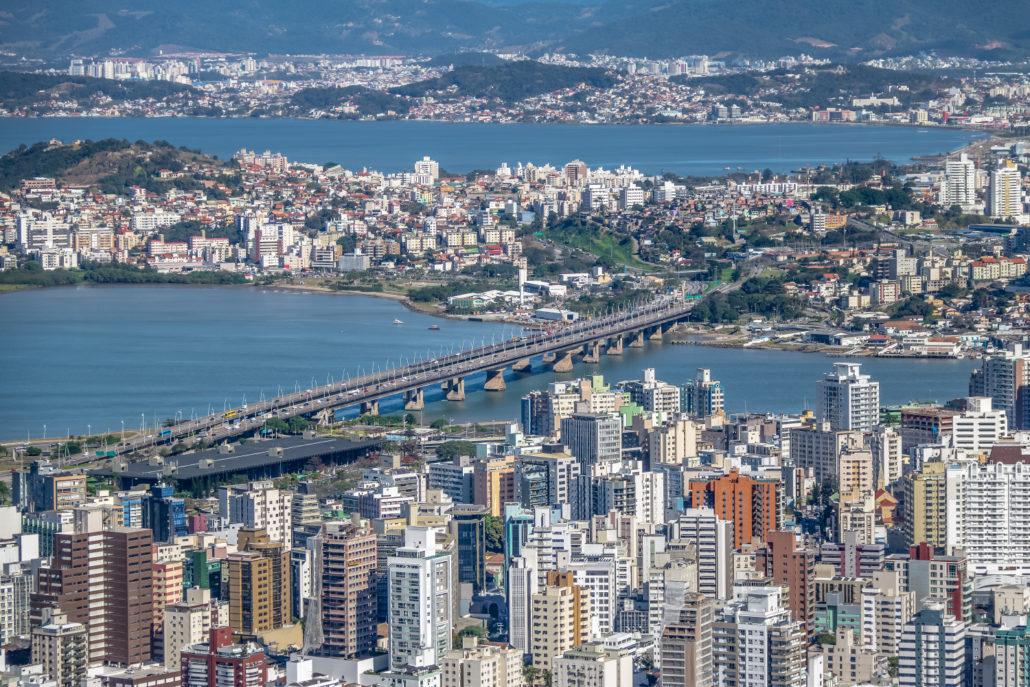
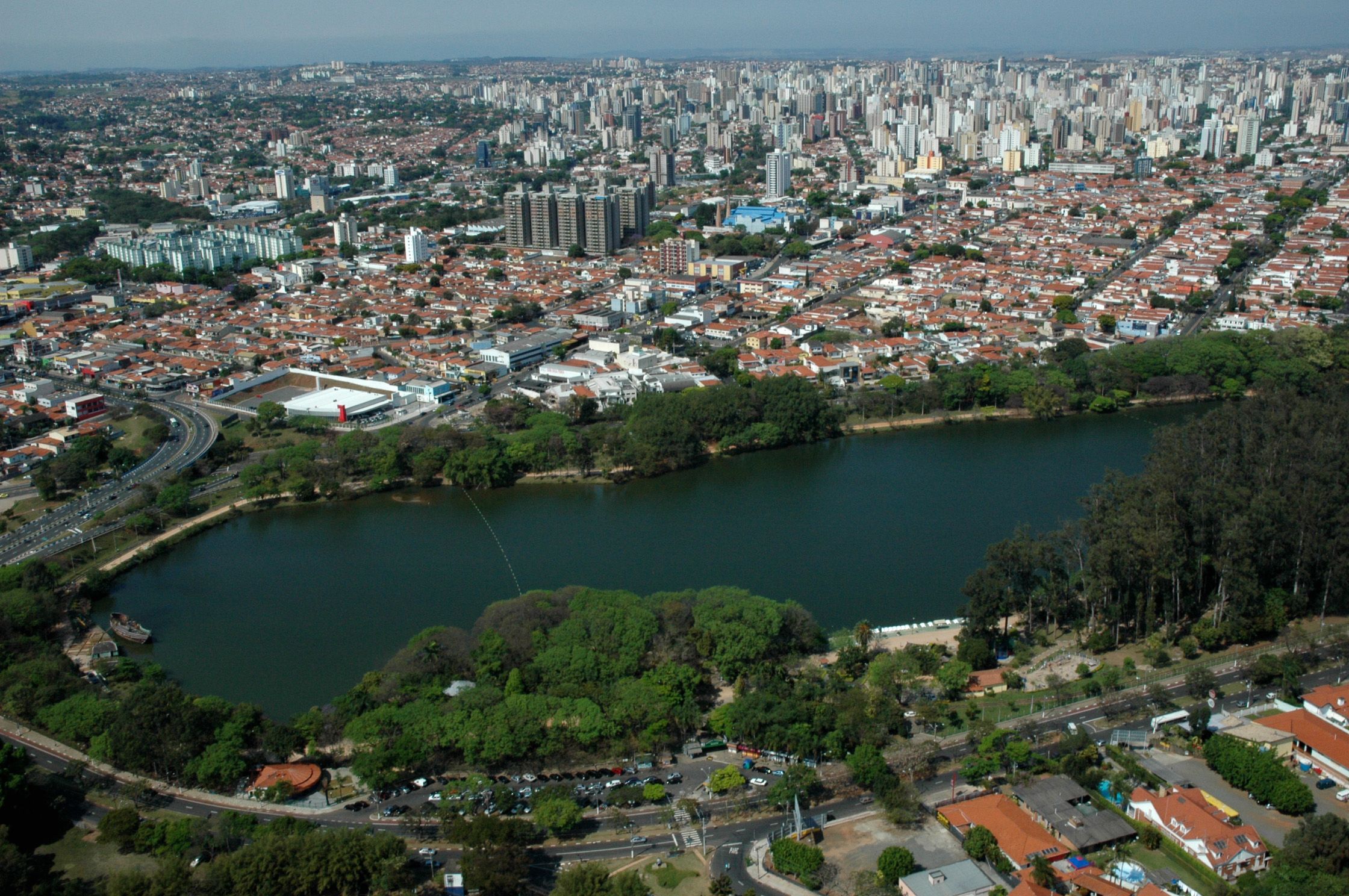
RIO DE JANEIRO, BRAZIL – Vitória (Espírito Santo), Florianópolis (Santa Catarina), and Campinas (São Paulo) have become metropolises, according to the Cities’ Influence Regions (REGIC) survey, based on 2018 data, which the Brazilian Institute of Geography and Statistics (IBGE) released yesterday, June 25th.

The three cities now figure among the total 15 Brazilian metropolises. With the rise of Campinas, the only city that is not a state capital, São Paulo became the first state to have two metropolises.
According to the IBGE, Vitória, Florianópolis, and Campinas reached a metropolis’ level of classification, for having increased the number of companies and public institutions, attracting very significant population contingents from other cities to access goods and services.
The manager of the IBGE’s Networks and Geographic Flows, Bruno Hidalgo, pointed out the economic activities that boosted the high number of companies in the new metropolises. He recalled that Campinas is a relevant technological and logistic hub, crossed by major highways, with one of the leading Brazilian universities – the State University of Campinas (UNICAMP).
The capital of Espírito Santo is home to the Tubarão Port, one of the most significant in the country, with iron ore exports. The state produces oil, steel, and cellulose.
In the case of Florianópolis, it is not only tourism that is important to the economy, but the state is home to agro-industry, naval production, and technology companies.
São Paulo, Brasília, Rio de Janeiro, Belém, Belo Horizonte, Curitiba, Fortaleza, Goiânia, Porto Alegre, Recife, Salvador, and Manaus complete the group of metropolises.
Within the Regional Capitals category, there are 32 newly included cities, totaling 97. The state of São Paulo recorded the highest absolute increase, from 12 to 20 regional capitals.
Mato Grosso and Rondônia, which had only Cuiabá and Porto Velho as regional capitals, began to have two more cities at this level: Sinop and Rondonópolis in the former; and Cacoal and Ji-Paraná in the latter. Goiás, which did not have any, now has Anápolis as a regional capital.
Bruno Hidalgo pointed out that the regional capitals of Goiás, Mato Grosso and Rondônia are all linked to the agribusiness industry.
Population displacement
The survey also showed the distance to be traveled by the population in a given place to purchase products and services in other cities. To attend higher education, the average travel was 92 kilometers, while the study shows that the average was 66 kilometers for cultural activities. The average for sports activities is 73 km.
According to the survey, there is a widespread demand for higher education courses throughout the country, with medium-sized cities attracting students outside the state capitals. “It is a matter dependent on the state and region, but in general there is a presence of important intermediate centers in relation to other research topics,” Hidalgo said.
Getting to airports represents the longest average travel distance, with 174 km – considering straight-line distances between cities. According to the IBGE, since there are few airports in urban centers, Brazilians need to travel more to access this service.
The state with the highest average displacement was Mato Grosso, with 284 km on average, followed by Amazonas, with 273 km. At the other end, the states recording the shortest displacement are small areas such as Sergipe (74 km) and Alagoas (114 km).
The road and waterway connections show high capillarity. Consequently, the national average displacement for road and waterway transport was 75 km, considering straight line city connections.
For high complexity health services, the population’s displacement between cities was 155 km, while for medium and low complexity health services it was 72 km.
The average population displacement to buy electronics and furniture was 73 km. The average displacement for the purchase of clothing and footwear was 78 km.
According to the IBGE, data regarding health services and the purchase of clothing and electronics were provided in April and May, respectively, to help fight the Covid-19 pandemic.
The survey, conducted every ten years by the IBGE, identifies and analyzes the Brazilian urban network, establishing the hierarchy of urban centers and the cities’ regions of influence.
The result shows how cities relate to each other, through the displacement of people in search of goods and services, as well as links between headquarters and branches of multi-localized companies and public institutions.
Source: Exame
More: Brazil news in English, every day from The Rio Times.
Live Market IntelligenceBrazil — Live Market Board
Rio Times · Live Market Intelligence
Brazil — Live Market Board
+1.38%
209,066.90
+1.38%
66,048.57
+1.63%
11,043.36
+0.17%
2,828,027
-0.16%
2,531.15
+0.21%
59,610.00
+2.26%
| Instrument | Last | Change | YoY | Prev. | High | Low | Volume |
|---|---|---|---|---|---|---|---|
| IBOV | 209,066.90 | +1.38% | +21.85% | 206,220.24 | 168,310 | 167,142 | — |
| USD/BRL | 5.16 | +0.01% | -5.13% | 5.16 | 5.18 | 5.14 | — |
| SELIC | 14.00% | — | — | — | — | — | |
| PETR4 | 41.64 | -0.05% | +35.19% | 41.66 | 41.97 | 41.15 | 41,499,400 |
| VALE3 | 72.97 | +0.83% | +30.75% | 72.37 | 73.54 | 72.66 | 17,658,000 |
| ITUB4 | 38.60 | -1.03% | +4.57% | 39.00 | 39.34 | 38.39 | 29,487,800 |
| BBDC4 | 16.85 | +0.36% | +3.50% | 16.79 | 16.90 | 16.67 | 19,416,900 |
| BBAS3 | 19.37 | +0.47% | +0.73% | 19.28 | 19.44 | 19.16 | 11,069,200 |
| B3SA3 | 14.26 | -0.21% | +12.73% | 14.29 | 14.47 | 14.11 | 33,037,800 |
| ABEV3 | 14.89 | -0.80% | +21.91% | 15.01 | 15.07 | 14.81 | 16,453,100 |
| WEGE3 | 47.59 | +0.49% | +29.99% | 47.36 | 48.08 | 47.36 | 3,364,600 |
| PRIO3 | 59.14 | -0.19% | +50.67% | 59.25 | 59.81 | 58.74 | 3,325,600 |
| SUZB3 | 41.33 | +2.35% | -23.55% | 40.38 | 41.48 | 40.35 | 3,914,900 |
| RENT3 | 34.68 | -0.09% | +0.84% | 34.71 | 34.96 | 34.35 | 7,979,100 |
| AZZA3 | 15.89 | -2.63% | -53.76% | 16.32 | 16.42 | 15.82 | 1,330,300 |
| CSNA3 | 4.30 | +0.47% | -42.65% | 4.28 | 4.41 | 4.26 | 10,076,100 |
| GGBR4 | 24.69 | +2.19% | +51.38% | 24.16 | 24.85 | 24.18 | 7,047,600 |
| ENEV3 | 24.21 | -1.38% | +70.49% | 24.55 | 24.64 | 23.99 | 9,297,000 |
This article was drafted with automated assistance and reviewed before publication. How we use AI · Report an error · Editorial responsibility: Matthias Camenzind, Editor-in-Chief