By Paulliny Tort *
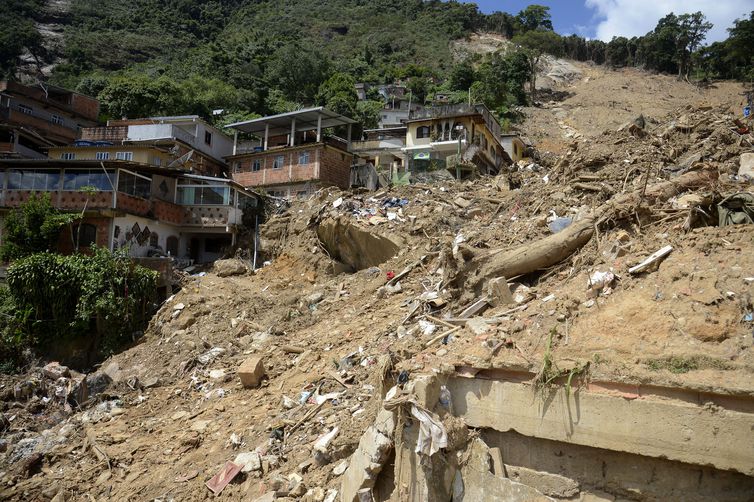
Climate-related events can lead from 800,000 to 3 million Brazilians to extreme poverty starting in 2030.
The data are from the Climate and Development Report for Brazil (CCDR), released by the World Bank on Thursday (4).
According to the study – which assesses policies and options for the country to meet its climate and development goals – droughts, floods, and inundations in the cities cause losses of R$13 billion (0.1% of the GDP in 2022) per year.

For Stéphane Hallegate, World Bank Climate Change consultant and co-author of the report, the country has great inequalities, and people experiencing poverty are already more exposed to the risk of disasters and climate change.
The scenario can, however, be reversed with investment.
“Investing in people and infrastructure in less developed areas is important to make this low-income population more resilient. ”
“This will help them escape poverty and contribute to the country’s economic growth,” he says.
The CCDR’s starting point is the goals set by the country itself in the Paris Agreement and editions of the Conference of the Parties (COPs).
To achieve these goals, the report recommends actions on four fronts: structural reforms and productivity-enhancing measures, comprehensive economic policies for resilient and low-carbon growth, sectoral policies and investment packages, and actions to secure financing for the necessary investments.
With this, Brazil could achieve green development and end illegal deforestation by 2028, reduce greenhouse gas (GHG) emissions by 50% by 2030, and zero net emissions by 2050.
POVERTY VS. INCLUSIVE GROWTH
Although Brazil has drastically reduced the share of people living in extreme poverty over the past three decades, the number of individuals in this condition increased in 2015 and 2016, reaching 5.8% of the population in 2021.
According to the report, the increase in extreme poverty could range from 0.4% to 1.3% by 2030, depending on the development model chosen.
Climate-related reductions in agricultural yields, extreme weather events, changes in food prices, health impacts, and reduced labor productivity due to heat could lead to this scenario.
The CCDR suggests, however, several measures so that Brazil can meet its commitment to zero illegal deforestation by 2028 without harming development.
Among the measures is supporting sustainable economic activities based on soil and forests.
For the study’s authors, the expansion of protected areas, including indigenous territories, would improve forest governance by creating opportunities for payments for caring for nature, such as ecotourism, sustainable harvesting of non-timber forest products, and agroforestry systems.
Creating Legal Forest Reserves (RFLs), as required by the Forest Code, would also provide income generation and inclusive growth opportunities.
COMPETITIVENESS AND ENERGY
Climate change is already altering Brazil’s temperature patterns and rainfall regime, resulting in less water availability and prolonged droughts.
According to the CCDR, these problems will worsen over time and can generate serious consequences for agriculture, water supply in cities, transportation infrastructure, and hydroelectric power generation, affecting economic competitiveness.
The impact projected by studying a possible tipping point in the Amazon on Brazilian GDP by 2050 would be approximately R$920 billion (US$184.6 billion)
The tipping point is a kind of collapse and would occur when the quantity of trees is no longer sufficient to generate the humidity necessary to sustain the forest.
Although Brazil is one of the ten largest emitters of greenhouse gases in the world, the profile of its emissions differs from that of other countries.
Between 2000 and 2020, 76% of the country’s emissions originated from land use change, including deforestation and agriculture, compared to 18% for global emissions.
On the other hand, almost half of Brazil’s energy supply, including more than 80% of its electricity, comes from renewable sources, compared to world averages of about 15% to 27%.
According to the CCDR, the prevalence of renewable energy and Brazil’s potential for producing green goods and services puts the country at a competitive advantage in supplying the products needed for decarbonization (removal of CO2 from the atmosphere), including green minerals, green hydrogen, and manufactured green products.
Prioritizing efforts to curb deforestation would allow Brazil to preserve its ecosystems and gradually decarbonize other productive sectors.
“The sustainable use of natural resources is becoming a requirement for competitiveness in international markets.”
“First, because green technologies are gaining space, and this affects demand.”
“For example, electric vehicles are growing rapidly. Brazil has demonstrated a capacity to innovate and lead in new technologies and can benefit from this,” concludes Hallegate.
*Edited by Denise Griesinger
With information from Agência Brasil
More: Brazil news in English, every day from The Rio Times.
Editorial responsibility: Matthias Camenzind, Editor-in-Chief · Editorial standards · Report an error