Brazil’s Edmundo and Tiririca Lose Races on 4 October

POLITICS · BRAZIL
Key Facts
- —The country Brazil, Latin America’s largest democracy, voted on 4 October for president, governors, 54 Senate seats and all 513 seats in the Chamber of Deputies.
- —Why it matters Parties field famous names to pull votes onto their lists. Tiririca’s debut in 2010 brought more than 1.3 million votes (O Globo).
- —Why now The Superior Electoral Court (TSE) completed the count on Sunday night; its final Rio de Janeiro file is stamped 10:23 p.m. Brasília time, 4 October.
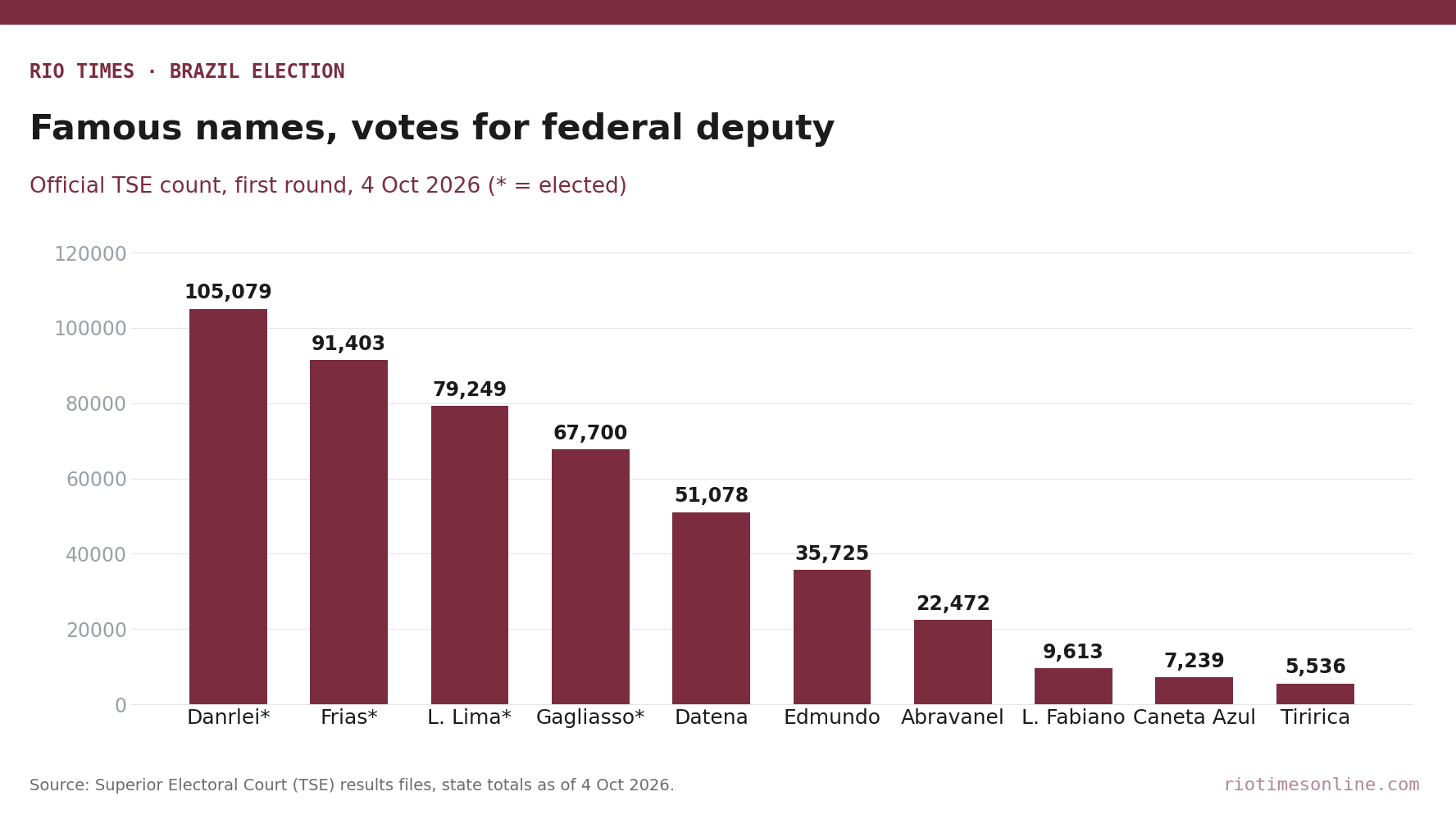
- —What happened Former Brazil striker Edmundo won 35,725 votes (0.40%) for federal deputy in Rio and was listed as an alternate, not elected (TSE, 4 October).
- —The numbers Rio’s 46 seats carried an electoral quotient of 190,082 votes. Edmundo’s PSDB-Cidadania federation won four; its last elected member had 46,780 votes (TSE).
- —What it means for you Fame alone does not win a seat in Brazil. Votes are pooled by party, so a star can lose while a lesser-known colleague wins.
- —Still open Alternates can enter the Chamber if elected deputies take government posts. In Rio, 114,193 federal deputy votes remain annulled pending court rulings (TSE).
Celebrity candidates had a mixed night in Brazil’s 4 October election, and the footballer Edmundo fell short. The former Vasco da Gama striker, part of Brazil’s 1998 World Cup squad, won 35,725 votes for federal deputy in Rio.
For American readers, his result shows how Brazil’s open-list voting works: personal fame counts, but party totals decide seats. Edmundo ended as an alternate, while a party colleague with 46,780 votes took the list’s last seat.
How Edmundo Missed a Seat in Rio
Edmundo, 55, ran for the Brazilian Social Democracy Party (PSDB), a centre-right party led by former presidential candidate Aécio Neves, in Rio de Janeiro. It was his first campaign for any office. Official results give him 0.40% of the state’s valid votes for federal deputy.
Rio elects 46 deputies, and this year each full seat required an electoral quotient of 190,082 votes. Parties and federations win seats by pooling every vote cast for their candidates and their label.
The PSDB runs in a federation with Cidadania, a small centre-left party led by deputy Alex Manente. The alliance took four seats in Rio, led by its top vote-getter, Luciano Vieira, with 177,887 votes. Its fourth seat went to fellow candidate Talita Galhardo, elected on the remainder with 46,780 votes.
Edmundo sits on the federation’s list of alternates, behind federation colleague Murillo Gouvêa on 37,590 votes. Two former Flamengo directors also lost: ex-club president Eduardo Bandeira de Mello with 37,535 and Marcos Braz (PSDB) with 18,305.
Who Won: Gagliasso, Frias, Danrlei and Ana Elisa
Among celebrity candidates in Rio, the clearest win went to actor Thiago Gagliasso of the Liberal Party (PL), the conservative party of former president Jair Bolsonaro, chaired by Valdemar Costa Neto. He took 67,700 votes and a Chamber seat, moving up from Rio’s state assembly, where he was elected in 2022.
In São Paulo, actor and former culture secretary Mario Frias (PL) was re-elected with 91,403 votes. Thammy Miranda, a city councillor and television personality, won a state assembly seat for the Social Democratic Party (PSD), a centrist party led by Gilberto Kassab, with 85,619 votes.
Former Grêmio goalkeeper Danrlei (PSD) kept his federal seat in Rio Grande do Sul with 105,079 votes. Former Olympic swimmer Luiz Lima, of the pro-market Novo party that ran former Minas Gerais governor Romeu Zema for president, was re-elected in Rio with 79,249.
The largest tally belonged to Ana Elisa, a 21-year-old influencer running in Minas Gerais for the Workers’ Party (PT), President Lula’s left-wing party, led by Edinho Silva. She won 524,219 votes, the second-highest federal deputy total in the state.
Who Lost: Tiririca, Datena and Luxemburgo
Among the celebrity candidates who lost, Tiririca stood out: the clown-turned-congressman was beaten for the first time since 2010. After four terms for São Paulo, he ran in Ceará for the PSD and won 5,536 votes.
His debut in 2010 brought more than 1.3 million votes under the slogan “It can’t get any worse”, O Globo recalled. This time the official count lists him only as an alternate.
Television presenter José Luiz Datena took 51,078 votes in São Paulo, short of a seat for the Brazilian Socialist Party (PSB), a centre-left party led by Recife mayor João Campos. Silvia Abravanel, daughter of the late broadcaster Silvio Santos, won 22,472 and journalist Rachel Sheherazade 22,453, both for the PSD.
Singer Manoel Gomes, known for the viral hit “Caneta Azul”, won 7,239 votes. Former São Paulo striker Luís Fabiano took 9,613, and Marcelinho Carioca won 2,494 for the Federal District assembly.
Coach Vanderlei Luxemburgo, in his first race, finished seventh for the Senate in Tocantins with 67,987 votes, or 4.11%. In Brasília, volleyball star turned senator Leila Barros lost her seat, third with 686,340 votes.
What the Results Say About Fame and Votes
Brazilian parties recruit celebrity candidates because every personal vote also counts toward the list total. A star who misses a seat can still help colleagues win one.
That bargain paid off unevenly for celebrity candidates in 2026. O Globo and Estadão both described the night as a poor one for former footballers in particular.
There is a steadier reading too: most seats went to candidates with local networks rather than national fame. Rio’s top vote-getter, Dr. Luizinho of the Progressives (PP), a centre-right party led by senator Ciro Nogueira, took 213,904 votes.
For the winners, the test now moves from screens and stadiums to committee rooms. The new Chamber takes office on 1 February 2027, with four-year mandates.
More: Brazil’s Congress: Bolsonaro’s PL Wins 121 Chamber Seats and Flávio Led 15 States, Lula 12 in Brazil’s First Round.
What It Means for You
For investors holding Brazilian stocks, ADRs or bonds, the celebrity races change little on their own. What counts for markets is the party balance in the 513-seat Chamber, which decides whether the next president can pass budget and tax bills.
For Americans following Brazil, the lesson is to read party lists, not famous names. A star’s votes can carry lesser-known colleagues into Congress, so a celebrity defeat does not always mean a weaker party.
What Is Not Known
Alternates can still reach the Chamber if elected deputies leave for a ministry or a state cabinet. Whether any Rio PSDB deputy does so, and how far down the list that reaches, is not yet known.
Some votes remain under legal challenge. In Rio alone, 114,193 federal deputy votes were annulled pending court decisions, and rulings could still shift seats.
Whether Edmundo, Tiririca, Datena or other defeated celebrity candidates will run again has not been announced. Manoel Gomes thanked supporters online, writing that he had taken the risk and gone to the end.
Was Edmundo elected in Brazil’s 2026 election?
No. The former Vasco and Brazil striker won 35,725 votes for federal deputy in Rio de Janeiro for the PSDB. The electoral court lists him as an alternate, not elected.
Which famous Brazilians won seats on 4 October?
Actor Thiago Gagliasso won a federal seat in Rio, and Mario Frias, Danrlei and Luiz Lima were re-elected. Influencer Ana Elisa won 524,219 votes in Minas Gerais, and Thammy Miranda won a São Paulo state seat.
Why can a candidate with more votes lose to one with fewer?
Brazil elects deputies by open-list proportional representation. Seats go first to parties and federations by combined votes, then to their top candidates. Results depend on each list’s total.
Sources: Superior Electoral Court (TSE), official results files for the 4 October 2026 first round (Rio de Janeiro, federal deputy; São Paulo, Ceará, Minas Gerais, Rio Grande do Sul, Tocantins and Federal District); O Globo, football candidates; O Globo, celebrity results; UOL; Estadão.
This article was produced by The Rio Times’ automated newsroom system. How we use AI · Report an error · Editorial responsibility: Matthias Camenzind, Editor-in-Chief