Argentina Bonds Cover US$145 Million Public Works Debt

ARGENTINA · PUBLIC FINANCE
Key Facts
- —The country Argentina is one of South America’s largest economies, led since December 2023 by libertarian President Javier Milei, a budget hawk.
- —What happened A rule published on Tuesday 6 October lets the Economy Ministry pay old public works debt with peso Treasury bonds, not cash.
- —The numbers The cap is 221.1 billion pesos (about US$145 million), and about two-thirds of that value falls due in January and April 2027.
- —The catch Contractors who join must drop their administrative and court claims over the contracts involved, with some pending items later exempted.
- —The US angle Payments stay out of the monthly budget result, helping Argentina show the balanced budget it promised for its US$20 billion International Monetary Fund (IMF) loan.
- —Still open The rules do not name the contractors that joined, how much has been delivered or the total public works debt owed.
Argentina will pay old public works debt to construction firms in peso Treasury bonds, not cash, under a rule published on Tuesday 6 October. Keeping the payments out of the monthly budget result helps Argentina show the balanced budget it promised the Washington-based IMF for a US$20 billion loan.
The bonds can cover up to 221.1 billion pesos (about US$145 million), and about two-thirds of that value falls due in 2027. Contractors who take them must drop their claims over the contracts, and the government says its budget cannot pay all these debts in cash.
How the Bond Payment Works
The measure is Joint Resolution 59/2026, published in the Boletín Oficial, Argentina’s official gazette. It comes from two arms of the Economy Ministry: the Finance Secretariat, run by Federico Furiase, and the Treasury Secretariat, run by Carlos Guberman.
Both men signed it on Friday 2 October, and it took effect that day. It enlarges three existing peso securities and hands them to contractors as a basket of bonds.
A third of the basket is a short-term Treasury bill maturing on Friday 30 October 2026. Another third is a Treasury bond due on Friday 15 January 2027, and the last 34% is a bond due on Friday 30 April 2027.
All three are capitalizing securities, which pay no regular interest and return principal plus accumulated interest at maturity. Each is valued at its technical value, face value plus interest earned so far, on the business day before delivery.
Conversions here use the central bank’s official rate of 1,520 pesos to the US dollar on Monday 5 October 2026. On that basis, the total cap of 221,119,509,519 pesos is about US$145 million.
If the full cap is used, about 148 billion pesos (about US$97 million) of the payout will sit in 2027 paper, La Nación calculated. The remaining 73 billion pesos or so (about US$48 million) is in the bill due on 30 October, just over three weeks away.
Contractors Must Drop Their Claims
The bonds settle public works debt under a scheme created on Wednesday 1 July by the ministry’s Infrastructure Coordination Secretariat. Its official name is the Simplified Regime for Extinguishing Public Works Contract Obligations.
It covers contractors working for the Public Works and Transport secretariats, including on projects financed by multilateral lenders. Argentina belongs to several such lenders, including the Washington-based World Bank and Inter-American Development Bank.
Eligible public works debt covers unpaid work certificates, stockpiled materials and price adjustments for rising costs from 1 January 2022 to 31 December 2025. Debts from contracts terminated since 2024 also qualify.
Joining is voluntary, and firms had 10 business days to apply. In return, they must drop their administrative and court claims against the state over the contract in question.
They must also waive any claim that being paid in bonds rather than cash upset the economics of the contract. The cap applies to the whole scheme until it runs out, and applications are processed in order of filing.
A later clarification exempted claims from certificates, price adjustments or official decisions still pending when a deal is signed, La Nación reported. In August the scheme was widened to Vialidad Nacional, the federal highway agency, for goods, materials and road maintenance from 2022 to 2025.
Why Milei Is Paying in Paper
The July rule says the Treasury’s budget office reported a lack of budget funds to pay all the debts identified. A survey by the Public Works and Transport secretariats had found unpaid bills from January 2022 to March 2026.
The debts span Milei’s own term and that of his predecessor, Alberto Fernández, a centre-left Peronist who governed from 2019 to 2023. The rules do not split them by year, project or company, La Nación noted.
Milei, an economist who took office in December 2023, has made a balanced budget his central promise. His party, La Libertad Avanza (Liberty Advances), campaigns on shrinking the state.
In August the national government posted a primary surplus, before interest payments, of 1.99 trillion pesos (about US$1.31 billion). After interest, the surplus was 635.5 billion pesos (about US$418 million), La Nación reported from ministry figures.
The resolution charges the bonds to financial applications, the budget line for paying off liabilities. That line sits outside the monthly budget result, which shields the surplus the government treats as its anchor, La Nación explained.
Nicolás Gadano, an economist at the consultancy Empiria, wrote on social media that the debts are settled without first booking the spending in the budget. Because the bonds pay no coupons, he added, their financing cost stays buried in the financing account.
Public Investment and the IMF Loan
La Nación set the measure in a context of reduced public investment. The state is now settling old public works bills, but in paper rather than cash.
Under the draft 2027 budget, public investment would fall to 0.4% of gross domestic product (GDP), a historic low. That estimate comes from the IIEP, an economics institute of the University of Buenos Aires and Conicet, the national science council.
The same institute noted that capital spending rose 42% in real terms in August from a year earlier. It warned, however, that the comparison started from very low levels, La Nación reported.
The IMF approved Argentina’s US$20 billion Extended Fund Facility, a multi-year loan tied to economic reforms, on 11 April 2025. When it completed the second review on Thursday 21 May 2026, it released about US$1 billion more.
In the statement on that review, the authorities committed to target an overall cash budget balance in 2026, meaning after interest payments. The monthly figures Argentina publishes leave out payments booked as financial applications, La Nación noted.
What It Means for You
For investors who hold Argentine bonds or New York-listed shares, the sum is small, but it shows how closely the government guards its surplus. The July rule itself cites the priority of putting public accounts in order and curbing spending.
The measure also adds up to about US$145 million to the peso Treasury debt falling due over the next seven months. About two-thirds of it falls due in 2027, after this year’s books are closed.
For construction firms owed public works debt, including on projects financed by multilateral lenders, payment arrives as bonds, not cash. A firm that needs cash now must sell them in Buenos Aires and may get less than the debt cancelled, La Nación noted.
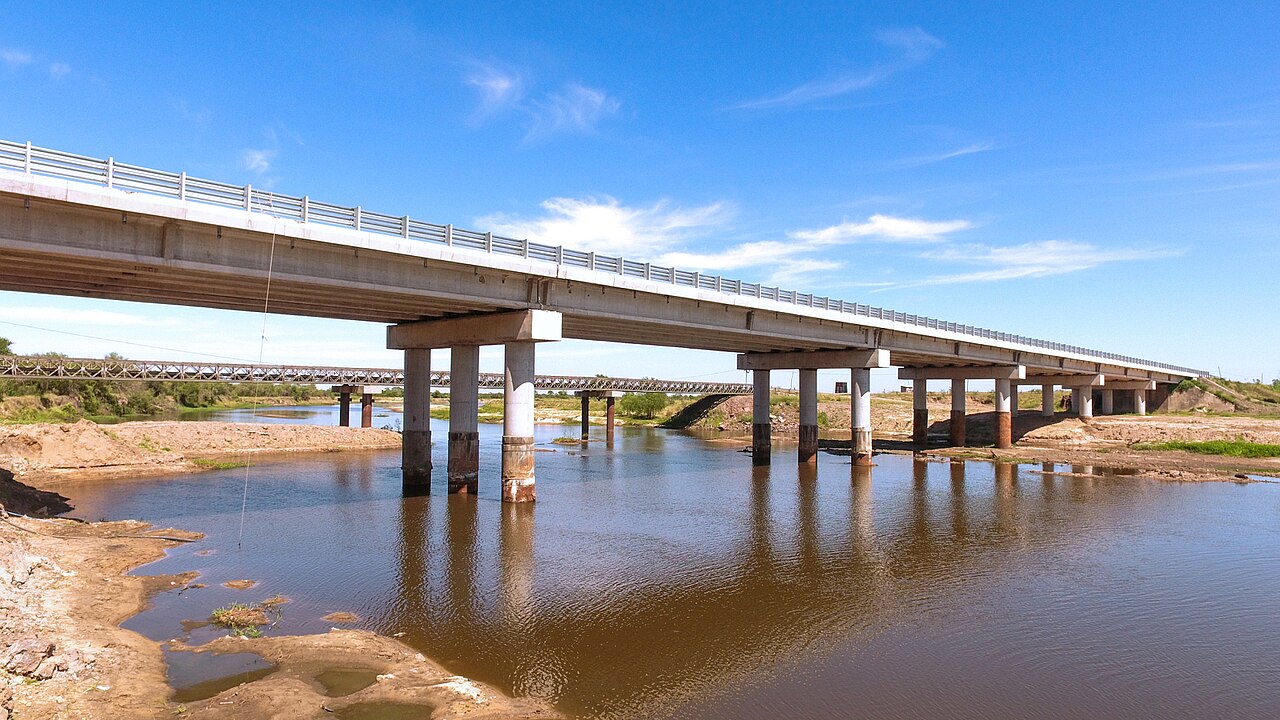
For residents and visitors, nothing changes overnight. The decision does not mean new roads or bridges; it settles bills for work already done or contracts already ended.
What Is Not Known
The rules do not name the contractors that joined or how much each is owed. Nor do they say how much has been delivered, or how much public works debt lies outside the 221.1 billion peso cap (about US$145 million).
It is unclear when the bonds will be handed over, which sets their value, or what price firms will get if they sell early. The construction industry’s response to being paid in paper is also still unclear.
More: Argentina news in English, every day from The Rio Times.
Frequently Asked Questions
Why is Argentina paying contractors with bonds instead of cash?
The government says its budget lacks the funds to pay all its public works debt in cash. Bonds let it settle the bills now and pay cash when the securities mature, mostly in 2027.
How much money is involved?
The public works debt cap is 221,119,509,519 pesos, about US$145 million at the official rate of 1,520 pesos per dollar. About two-thirds of that value matures in January and April 2027.
Do contractors have to accept the bonds?
No, joining the scheme is voluntary. Firms that join must drop their administrative and court claims over the contracts covered, apart from some items still pending at signing.
Does this affect Argentina’s IMF programme?
The resolution does not mention the IMF. Paying in bonds avoids a cash outlay now and keeps the cost out of the budget result Argentina promised the IMF to balance.
Sources: Boletín Oficial: Resolución Conjunta 59/2026 (Secretaría de Finanzas y Secretaría de Hacienda), 6 October 2026; Boletín Oficial: Resolución 1/2026 (Secretaría de Coordinación de Infraestructura), 2 July 2026; Banco Central de la República Argentina: official exchange rate, 5 October 2026; International Monetary Fund: second review of Argentina’s Extended Fund Facility, 21 May 2026; La Nación: El Gobierno pagará con bonos deuda por obra pública, 6 October 2026; La Nación: El Gobierno volvió a tener superávit en agosto, 18 September 2026.
This article was produced by The Rio Times’ automated newsroom system. How we use AI · Report an error · Editorial responsibility: Matthias Camenzind, Editor-in-Chief
In depth