
Argentina · Economy & Politics
Key Facts
- —What happened Argentina’s crude oil exports hit US$1,020 million in July, topping soybean meal for the first time in a century.
- —How big a jump Soybean meal fell to second at US$401 million, fuel exports nearly doubled (97.8%), and the trade surplus hit US$2,115 million.
- —The real story Vaca Muerta, Belgium-sized, now reshapes national accounts, ending a century of agricultural export dominance.
- —The catch Energy contributed only ~40% of surplus; falling imports also reflect weak demand, not just exports.
- —Who it touches Small-business sales fell 3.8% in July; wages can’t cover food and medicine (CAME).
- —What comes next The 2026 energy surplus is US$6,853 million, up 84%, but depends on Vaca Muerta output and prices.
July’s trade figures mark a quiet reversal of a century-old export profile — while at home, the argument is about whether people can afford food.
Crude passes the soybean
The statistics office published July trade on 20 August, and buried in it is a structural change. Crude oil exports rose 144.4% year on year to US$1,020 million, which makes crude Argentina’s largest single export product. Soybean meal, long the country’s export anchor, came second at US$401 million.
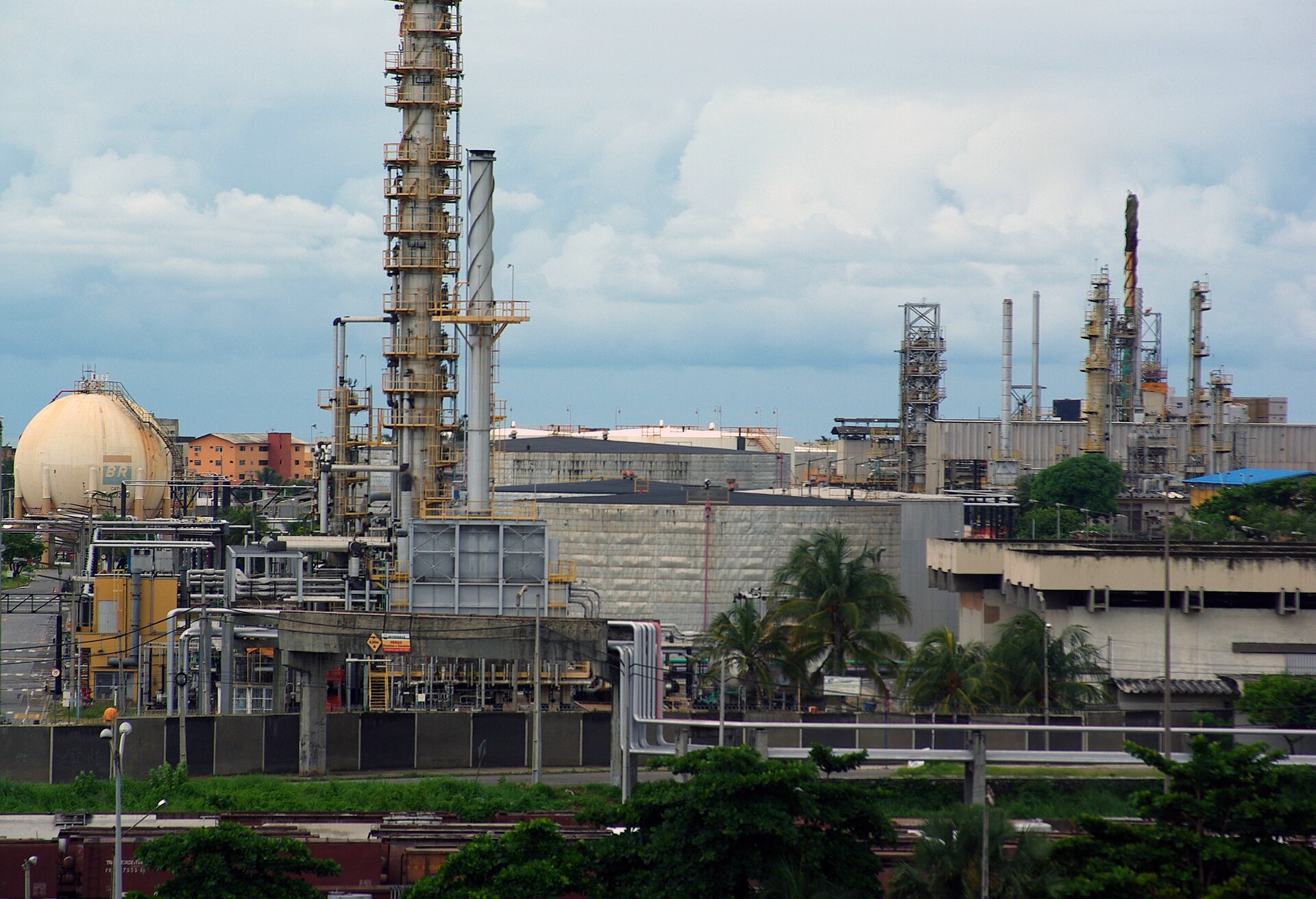
For a country whose export identity has been agricultural for more than a century, that is not a monthly data point. It is Vaca Muerta — the shale formation in Neuquén, roughly the size of Belgium — arriving in the national accounts.
The headline numbers: exports of US$8,854 million, up 14.1%; imports of US$6,739 million, down 1.7%; a surplus of US$2,115 million, the 32nd consecutive monthly surplus. Fuel and energy exports nearly doubled, up 97.8%, and the energy balance alone contributed US$892 million.
Two cautions worth holding. Energy is about two-fifths of the surplus, not the majority of it — it is the driver of the growth rather than the bulk of the total. And imports are falling. A surplus built partly on weak import demand tells you something about domestic activity, and it is not flattering.
Singapore is further along than it looks
The Mercosur–Singapore free trade agreement, signed in Rio de Janeiro in December 2023, is often described as newly arrived in Argentina’s Congress. It is not. The Senate approved it unanimously, 65–0, on 14 May. On 12 August the lower house’s foreign relations and Mercosur committees signed off, and it now waits for a floor vote with no date set.
Singapore removes tariffs on all Mercosur agricultural and industrial goods; Mercosur shields about 9.2% of trade in sensitive sectors, with phase-outs of up to fifteen years. The rules of origin are written tightly to stop Chinese goods being transshipped through Singapore to claim the preference. Paraguay has had it in force since February, Uruguay since March. Brazil is still ratifying.
Río Negro takes the roads, and the tolls
Cabinet Chief Diego Santilli and Economy Minister Luis Caputo sign an agreement at Casa Rosada today with Governor Alberto Weretilneck, handing Río Negro the administration of national routes 22 and 151 and the Tren del Valle commuter railway.
The wording matters more than the ceremony. The decree behind the programme says the delegation “shall in no case imply transfer of public-domain ownership or of federal jurisdiction”. The province is not being given the roads. It is being given the job of running and repairing them, and the right to charge tolls to pay for it. Nine provinces are authorised under the same decree; San Juan, Santa Fe and Catamarca have already signed.
For anyone who drives Route 22, the practical consequence is new toll booths. There is a six-month transition before Río Negro assumes the rail operation, which will pass to the provincial company Tren Patagónico, and roughly US$60 million of international credit is earmarked for the road works.
An argument about what people are borrowing for
On 3 August President Javier Milei dismissed calls to help indebted households: “Nobody put a gun to their head to take on debt,” he said, calling it their responsibility.
CAME, the confederation of small and medium-sized businesses, disagrees. Its spokesman Salvador Femenía said on Radio Rivadavia at the weekend that the fall in purchasing power “forces people to finance food and medicine”, and that “it is very hard to reach the end of the month; the wage evidently is not enough”. CAME’s own retail index has small-business sales down 3.8% year on year in July and down 2.7% across the first seven months.
The disagreement is not academic. CAME is a business federation, not a union, and its retail series is one of the most closely watched private measures of Argentine consumption. When Mercado Libre’s founder pointed to 38% constant-currency growth on his platform, CAME’s Ricardo Diab answered that even adding it in, consumption would still be falling.
The Cerimedo case
Two men accused of shooting the Bolivian lawyer Nadia Beller give statements today in Santa Cruz de la Sierra. Beller was shot three times outside her hotel on 17 August by attackers dressed as delivery riders. She left hospital on 22 August, is using a wheelchair, and is under police protection.
Fernando Cerimedo, a former campaign adviser to Milei and Beller’s former partner, was detained at Santa Cruz airport hours after the attack. On 21 August a judge ordered 180 days of pretrial detention at Palmasola prison on an accusation of attempted femicide as alleged intellectual author. He has not been tried or convicted; his lawyer denies any link to the attackers. Prosecutors have not established a motive publicly, and we are not going to speculate about one.
Why this matters if you are invested here
The trade numbers are the ones to keep. An energy surplus of US$6,853 million so far this year, up 84%, is the difference between an Argentina that periodically runs out of dollars and one that does not. Whether that holds depends on Vaca Muerta’s output and on prices, not on policy.
The domestic picture is the counterweight. Falling imports, falling small-business sales and a public argument about whether families are borrowing for groceries all point the same way, and an election is coming in 2027. The provinces signing road deals are being courted for a reason.
Frequently Asked Questions
Is Argentina’s trade surplus really driven by energy?
Partly. Energy produced US$892 million of July’s US$2,115 million surplus, so about two-fifths. But energy generated almost all of the year-on-year growth, with fuel and energy exports up 97.8%. The accumulated energy surplus for 2026 stands at US$6,853 million, up 84% on the same period last year.
Is Río Negro taking ownership of the highways?
No. The governing decree is explicit that the arrangement “shall in no case imply transfer of public-domain ownership or of federal jurisdiction”. It is a limited, revocable delegation of administration. The province takes on maintenance and gains the right to charge tolls; the federal government keeps the title.
What is CAME and why does its view matter?
It is the Confederación Argentina de la Mediana Empresa, the confederation of small and medium-sized businesses. Its monthly retail index is one of the most closely watched private gauges of consumption in Argentina. It is neither a union nor an opposition body, which is why its disagreement with the government registers.
What is Fernando Cerimedo accused of?
Bolivian prosecutors accuse him of being the intellectual author of the attempted femicide of his former partner, the Bolivian lawyer Nadia Beller, who was shot three times in Santa Cruz de la Sierra on 17 August. A judge ordered 180 days of pretrial detention on 21 August. He has not been tried or convicted, and his lawyer denies the accusation.
Sources
- INDEC — Intercambio Comercial Argentino, July 2026
- Decreto 253/2026, Boletín Oficial
- Banco Central de la República Argentina — reference exchange rate
- Parlamentario — Mercosur–Singapore committee approval
- Ámbito — CAME on household borrowing
- La Nación — detainees testify in the Beller case
This article was produced by The Rio Times’ automated newsroom system. How we use AI · Report an error · Editorial responsibility: Matthias Camenzind, Editor-in-Chief