Afreximbank’s Profit Rose 30% in a Rough Year for Its Members
AFRICA · FINANCE
Key Facts
—Profit up 30%: Net income reached US$534.7 million in the first half of 2026, up from US$412.7 million a year earlier.
—More lending: Net loans and advances rose 5.7% to US$35.4 billion, from US$33.5 billion at the end of 2025.
—Interest income: Net interest income rose 22% to US$1.0 billion, from US$0.84 billion.
—Better credit quality: The non-performing loan ratio fell to 2.20%, from 2.43% at the end of 2025.
—Balance sheet: Total assets and contingencies rose 7.8% to US$52.3 billion; total assets alone stood at US$43.4 billion.
—Returns: Return on average equity rose to 13% from 11%, and return on average assets to 2.54% from 2.22%. After the period, the bank raised US$1.5 billion in a dual-tranche bond, its largest international issue.
Afreximbank half-year results show net income of US$534.7 million for the first six months of 2026, a 30% increase on the same period last year. Lending grew, interest income rose sharply and the bad-loan ratio improved.
What the Afreximbank half-year results say
Net income reached US$534.7 million, up 30% from US$412.7 million in the first half of 2025. Gross income rose to US$1.8 billion from US$1.6 billion.
Net loans and advances increased 5.7% to US$35.4 billion, compared with US$33.5 billion at the end of 2025. Net interest income rose 22% to US$1.0 billion.
Fee and commission income increased 15% to US$71.1 million, from US$61.9 million, helped by guarantees, letters of credit and advisory work. Total assets and contingencies rose 7.8% to US$52.3 billion.
The results were announced from Cairo on 24 August. Denys Denya, the bank’s senior executive vice president, said the performance reflected the group’s resilience while member countries navigate a complex global environment.
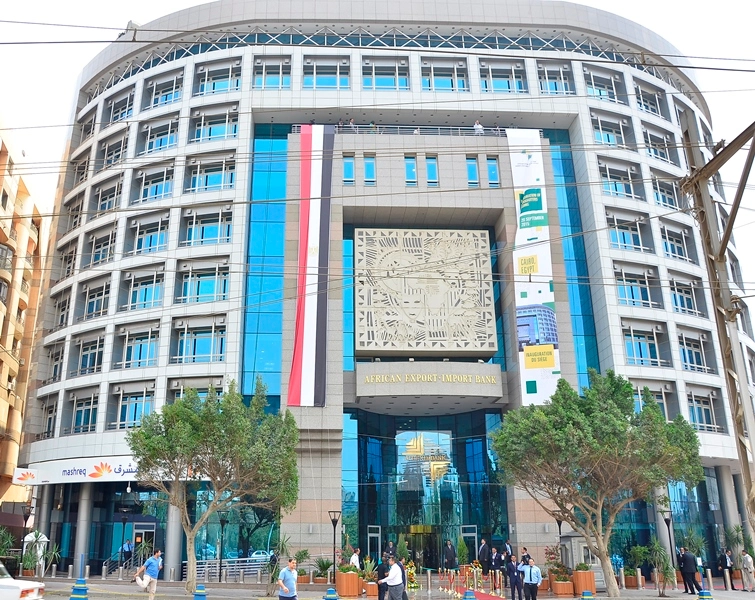
The bank is headquartered in Cairo and owned by African states, institutions and private investors. It sits outside the Bretton Woods system, which gives it more latitude and less concessional funding.
The number that matters most
The non-performing loan ratio fell to 2.20%, from 2.43% at the end of 2025. For a lender whose borrowers are African sovereigns, banks and corporates, credit quality is the figure that determines whether growth is sustainable.
Improving asset quality while expanding the loan book is a difficult combination. It suggests the growth is not being bought by lowering credit standards.
Return on average equity rose to 13% from 11%, and return on average assets to 2.54% from 2.22%. Capital adequacy under Basel II eased slightly to 22% from 23%.
A rising loan book with falling arrears usually points to either better borrowers or better selection. In a year when several African sovereigns have been under strain, that is not a trivial result.
One distinction worth keeping straight
The widely quoted US$52.3 billion is total assets and contingencies, not total assets. The bank’s own table puts total assets at US$43.4 billion, against US$42.3 billion at the end of 2025.
Contingencies include guarantees and similar off-balance-sheet exposures, which are real commitments but not the same as assets held. Several reports have conflated the two.
The cost-to-income ratio edged up to 20% from 19%. Liquid assets stood at 13% of total assets.
Why this institution matters
Afreximbank finances trade across a continent where commercial banks often will not, providing the letters of credit and guarantees that let goods move. When correspondent banking retreats, it fills part of the gap.
It has grown into one of the few African institutions able to raise large sums in international markets on its own name. After the reporting period it issued US$1.5 billion in a dual-tranche bond — US$750 million for five and a half years and US$750 million for ten — its largest international issue, roughly twice oversubscribed.
That matters beyond the balance sheet. A multilateral that can borrow cheaply can lend to members who cannot borrow cheaply themselves.
The South-South angle
Afreximbank has been building trade and payment links between Africa and Latin America, an agenda pursued through its Africa-Caribbean trade initiatives and its work on intra-African payments. Those corridors are small but growing.
For Brazilian and Argentine exporters, the practical question is whether African buyers can obtain credit. An institution with a stronger balance sheet can underwrite more of that trade.
The bank has also extended into resource finance, approving a US$200 million facility in June for Nigeria’s Shoreline group to back work on the Hassi Bir Rekaiz oilfield in Algeria. Its footprint now spans well beyond conventional trade credit.
Trade finance is unglamorous but foundational, and gaps in it show up as goods sitting in ports. An institution of this size can move that constraint.
What the results do not settle
No president or chairman is quoted in the release, and the only executive comment comes from the senior executive vice president. Dr George Elombi became the bank’s fourth president in October 2025.
There is also an internal inconsistency worth noting. The narrative refers to shareholders’ funds rising to US$8.5 billion from US$8.4 billion, while the accompanying table shows US$8.3 billion for the end of 2025.
Half-year figures are unaudited by convention, and the full-year picture will matter more. For now the direction is clear enough.
More: Egypt news in English, every day from The Rio Times.
Frequently Asked Questions
What did Afreximbank earn in the first half of 2026?
Net income reached US$534.7 million, a 30% increase from US$412.7 million a year earlier. Gross income rose to US$1.8 billion.
How large is Afreximbank’s loan book?
Net loans and advances rose 5.7% to US$35.4 billion, from US$33.5 billion at the end of 2025. Total assets stood at US$43.4 billion.
Did credit quality improve?
Yes. The non-performing loan ratio fell to 2.20% from 2.43% at the end of 2025, while the loan book was still growing.
What is the difference between total assets and total assets and contingencies?
Total assets were US$43.4 billion, while total assets and contingencies were US$52.3 billion. The larger figure includes guarantees and similar off-balance-sheet commitments.
Connected Coverage
The bank has expanded through its largest bond to date and resource lending such as a US$200 million facility for an Algerian oilfield. More sits on our Northern Africa desk.
This article was produced by The Rio Times’ automated newsroom system. How we use AI · Report an error · Editorial responsibility: Matthias Camenzind, Editor-in-Chief
LatAm Markets: Live Signals → — real-time movers, turnover leaders and FX across Latin America.