A Closed Strait Carried Sasol’s Year in South Africa
South Africa · ENERGY
Key Facts
- —Adjusted EBITDA Adjusted EBITDA rose 17% to R60.7 billion (US$3.4 billion) in FY2026.
- —Revenue Turnover increased 9% to R272.1 billion (US$15.1 billion) from R249.1 billion (US$13.8 billion).
- —Net debt Net debt fell 11% to US$3.3 billion, still above the US$3 billion dividend threshold.
- —Dividend No final dividend was declared because net debt is not sustainably below US$3 billion.
- —Impairments Non-cash impairments totaled R16.8 billion (US$930 million), including R7.7 billion for Secunda.
- —Secunda output Secunda produced 7.26 million tonnes, beating guidance and hitting a five-year high.
Sasol’s adjusted EBITDA rose 17% as refined margins doubled after the Strait of Hormuz closure. But net debt above its US$3 billion target kept dividends on hold.
Sasol’s FY2026 results show how the Strait of Hormuz closure reshaped global energy markets. The waterway shut on 28 February 2026 after US and Israeli strikes on Iran, tightening supply and lifting refining margins.
This boost helped Sasol’s adjusted EBITDA rise 17% to R60.7 billion (US$3.4 billion), with revenue up 9% to R272.1 billion (US$15.1 billion). But the company still held back its dividend, as net debt of US$3.3 billion exceeds its US$3 billion target.
The Hormuz Effect
The Strait of Hormuz, between Oman and Iran, carries about 20% of global oil. After its closure on 28 February 2026, Brent crude averaged 7% higher for the year and neared US$90 a barrel in August.
Refining margins more than doubled, with fourth-quarter crack spreads around US$25 a barrel. Sasol’s integrated chain, from coal to refineries, ran steadily to capture these gains.
Mixed Impact on Operations
The closure hurt one asset: ORYX GTL, Sasol’s 49%-owned gas-to-liquids venture in Qatar, halted shipments and shut temporarily. It contributed a loss of about R0.5 billion to earnings.
The plant returned in August 2026. Unlike Shell’s Pearl GTL, it was not damaged.
Sasol’s fuels gain outweighed the ORYX loss.
Live Market IntelligenceCommodities — Live Market Board
Rio Times · Live Market Intelligence
Commodities — Live Market Board
-0.03%
| Instrument | Last | Change | YoY | Prev. | High | Low | Volume |
|---|---|---|---|---|---|---|---|
| GOLD | 4,461 | +1.78% | +33.20% | 4,383 | 4,503 | 4,421 | 139,824 |
| SILVER | 65.59 | +1.26% | +73.05% | 64.77 | 66.98 | 64.81 | 46,406 |
| BRENT | 88.88 | -0.03% | +34.42% | 88.91 | 90.07 | 88.12 | 29,713 |
| WTI | 83.11 | -0.11% | +31.57% | 83.20 | 84.35 | 82.40 | 166,848 |
| COPPER | 6.61 | +0.03% | +46.70% | 6.61 | 6.71 | 6.61 | 39,543 |
| LITHIUM | 75.20 | +1.47% | +62.95% | 74.11 | 75.80 | 75.08 | 89,275 |
| IRON ORE | 161.91 | — | +58.10% | 161.91 | 161.91 | 1 | |
| SOY | 1,184 | +3.20% | +17.05% | 1,148 | 1,199 | 1,168 | 163,179 |
| CORN | 480.50 | +10.02% | +29.34% | 436.75 | 480.75 | 459.50 | 341,248 |
| WHEAT | 655.00 | +3.93% | +29.70% | 630.25 | 657.75 | 631.50 | 128,793 |
| COFFEE | 317.25 | -5.51% | +0.67% | 335.75 | 321.20 | 313.55 | 21,747 |
| SUGAR | 16.43 | -1.79% | -3.01% | 16.73 | 17.11 | 16.22 | 171,992 |
| COCOA | 5,719 | +3.18% | -34.96% | 5,543 | 5,779 | 5,574 | 26,773 |
| ORANGE JUICE | 138.55 | -0.47% | -45.38% | 139.20 | 141.05 | 137.50 | 703 |
| COTTON | 85.03 | +2.33% | +26.78% | 83.09 | 82.90 | 81.96 | 16,546 |
| BEEF | 223.60 | -3.93% | -5.18% | 232.75 | 226.40 | 223.00 | 16,126 |
| CATTLE | 339.10 | -3.16% | -1.82% | 350.17 | 345.50 | 338.60 | 10,164 |
| USD/BRL | 5.16 | +0.01% | -5.13% | 5.16 | 5.18 | 5.14 | — |
Secunda and Natref Perform
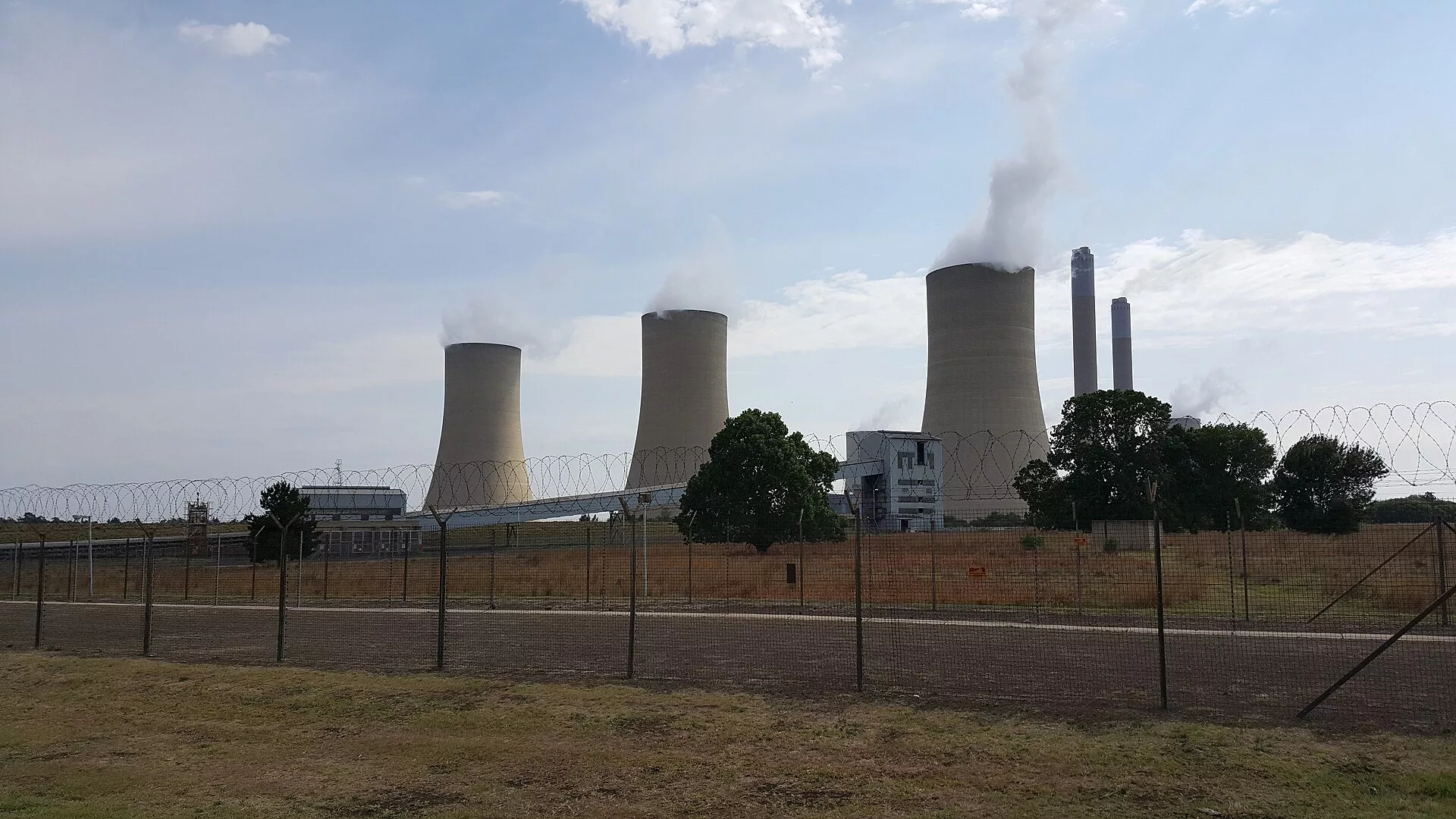
Secunda, Sasol’s main coal-to-liquids plant, produced 7.26 million tonnes, its highest in five years and above guidance. Improved coal quality and gasifier availability drove the gain.
Natref, a joint-venture refinery, delivered stable performance with improved margins. The stronger rand, however, was a headwind that partially offset operational gains.
Impairments Cloud the Picture
Despite stronger operations, Sasol booked R16.8 billion (US$930 million) in non-cash impairments, down from R20.7 billion a year earlier. The biggest charge was R7.7 billion against Secunda’s liquid fuels refinery.
Other impairments included R3.8 billion on its Mozambique production sharing agreement and R3.7 billion on polyethylene assets. These reflect lower oil price assumptions and a stronger rand, which reduced the refinery’s recoverable value.
Why No Dividend?
Sasol’s policy is to pay 30% of free cash flow, but only when net debt is sustainably below US$3 billion. At 30 June 2026, net debt was US$3.3 billion, so the board withheld a final dividend.
Shareholders last received a final dividend in September 2023. Free cash flow fell 5% to R11.9 billion on higher working capital, versus the prior year which included a Transnet settlement.
Debt and Climate Goals
Sasol targets net debt below US$3 billion before resuming dividends. It expects to reach that level between FY2027 and FY2028.
Climate targets remain unchanged: 510MW renewables operational, about 1,370MW contracted, aiming for 2GW by 2030. The company has spent over R11 billion on air quality since 2018.
Market and Analyst Reaction
No confirmed share price reaction for 1 September could be found, so none is reported here. The stock had risen roughly 83% since the Hormuz closure began, according to Daily Maverick.
Daily Maverick argues the Hormuz boost offers short-term relief but does not fix structural issues at Secunda. It also notes four major internal control weaknesses remain open, as per its 2 September 2026 analysis.
Guidance for FY2027
Sasol guided to capital expenditure of R23-26 billion (US$1.3-1.4 billion). Own coal production should hit 30-32 million tonnes, with external coal purchases down to 5-7 million tonnes from 8.8 million.
International Chemicals adjusted EBITDA is seen at US$450-600 million, below FY26’s US$604 million. Management expects cash fixed costs to stay broadly flat and will keep prioritising deleveraging.
More: Brazil news in English, every day from The Rio Times.
Frequently Asked Questions
Why did the Strait of Hormuz closure affect Sasol?
The strait is a key oil shipping route. Its closure tightened global oil supply, raised crude prices and doubled refining margins, boosting Sasol’s fuels business.
Why didn’t Sasol pay a dividend?
Sasol’s policy requires net debt to be sustainably below US$3 billion. At year-end, net debt was US$3.3 billion, so the board withheld a final dividend.
What is the dividend threshold?
The threshold is net debt (excluding leases) below US$3 billion. Once achieved on a sustainable basis, Sasol plans to distribute 30% of free cash flow.
Did the closure hurt any Sasol operations?
Yes, ORYX GTL in Qatar shut temporarily, contributing a loss of about R0.5 billion. It resumed operations in August 2026.
What were Sasol’s headline earnings per share?
Headline EPS rose 9% to R38.31 per share. Basic EPS jumped 79% to R18.99 per share.
Connected Coverage
Sources: Sasol SENS results release FY2026; Sasol annual financial statements FY2026; Sasol investor presentation and earnings call; Daily Maverick, 2 September 2026; Moneyweb and wire-style reports.
This article was produced by The Rio Times’ automated newsroom system. How we use AI · Report an error · Editorial responsibility: Matthias Camenzind, Editor-in-Chief