After Venezuela’s Quake, Families Search the Web for the Missing
Venezuela · Politics
Key Facts
—The disaster. Twin earthquakes of magnitude 7.2 and 7.5 hit northern Venezuela on June 24, killing more than 1,700 people.
—The blackout. The platform X was blocked nationwide for 10 days starting August 8, 2024; direct access without VPN was broadly restored by mid-January 2026, and users reported access in the early hours of Thursday June 25, 2026, after the June 24 earthquakes.
—The workaround. Families turned to WhatsApp and homemade websites to register the missing, tens of thousands of whom remain unaccounted for.
—The appeal. The United Nations urged Caracas to restore digital access, warning that information gaps cost lives in an emergency.
—The cover. Almost none of the damaged property was insured, leaving the repair bill on the state rather than private policies.
—Why it matters. Citizens are absorbing both the search for the lost and the cost of rebuilding, in a country with little of either to spare.
The Venezuela earthquake blackout has forced families to do for themselves what the state could not, hunting for missing relatives on WhatsApp while a country with almost no insurance counts a repair bill it cannot meet.
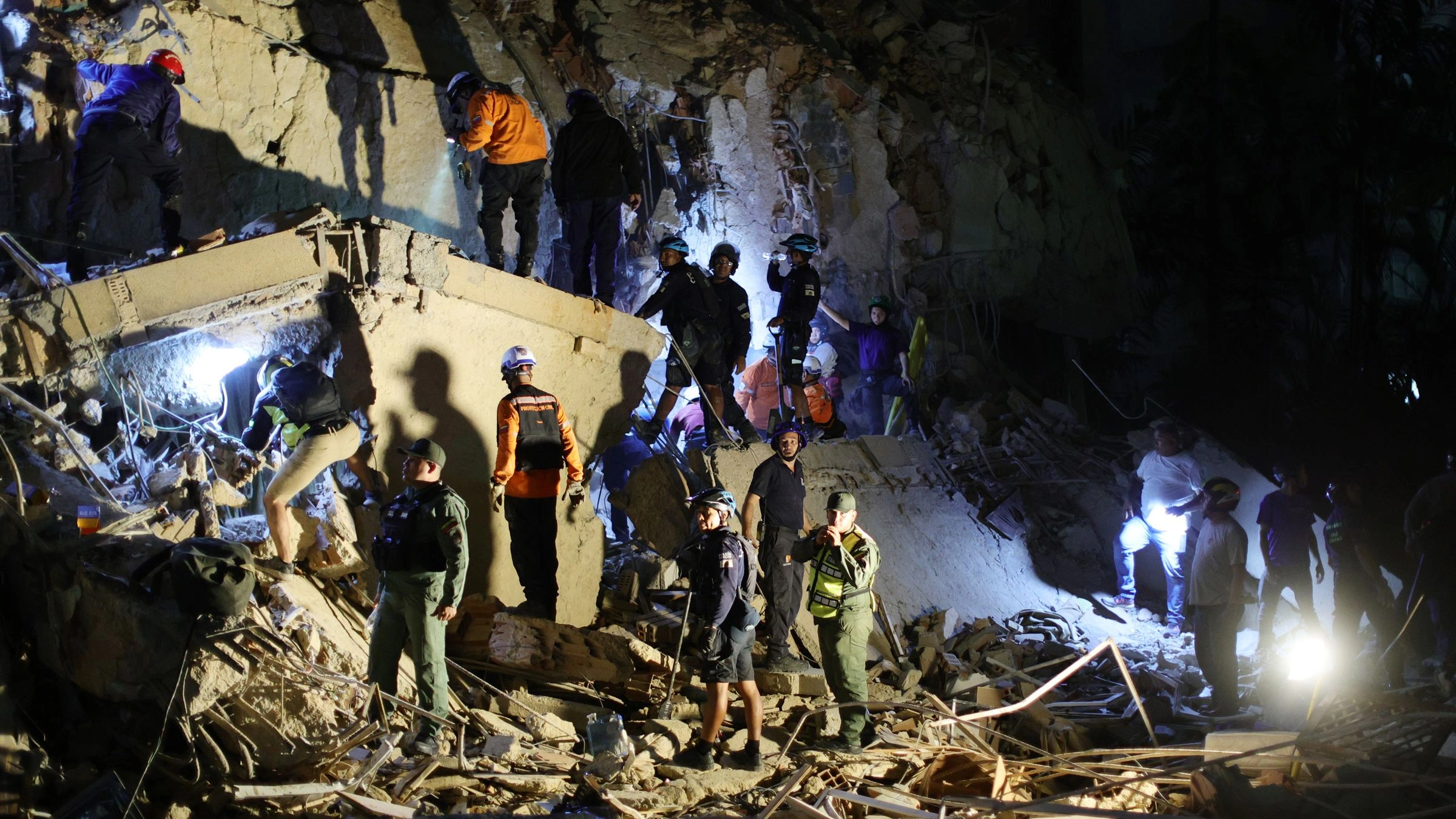
Two quakes struck the north of the country on June 24, seconds apart, and flattened buildings in and around Caracas. The death toll has climbed past 1,700, with thousands injured and tens of thousands still listed as missing.
For the families left behind, the disaster came with a second problem. The information they needed most to find loved ones was the hardest thing to get.
A Venezuela earthquake blackout in the worst hours
Venezuela has one of the most closed information systems in the hemisphere. The social-media platform X had been suspended inside the country for 10 days in August 2024, after a disputed presidential election. Direct access without VPN was broadly restored by mid-January 2026, and users reported access in the early hours of June 25, 2026, after the June 24 earthquakes; rights groups say more than 200 websites are still restricted.
Digital-rights groups say more than 200 websites are restricted, including local and international news outlets and the tools people use to get around censorship. In the first hours, official casualty reports were scarce, especially from remote areas.
The United Nations stepped in. Its human-rights office confirmed the restrictions were still in place after the earthquakes and called on Caracas to safeguard access to information and independent media.
For two crucial days, the fastest tools for coordinating a rescue had been switched off. The United Nations urged Caracas to restore digital access, warning that information gaps cost lives in an emergency.
Families build their own search engines
Into that gap stepped ordinary Venezuelans. Volunteers built independent websites to register the missing, the found and the dead, with names like Missing Persons Earthquake Venezuela and Venezuela Searches For You.
Relatives posted digital flyers on WhatsApp, Facebook and Instagram with photographs and last-known locations. These platforms required no account and let users file unlimited reports, filling the silence left by official channels.
The scale of that effort is its own measure of the disaster. Independent registries have logged up to roughly 40,000 missing, far above the government’s count, and the crowdsourced database Venezuela Reporta put online missing-person reports above 41,000.
Much of the searching is done from abroad. Around eight million Venezuelans have emigrated over the past decade, and many spent the week messaging into a country they could not reach, trying to confirm whether parents and siblings were alive.
The tools they leaned on were never built for this. A messaging app and a volunteer-run form became, by default, the national emergency registry that the government did not provide.
A second gap: almost no insurance
The information gap has a financial twin. The United Nations estimates direct damage at around 6.7 billion dollars, but almost none of the destroyed property carried insurance.
In a functioning market, private policies would fund much of a rebuild on this scale. In Venezuela, that cushion barely exists, so the cost falls almost entirely on the public purse.
That purse is nearly empty. The economy has shrunk by about four-fifths over the past decade, and the state was already trying to support some eight million people in need before the ground shook.
A study by the insurance industry made the point bluntly, noting that with minimal cover to fund private recovery, the rebuilding burden lands on a government with limited room to carry it.
What it means for residents and watchers
For Venezuelans at home and the diaspora abroad, the lesson of the week is self-reliance by necessity. The search for the missing and the work of rebuilding are both being shouldered by citizens, not institutions.
For the outside observer, the two gaps point the same way. A state that cannot keep the internet on in a crisis, and cannot insure its own buildings, is a state with very little capacity in reserve.
That matters as Washington pours in aid and investors weigh a return. The recovery now depends less on the institutions inside the country than on help and money arriving from outside it.
More: Venezuela news in English, every day from The Rio Times.
Frequently Asked Questions
What is the Venezuela earthquake blackout?
It refers to the internet and media restrictions that stayed in force as the disaster unfolded. The platform X was blocked inside the country for the first two days, and rights groups say more than 200 websites remain restricted, making it hard for families to find information.
How are people finding the missing?
Volunteers built independent websites and families posted digital flyers on WhatsApp, Facebook and Instagram. Online registries have logged tens of thousands of missing-person reports, far more than official figures, with much of the searching done by relatives abroad.
Did the United Nations respond to the restrictions?
The UN human-rights office confirmed the restrictions and urged Caracas to safeguard digital access and freedom of information. After the appeal, the platform X became reachable again through the country’s main internet provider.
Why does the lack of insurance matter?
Because it shifts the rebuild onto the state. With almost no property insured, there are few private policies to fund recovery, so the repair bill falls on a government whose economy has shrunk by about four-fifths over the past decade.
Connected Coverage
US Troops Race to Reopen Venezuela’s Airport and Port for Quake Aid
Venezuela’s Crisis in 2026: A Guide for Investors and Expats
Related: A $6.7 Billion Quake Bill Hits Venezuela Mid-Default
This article was produced by The Rio Times’ automated newsroom system. How we use AI · Report an error · Editorial responsibility: Matthias Camenzind, Editor-in-Chief