Trump Pushes for Rate Cuts Amid Tariffs and Rising Inflation
President Donald Trump has reignited his campaign for lower interest rates, urging the Federal Reserve to align monetary policy with his sweeping tariff agenda.
In a Truth Social post on Wednesday, Trump declared, “Interest Rates should be lowered, something which would go hand in hand with upcoming Tariffs!!! Let’s Rock and Roll, America!!!”
His comments coincide with Federal Reserve Chair Jerome Powell’s testimony before Congress, where Powell emphasized a measured approach to rate adjustments despite growing inflation concerns.
Trump’s push comes as inflation accelerates. January’s consumer price index revealed a 3% annual inflation rate, exceeding the Fed’s 2% target. Economists warn that Trump’s new tariffs—25% on steel and aluminum imports—could further drive up prices.
Additional levies on goods from Canada, Mexico, and China may also contribute to rising costs. Analysts estimate these tariffs could raise inflation by 0.5 to 0.7 percentage points if sustained through 2025.
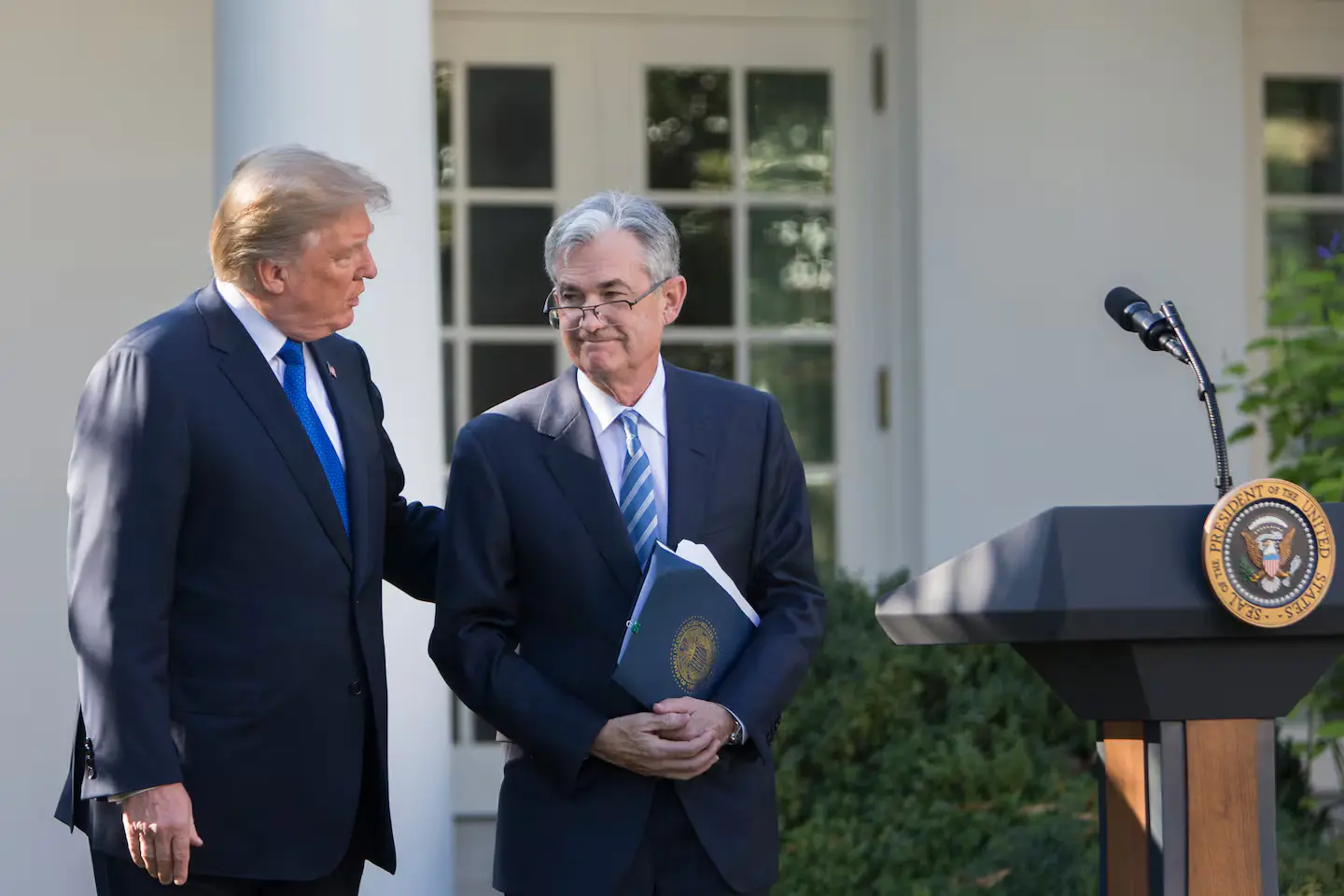
This complicates the Fed’s ability to cut rates, as higher inflation might necessitate maintaining or even increasing borrowing costs. Powell, testifying before the Senate Banking Committee on Tuesday, reiterated that the Fed is in “no hurry” to lower rates.
Powell’s Caution on Monetary Policy
The central bank recently held its benchmark rate steady at 4.25%-4.50% after three cuts in 2024. Powell highlighted the need for caution, stating that premature easing could hinder progress on inflation while excessive restraint might weaken economic activity and employment.
His remarks suggest that the Fed is balancing its dual mandate of price stability and maximum employment amid heightened policy uncertainty. Trump’s tariff strategy adds another layer of complexity.
While aimed at protecting domestic industries and addressing trade imbalances, these measures risk curbing economic growth. S&P Global estimates that U.S. GDP could shrink by 0.6% over the next year due to reduced consumer spending and weakened export competitiveness.
Businesses face higher input costs, which could trickle down to consumers in the form of elevated prices. The president’s repeated criticism of Powell and the Fed marks a departure from traditional norms of central bank independence.
Despite having no direct control over monetary policy, Trump has consistently pressured the Fed to adopt more accommodative measures, arguing that lower rates would stimulate growth and offset tariff impacts.
As Powell prepares for further congressional hearings, the tension between the White House and the Fed underscores broader challenges in navigating economic policy amid rising inflation and geopolitical trade disputes.
Markets now anticipate a prolonged pause in rate cuts. Analysts project no major adjustments until late 2025 at the earliest.
This article was produced by The Rio Times’ automated newsroom system. How we use AI · Report an error
Read More from The Rio Times