Trump and Musk Unveil Sweeping Plan to Slash Federal Workforce
On Tuesday, February 11, 2025, President Donald Trump signed an executive order in the Oval Office alongside billionaire Elon Musk, launching a controversial initiative to drastically reduce the size of the federal government.
The directive empowers Musk’s Department of Government Efficiency (DOGE) to oversee workforce reductions, enforce hiring restrictions, and identify government functions for elimination.
The order mandates federal agencies to hire no more than one employee for every four who leave. Exceptions are allowed for roles tied to national security, public safety, and law enforcement.
Agencies must also collaborate with DOGE to plan large-scale layoffs and determine which offices or programs can be shuttered entirely. Trump emphasized that the initiative aims to eliminate waste and align government operations with his administration’s priorities.
Musk, the world’s richest man and CEO of Tesla and SpaceX, defended his unprecedented role in reshaping the federal workforce. Standing beside Trump with his young son on his shoulders, Musk described the federal bureaucracy as an “unelected fourth branch of government.”
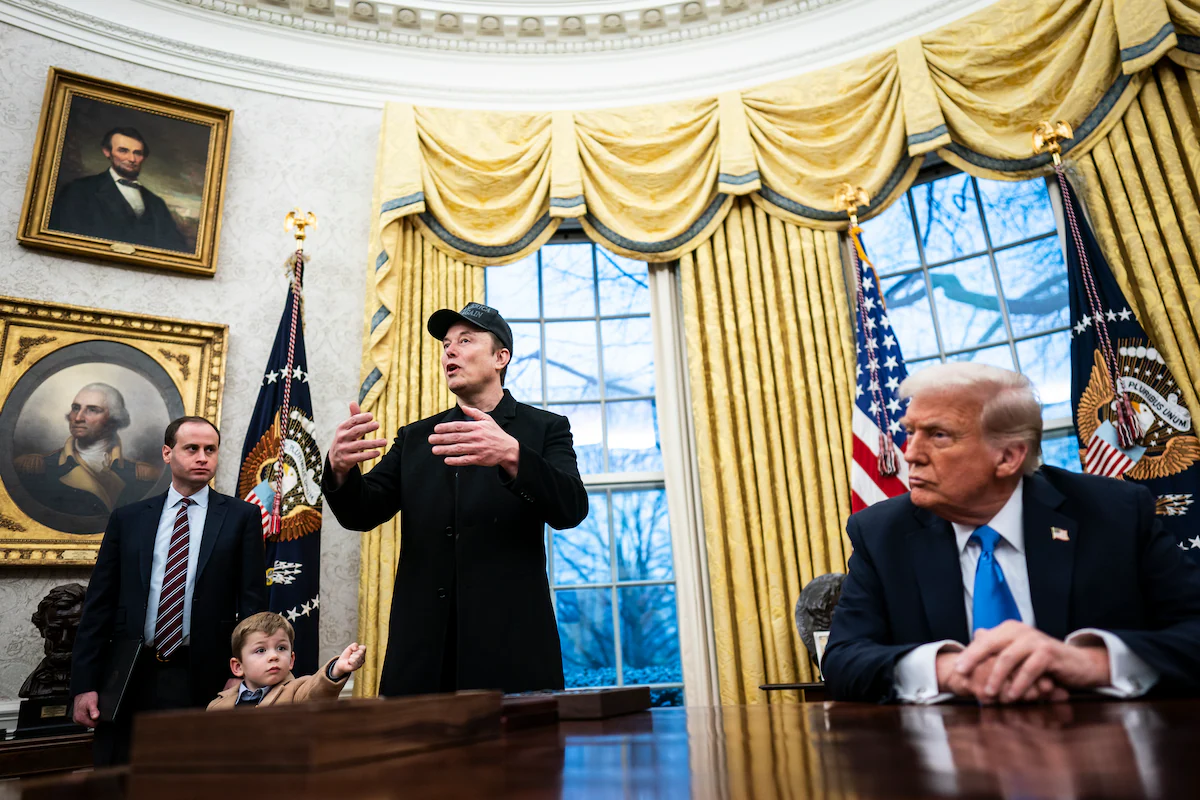
He emphasized that it requires reform. He claimed DOGE has already uncovered billions in waste and inefficiencies but provided few specifics about how these figures were calculated.
In addition, critics have raised concerns about transparency and potential conflicts of interest, given Musk’s companies hold billions in federal contracts.
Musk dismissed these worries, stating that his actions would be “scrutinized nonstop.” He added that any perceived conflicts would be obvious to the public.
Federal Workforce Cuts Under Legal Scrutiny
Trump also downplayed concerns, asserting that Musk’s oversight would not extend to areas where conflicts might arise. The initiative has sparked widespread legal challenges.
Federal judges have already blocked aspects of DOGE’s work, including access to sensitive Treasury Department data. They have also halted a controversial “deferred resignation” program offering paid leave for employees who voluntarily quit.
Despite these setbacks, the administration remains committed to its goal of cutting the federal workforce by 5% to 10%. Supporters argue the plan will streamline government operations and reduce taxpayer burdens.
However, critics warn that indiscriminate cuts could disrupt essential services and harm public trust in government institutions. As agencies scramble to comply with DOGE’s directives, the long-term impact on federal operations—and on millions of Americans who rely on them—remains uncertain.
This article was produced by The Rio Times’ automated newsroom system. How we use AI · Report an error
Read More from The Rio Times