Tesla’s Bold Leap: Unsupervised FSD Hits Austin Roads by June 2025
Elon Musk’s recent interviews unveil a daring blueprint for Tesla’s dominance in autonomous driving and AI, signaling a pivotal industry shift.
Speaking with unflinching resolve, Musk detailed plans to launch unsupervised full self-driving (FSD) and scale AI innovations, positioning Tesla to outpace rivals.
Tesla will roll out unsupervised FSD in Austin by June 2025, starting with 10 to 20 cars in a tightly controlled, safe zone.
Musk projects rapid growth to 1,000 vehicles within months and over a million by 2026, backed by 24/7 testing showing near-zero driver interventions.
Using eight to nine cameras and neural networks, Tesla shuns LIDAR, betting on streamlined safety to surpass competitors like Waymo.
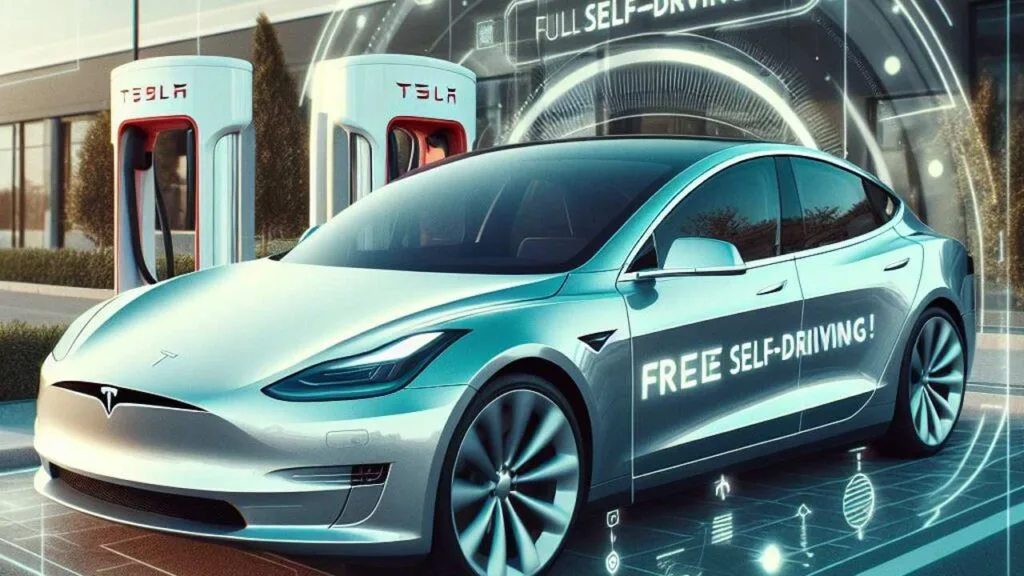
Owners can join a ride-hailing fleet, turning cars into revenue streams via an “Uber-Airbnb” model. Musk eyes licensing FSD to automakers, with talks underway, amplifying Tesla’s influence.
Despite patchy U.S. regulations, he champions unified standards, arguing state-by-state rules hinder progress.
Tesla’s Bold Leap: Unsupervised FSD Hits Austin Roads by June 2025
Financially, Tesla recovers from a 20% Q1 2025 revenue dip, tied to Model Y factory upgrades, with Musk citing robust demand.
Europe struggles, mirroring industry trends, but Tesla’s $1 trillion market cap signals investor trust.
Musk shrugs off brand backlash from his political role, noting balanced consumer shifts while condemning attacks on Tesla showrooms.
Musk Commits to Tesla for Five Years While Scaling Back Political Activities
Musk’s vision extends to 1 million Optimus robots by 2030, mastering tasks through video learning and self-play.
This demands massive compute power, with xAI’s 200,000-GPU Memphis cluster scaling to 1 million by mid-2026. Power shortages loom, as China’s 2.5x U.S. output underscores a growing gap.
SpaceX commands 90% of 2025’s orbital launches, fueled by Starlink’s 80% satellite share across 130 countries.
Musk mulls a Starlink IPO but flags legal hurdles. His government efficiency work, claiming $160 billion in deficit cuts, sparks debate, yet he plans to refocus on tech.
Musk vows to lead Tesla through 2030, demanding voting control to fend off activist investors.
His $100 billion compensation package faces court battles, but control, not cash, drives him.
Behind these figures lies a high-stakes wager: Tesla’s bid to redefine mobility and AI, balancing bold innovation with calculated risk.
This article was produced by The Rio Times’ automated newsroom system. How we use AI · Report an error · Editorial responsibility: Matthias Camenzind, Editor-in-Chief