America’s Golden Dome: Shielding the U.S. from China, Russia, and Beyond
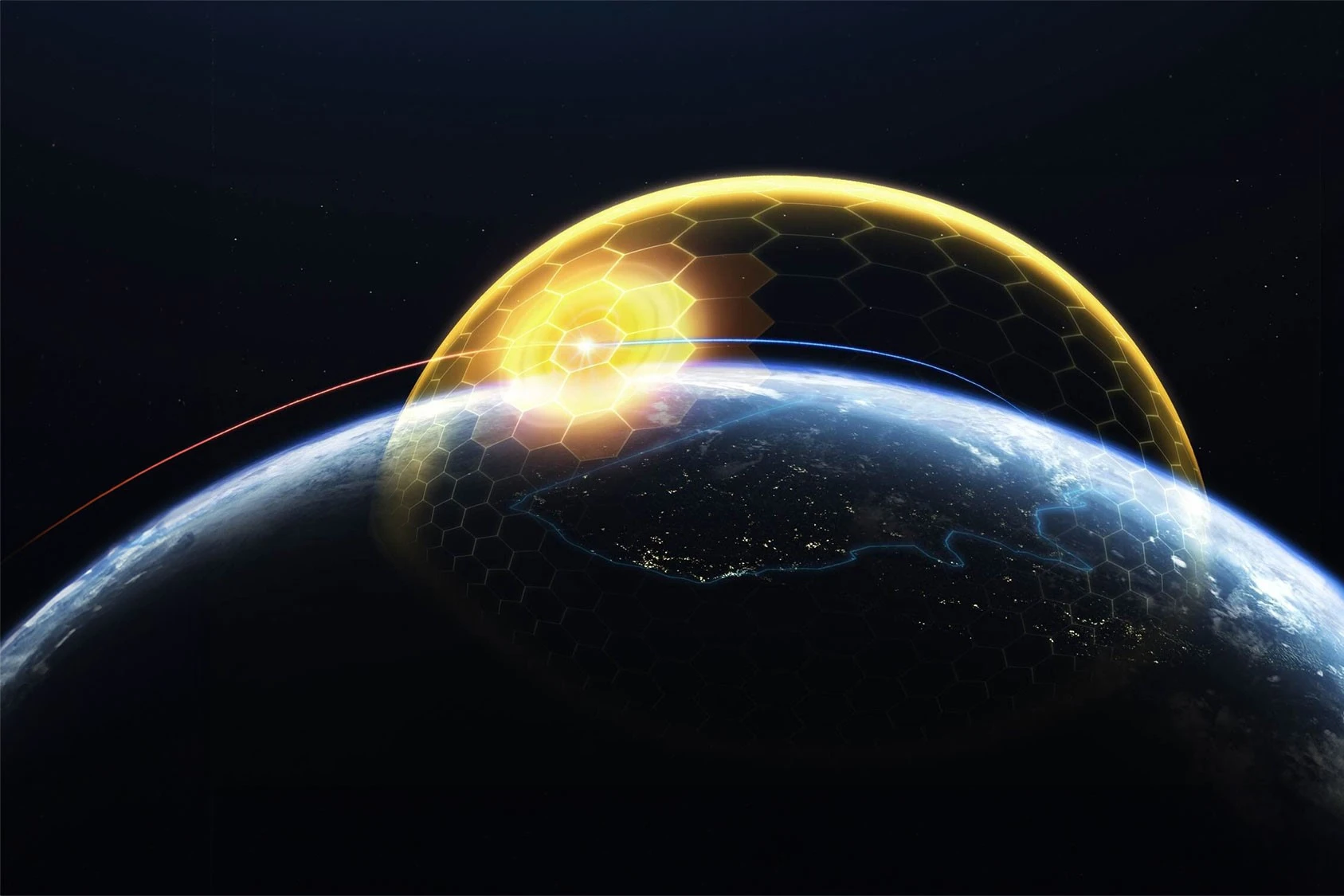
President Donald Trump announced the Golden Dome missile defense system on May 20, 2025, a $175 billion shield to protect America from ballistic, hypersonic, cruise, and space-based missile threats.
Targeting operation by 2028, this ambitious plan counters dangers from China, Russia, North Korea, and Iran. It redefines global security and challenges adversaries’ strategies.
Space Force General Michael Goodline spearheads the project, deploying space-based interceptors and 400–1,000 satellites to destroy missiles during their boost phase.
This technology neutralizes threats over enemy territory and counters space-launched weapons, a capability unmatched globally.
Ground sensors and NORAD jets bolster defenses against drones and cruise missiles.
China tests Mach 20 hypersonic missiles, potentially satellite-launched, while Russia advances three hypersonic weapons.
North Korea’s ICBMs threaten U.S. soil, and Iran develops space-launch vehicles for future missiles by 2035.
The Golden Dome stops these, including orbital threats, preventing warhead dispersal, a decisive advantage.
(America’s Golden Dome: Shielding the U.S. from China, Russia, and Beyond)
[arve url=”https://www.riotimesonline.com/wp-content/uploads/2025/05/Golden-Golden.mp4″ loop=”true” autoplay=”true” /]
America’s Golden Dome: Shielding the U.S. from China, Russia, and Beyond
Trump commits $25 billion initially, but costs could reach $542 billion over 20 years, straining the $895 billion 2025 defense budget.
SpaceX, Palantir, and Anduril lead satellite and software efforts, building on Starlink’s 7,000-satellite network.
A subscription-based satellite model might reduce costs but raises concerns about government control.
Canada negotiates involvement via NORAD, seeking protection and possibly contributing funds. This partnership strengthens continental defense but fuels debates over cost-sharing.
The system’s open architecture allows multiple contractors, ensuring adaptability to evolving threats, including space-based attacks.
Geopolitically, the Golden Dome shifts power dynamics. An impregnable U.S. could deter missile and space attacks, forcing China and Russia to develop costly countermeasures like anti-satellite weapons or cyberattacks.
North Korea and Iran, with limited options, might turn to riskier tactics, escalating global tensions and arms race risks.
The system’s uniqueness lies in its continental scale, boost-phase interception, and space-threat defense. No nation has attempted such a comprehensive shield, promising U.S. dominance if achieved.
However, experts question the three-year timeline, estimating 10 years due to technical challenges like rapid satellite deployment and precise interception.
Businesses benefit from lucrative contracts. Defense leaders like Lockheed Martin and innovators like SpaceX drive job growth and technological advances.
The satellite market expands as launch costs fall, but cost overruns could burden taxpayers, diverting funds from other defense priorities.
Adversaries face stark choices. China and Russia might act before 2028 or invest heavily in countering space and missile defenses, straining budgets.
North Korea could intensify missile tests, while Iran might explore asymmetric threats. Their reactions will shape global stability and arms control prospects.
The Golden Dome tests America’s ambition. Success ensures unmatched security against terrestrial and space threats, cementing influence.
Failure risks squandered billions and emboldened rivals. Its outcome will redefine U.S. power and global military balances for decades.
This article was produced by The Rio Times’ automated newsroom system. How we use AI · Report an error · Editorial responsibility: Matthias Camenzind, Editor-in-Chief
Read More from The Rio Times