Tanzania Puts 33 World Bank Projects at US$8.8 Billion

TANZANIA · MARKETS
Key Facts
- —The country Tanzania is a large East African nation whose Dar es Salaam port serves landlocked neighbours such as Zambia and Rwanda.
- —What happened On Monday 12 October, Finance Minister Khamis Mussa Omar met World Bank Vice President Ndiame Diop in Bangkok, the Swahili daily Mwananchi reported.
- —The numbers Omar put 33 World Bank projects at US$8.8 billion; the bank’s website lists US$8.4 billion across 33 active operations.
- —The IMF Tanzania drew about US$1.7 billion from the International Monetary Fund from 2022, and the fund completed its final programme reviews in July 2026.
- —The economy Official data show 6.1% growth in the first quarter of 2026 and 4.3% inflation in September, inside the 3% to 5% target.
- —Still open Tanzania has not said whether or when it will ask the IMF for a new programme, and no new World Bank loan was announced.
Tanzania has 33 World Bank projects worth US$8.8 billion, Finance Minister Khamis Mussa Omar told the bank’s regional vice president on Monday 12 October. They met in Bangkok, Thailand, at the annual meetings of the World Bank and the International Monetary Fund, the Swahili-language daily Mwananchi reported.
For US investors and contractors, the talks show where the money in one of East Africa’s main trade corridors is coming from. They also came as Tanzania weighs a new IMF programme after its last programmes with the fund ended this year.
What the Minister and the World Bank Discussed
Khamis Mussa Omar, who carries the title of ambassador, is finance minister in President Samia Suluhu Hassan’s government. He also represents Tanzania as its governor at the IMF and the World Bank, his ministry says.
He met Ndiame Diop, a Senegalese economist who is the World Bank’s vice president for Eastern and Southern Africa. Diop oversees the bank’s work across 26 countries, according to his official World Bank profile.
The World Bank is the Washington-based lender that funds roads, power and schools in poorer countries, and the United States is its largest shareholder. Its annual meetings with the IMF, held in Bangkok from 12 to 18 October, gather finance ministers and central bankers.
According to Mwananchi, Diop said the World Bank would remain an important partner in financing Tanzania’s strategic and regional projects. He named energy, education, rail, especially the Central Line from Dar es Salaam to Lake Tanganyika, and cash transfers for poor households.
Omar told the bank that revenue collection and spending were on track, with inflation inside the 3% to 5% target band. Figures from the National Bureau of Statistics show growth of 6.1% in the first quarter of 2026 and inflation of 4.3% in September.
What the 33 World Bank Projects Cover
Omar valued the 33 World Bank projects at 23.2 trillion Tanzanian shillings (about US$8.8 billion), at 2,635 shillings to the dollar on 12 October 2026. They span industry, education, health, farming and social protection, Mwananchi reported.
The World Bank’s own country page lists a slightly smaller active portfolio of US$8.4 billion across 33 operations, as of 31 August 2026. These come from its International Development Association, the arm that lends to the poorest countries on soft terms.
Omar listed work on Dar es Salaam port, the Central Line and the new electric Standard Gauge Railway among the strategic projects under the partnership. He also named power lines to link Tanzania’s national grid with Zambia’s.
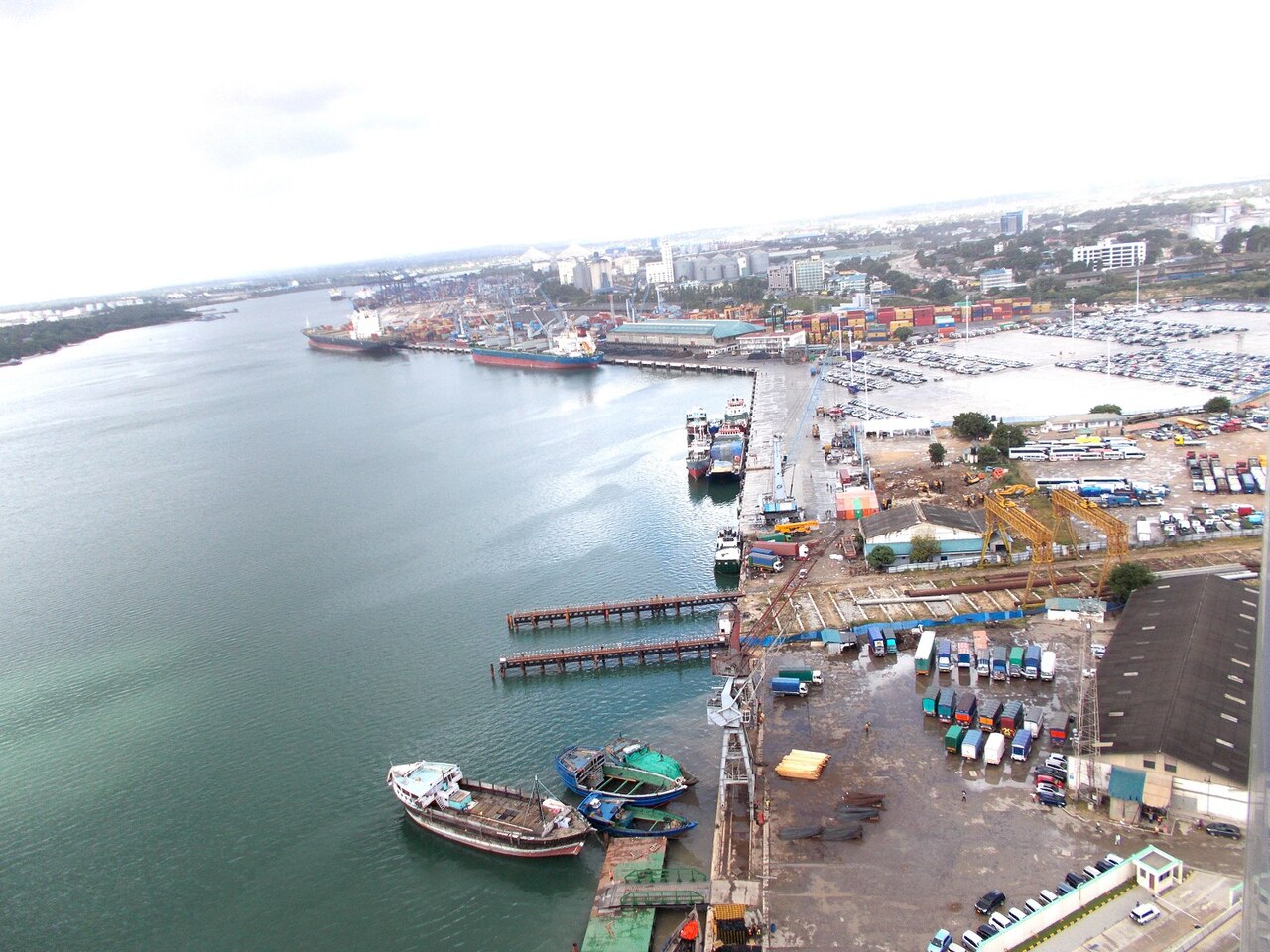
Dar es Salaam port is a main sea gateway for Zambia, Malawi, Rwanda, Burundi, Uganda and eastern Democratic Republic of Congo. Faster railways and a bigger port can cut the cost of moving copper, cobalt and farm goods to the coast.
Social spending is part of the World Bank projects too, through the Tanzania Social Action Fund (TASAF). That state fund pays small cash transfers to poor households and hires villagers for public works.
Why the IMF Question Matters
The International Monetary Fund is the Washington-based lender that helps governments short of foreign currency, and the United States is also its largest shareholder. Its programmes come with targets on deficits, debt and reforms that investors watch closely.
Tanzania drew about US$1.7 billion from the IMF between 2022 and 2026, Omar said, according to Mwananchi. About US$1.063 billion came through the Extended Credit Facility, a low-cost loan for countries with long-running shortages of foreign currency.
Another US$636.5 million came through the Resilience and Sustainability Facility, which funds climate-related reforms and ended in August 2026, he said. The IMF board completed the final reviews of both programmes in July, releasing about US$443.8 million, The Citizen reported at the time.
Omar said Tanzania is now running an internal assessment of its needs before entering any new agreement with the fund. He gave no date for a decision.
Rating Agencies and a New World Bank Round
At a preparatory session of the Tanzanian delegation, Omar said Tanzania has sent a preliminary list of proposed World Bank projects for IDA21. That is the current funding round of the International Development Association, the bank’s fund for the poorest countries.
The Ministry of Finance also said Tanzania is in talks with the credit rating agencies Moody’s and Fitch and is courting new lenders. It added that the government may seek general budget support where needed to fund development programmes.
What It Means for US Readers
For US investors, the World Bank projects and the IMF decision show how Tanzania plans to pay for its railway, port and power plans. A new IMF deal would add outside checks on the budget, while going without one would test confidence in the country’s own plans.
For US bond investors, the talks with Moody’s and Fitch matter because credit ratings shape what Tanzania pays to borrow. Better ratings would also widen the pool of foreign lenders that the ministry says it is courting.
For US engineering, equipment and consulting firms, large contracts on World Bank projects are generally open to international bidding under the bank’s procurement rules. Ports, railways and power lines are the kind of work where such tenders appear.
For US companies trading with Zambia and eastern Congo, the port and rail upgrades matter as much as Tanzania’s own economy. Copper and cobalt from the region, used in batteries and wiring, can move to the sea through Tanzania.
What Is Not Known
The World Bank has not published its own account of Monday’s meeting, and no new loan figure was announced. The ministry has not explained why its US$8.8 billion figure for World Bank projects is higher than the US$8.4 billion the bank lists.
Tanzania has not said when its internal review of IMF needs will end, or how large a new programme might be. The fund has not commented on whether talks on a fresh arrangement have begun.
More: Tanzania news in English, every day from The Rio Times.
Frequently Asked Questions
How much does the World Bank fund in Tanzania?
Finance Minister Khamis Mussa Omar says 33 World Bank projects in Tanzania are worth US$8.8 billion. The bank’s own website lists US$8.4 billion in 33 active operations as of 31 August 2026.
Who met in Bangkok on 12 October?
Tanzania’s Finance Minister Khamis Mussa Omar met Ndiame Diop, the World Bank’s vice president for Eastern and Southern Africa. They spoke on the sidelines of the World Bank and IMF annual meetings in Thailand.
Does Tanzania have an IMF programme now?
No. The IMF completed the final reviews of Tanzania’s two programmes in July 2026, after about US$1.7 billion in lending since 2022. The government is assessing its needs before any new agreement.
Which World Bank projects matter most for trade?
Omar listed Dar es Salaam port, the Central Line, the electric Standard Gauge Railway and a power link with Zambia. These routes carry goods for Zambia, Burundi, Rwanda and eastern Congo.
Why should US investors care?
The United States is the largest shareholder in both the World Bank and the IMF. Their lending shapes Tanzania’s debt, its budget and the contracts open to American firms.
Sources: Mwananchi (Swahili), 12 October 2026; Ministry of Finance, Tanzania (Swahili), 12 October 2026; Ministry of Finance, Tanzania, arrival in Bangkok (Swahili), 12 October 2026; World Bank, Tanzania overview, 5 October 2026; World Bank, Ndiame Diop profile, 12 October 2026; National Bureau of Statistics, Tanzania, GDP, 30 June 2026; National Bureau of Statistics, Tanzania, CPI September 2026, 8 October 2026; The Citizen, 11 July 2026; World Bank, voting powers, 12 October 2026; International Monetary Fund, members’ quotas and voting power, 12 October 2026.
This article was produced by The Rio Times’ automated newsroom system. How we use AI · Report an error · Editorial responsibility: Matthias Camenzind, Editor-in-Chief
LatAm Markets: Live Signals → — real-time movers, turnover leaders and FX across Latin America.